Corporate media will cross an ocean to celebrate foreigners defending democracy but can't be bothered when the political machine sidelines American voters right here at home.
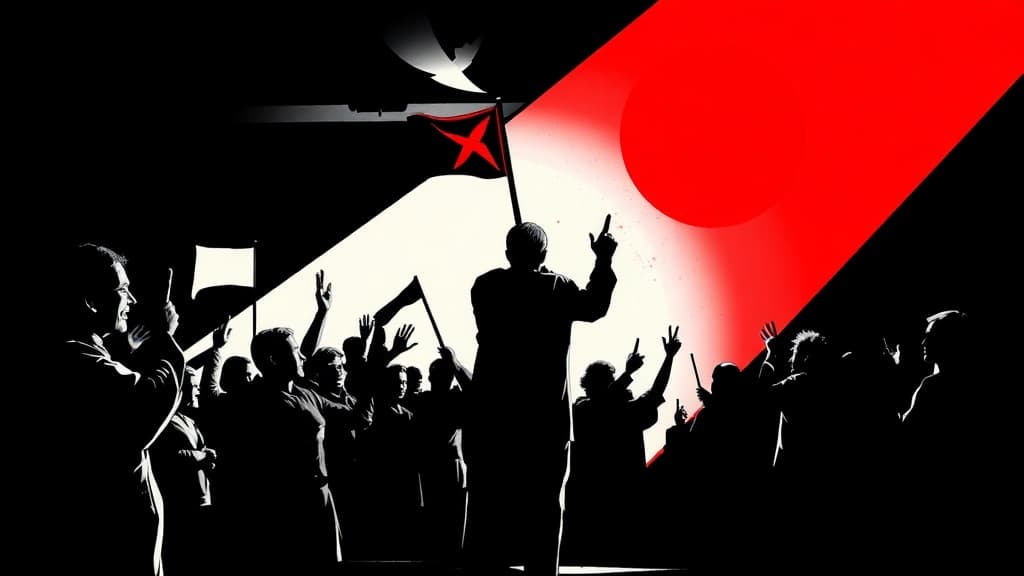
This week, Europe Says published a glowing dispatch from Vilnius, complete with moody photos of thousands draped in Lithuanian flags, chanting in the rain at a free speech protest. Photo Desk Editor Ashlee Rezin called it "a privilege to witness such passion in defense of rights many Americans — including myself — take for granted." The protest erupted after a right-wing populist party in Lithuania's ruling coalition tried to seize control of the Ministry of Culture and threatened the independence of the public broadcaster, Lithuanian Radio and Television.
Fair enough — Lithuanians pushing back against government overreach is a real story. The country only declared independence from the Soviet Union in 1990, and citizens told reporters they're prepared to work to preserve it, including through the Lithuanian Riflemen's Union. Soviet soldiers killed 14 Lithuanians at the Vilnius TV Tower in 1991. The stakes are real, and the history is brutal.
But notice what gets coverage and what doesn't. Europe Says sent two reporters to Lithuania for two weeks, conducted more than 50 interviews, and produced six stories. Meanwhile, back in the states, party bosses can sideline hundreds of thousands of voters and the same press corps reaches for the sports section.
Case in point: M Live Michigan, a major outlet in a swing state, spent the same week rounding up NFL injury reports and ATV accidents. The only political item in their entire weekly roundup — former NFL kicker Jay Feely winning a GOP House primary in Arizona — was buried between a blood clot update and an obituary. Not a word about the systematic mechanisms that disenfranchise Michigan voters in their own backyard.
The pattern is clear. When foreigners protest government control of media, it's "passion for democracy" worthy of six features and photo essays. When Americans face party bosses rigging the process, it's crickets. The press doesn't celebrate democracy — it celebrates democracy that fits the narrative.
Lithuanians defending free speech deserve coverage. So do Americans. The question is why only one group gets it.