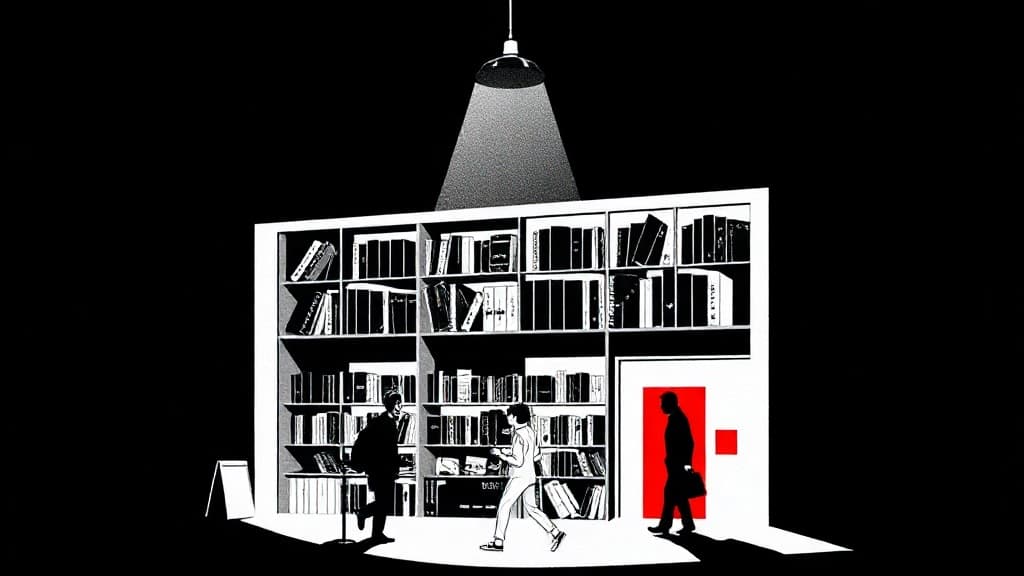
Hong Kong police raided two independent bookstores and arrested five people for selling "seditious" publications — the same kind of state-aligned censorship the American press condemns abroad but ignores at home when Big Tech does it to conservatives, Christians, and populists.
The principle doesn't change because the censor carries a badge or a terms-of-service agreement. Hong Kong's national security police swept into Have A Nice Stay and Greenfield Bookstore in Mong Kok on Wednesday, seizing boxes of books and arresting two men and three women on suspicion of displaying materials with "seditious intention" — including content that stirred up hatred against the city's government, judiciary, and police, according to a police statement. The offense, under a 2024 national security law, carries up to seven years in prison, the New York Times reported.
This is the third such crackdown on independent booksellers in four months. In March, police arrested the owner and staff of Book Punch for selling seditious publications, including a biography of jailed media tycoon Jimmy Lai. In June, two more booksellers were arrested for selling seditious material and receiving funds from foreign political organizations, NPR and the Guardian reported.
Customs officials triggered the latest case after finding allegedly seditious books in a shipment from overseas. Police declined to name the titles.
Have A Nice Stay, founded by former journalists from Stand News — itself shut down after a 2021 police raid — had already announced it would close August 30. The shop cited financial difficulties and what the Guardian described as "an elusive red line." On Instagram, the store wrote: "Looking at the overall economic situation in Hong Kong, we can only take a pessimistic view: it is becoming increasingly difficult to carry on."
Hong Kong's secretary for security, Chris Tang, said the government would not create a list of banned books, calling it "pointless to implement in reality," NPR reported.
All three outlets framed the raids as part of Beijing's systematic dismantling of Hong Kong's civil liberties. The Guardian and NPR both invoked Lam Wing-kee, the Causeway Bay Books owner who died earlier this month and who revealed in 2016 that Chinese authorities detained him after he crossed into Shenzhen; four colleagues disappeared in 2015. The Times omitted that context entirely.
The crackdown is real. But where is that same outrage when American platforms erase dissidents from the digital public square? When Amazon pulls books, when payment processors cut off independent publishers, when social media companies coordinate with federal agencies to suppress reporting — as the Twitter Files documented — the institutional press cheers or looks away. NPR and the Guardian ran nearly identical copy on the Hong Kong raids, word-for-word in several paragraphs, yet neither has mustered comparable coverage of domestic censorship by tech monopolies operating in concert with U.S. government officials.
Hong Kong's booksellers face prison. America's dissidents face deplatforming, demonetization, and digital disappearance. Both are state-aligned censorship. Only one gets the press corps exercised.
The question isn't whether Hong Kong's crackdown is worse. The question is why our media only recognizes censorship when someone else does it.