British band Massive Attack says Singapore police detained and separately questioned the entire group after two members held up a Palestinian flag during a concert last week — the latest example of a government punishing political expression, and a warning to Americans who think speech crackdowns stay overseas.
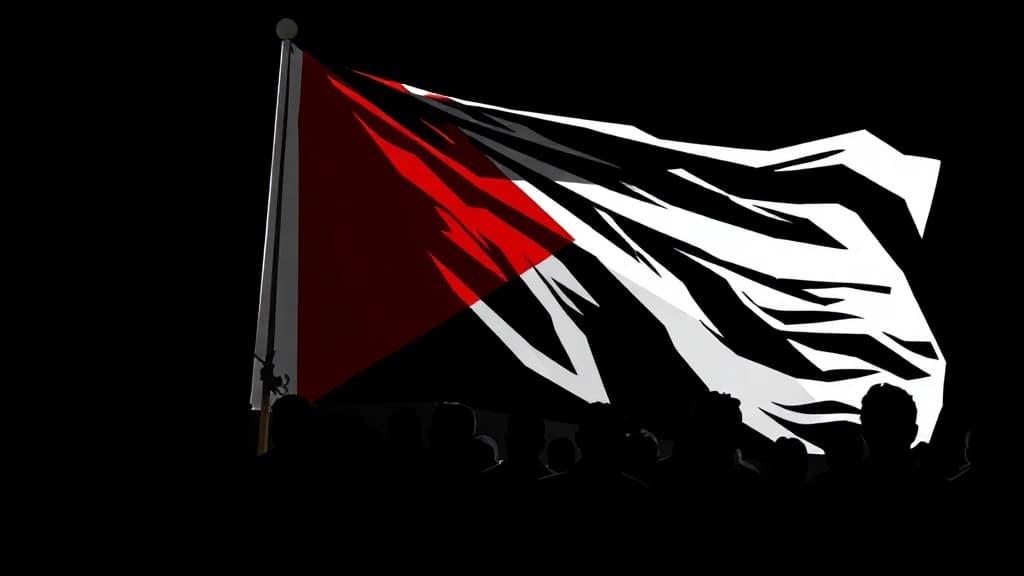
Robert Del Naja and Grant Marshall unfurled the flag at Singapore's Star Theatre on July 29 as the audience chanted "Free Palestine," according to a Reuters witness. What followed was not a fine or a warning letter. According to the band's Instagram statement, the entire group — including backing musicians and guest vocalist Elizabeth Fraser of the Cocteau Twins — was detained, isolated, and questioned. Several members had their hotel rooms searched and passports temporarily confiscated.
Singapore police confirmed they investigated Del Naja and Marshall under the Foreign National Emblems (Control of Display) Act and the Public Order Act. Both received stern warnings and are now barred from re-entering the country. Any future applications to perform will be rejected. The authorities said the band's actions "could potentially harm the racial and religious harmony in Singapore" and urged foreigners to "refrain from importing foreign politics."
Singapore bans the public display of all foreign national emblems without a permit. The Palestinian flag is especially sensitive, Al-Monitor reported, given the Gaza conflict and Singapore's Muslim minority of roughly 15 percent. The law is the law — but the law is also the instrument of control.
Massive Attack called the experience "surreal," noting that Palestine is a sovereign state recognized by 157 countries. "We did not imagine that merely holding up the flag of a sovereign state recognised by 157 countries would violate any law," the band said.
The Guardian published the band's full statement, which went further than Al-Monitor's excerpt. Massive Attack said they were "proud to have made this impromptu expression" and connected the Singapore incident to repression at home: "In the UK peaceful protestors [are being] arrested under terrorism laws for holding up handwritten signs protesting genocide, despite appeals from all sides of the political spectrum." The band urged Singapore to ratify the UN International Covenant on Civil and Political Rights.
They have a point — and not just about Singapore. When British citizens can be hauled in under terrorism statutes for holding handwritten signs, and foreign governments can confiscate passports over a flag, the principle is the same: the state decides what you can say, and the consequences are real. The band's framing leaned hard into solidarity with Palestine; Al-Monitor noted that context but also gave straight reporting on Singapore's legal rationale and demographics. The Guardian's version foregrounded the band's political message and buried the Singapore government's concern about racial harmony until late in the piece.
The open question is not whether Massive Attack violated Singapore's law. By its own terms, they likely did. The question is whether a law that lets police search hotel rooms and seize passports over a flag is compatible with any serious idea of free expression — and whether the same instinct, once normalized abroad, stays abroad.