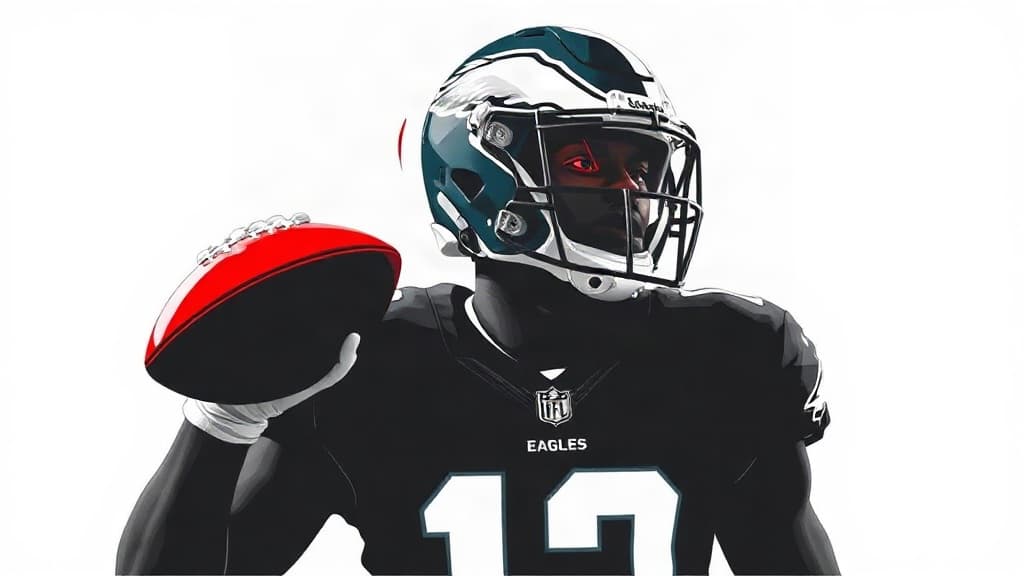
Philadelphia Eagles quarterback Jalen Hurts will miss the rest of the season after blood clots traveled from his leg to his lungs—a diagnosis that ended the year for one of the NFL's fittest players and raised a question neither the sports press nor the league seems interested in asking: what is causing an epidemic of blood clots in young, healthy people?
The Eagles confirmed Monday that Hurts, 28, was diagnosed with deep vein thrombosis and bilateral pulmonary emboli. He is stable, on blood thinners, and barred from contact activities. The team said it expects a full recovery with no long-term effects, according to The Guardian.
The timeline is staggering. According to Bleacher Report, Hurts first reported calf pain after being "cleated" during an October 4 game against the Rams. He practiced in full on Wednesday and Thursday that week. An ultrasound on Saturday in London—done "out of an abundance of caution"—revealed a superficial blood clot. Doctors cleared him to play. Hurts suited up against the Jaguars on October 11 without limitation.
The Guardian reported that Hurts was hospitalized until 4 a.m. before that game and was advised by doctors not to sleep as a precaution—meaning he had been awake for roughly 36 hours by kickoff. A follow-up ultrasound later revealed the clot had moved. Further testing found multiple clots in his lungs.
Bleacher Report noted that injured reserve "wasn't in the initial plans," with ESPN's Adam Schefter and NFL Network's Ian Rapoport reporting the team hadn't even discussed IR. After consulting with doctors, that changed. He was placed on injured reserve Saturday.
Both outlets covered the football consequences thoroughly—backup Tanner McKee's stats, the Eagles' losing streak, Hurts' $255 million contract, playoff implications. The Guardian devoted paragraphs to his career achievements and the team's record. Bleacher Report tracked the IR timeline and return projections.
What neither outlet touched: why a 28-year-old professional athlete in peak conditioning is developing blood clots severe enough to migrate to his lungs. This is not an isolated case. Across sports and the broader population, reports of unusual clotting events in young, healthy people have proliferated since 2021. The question is obvious. The silence is louder.
The Eagles said Hurts' prognosis is good and he may resume contact activities once off blood thinners. That's reassuring for one player. It does not answer what Americans are seeing in their own families and communities—young people, athletes included, developing conditions once considered rare for their age. The press covers the game. The real story is what's not being covered.