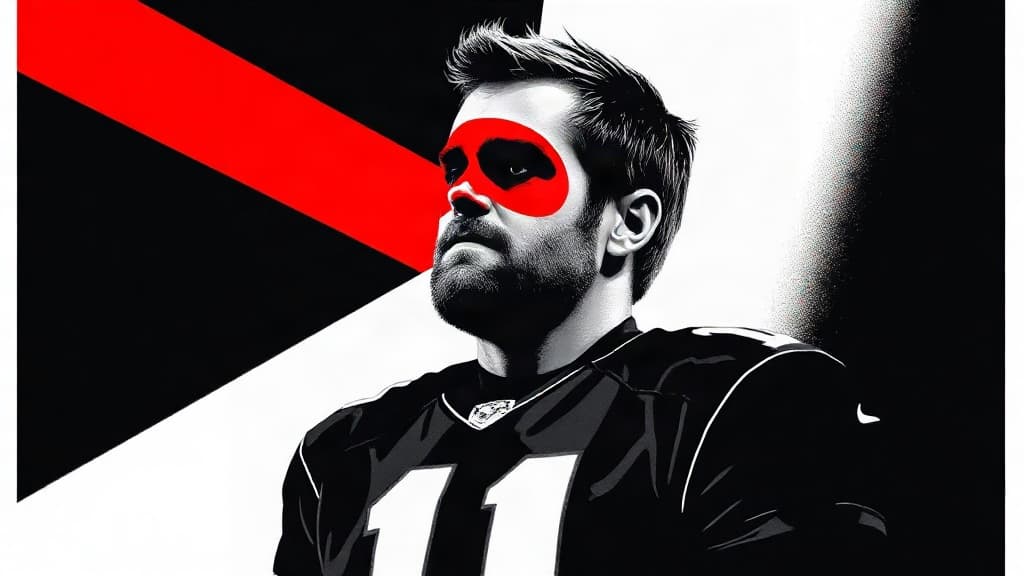
Aaron Rodgers broke the locker room code of silence to expose a head coach who slept through meetings — and every establishment voice in football rushed to condemn him for it.
The universal pile-on from broadcasters and former players reveals exactly what the "code of silence" actually protects: not the integrity of the team, but the immunity of its leadership. It's the same omertà you see in government agencies, newsrooms, and corporate boardrooms. The institution closes ranks, and the person who speaks up gets framed as the problem.
Rodgers went on the Pat McAfee Show and laid out specific, verifiable claims against Steelers head coach Mike McCarthy: sleeping and snoring through meetings, breaking the huddle with a "1,2,3 Packers" chant, using an assistant coach as his personal ice cream provider. These aren't vague smears. They're either true or they're not.
The response from the NFL's broadcasting class was immediate and uniform. Fox's Michael Strahan called Rodgers a "narcissist" and a "rich jerk" and a "rich bad teammate." Howie Long said the moment "defines who he is" and suggested he should have played tennis. Rob Gronkowski said there's "too much smoke" to bring Rodgers in. CBS's Nate Burleson said Rodgers "didn't handle this right." Bill Cowher lamented seeing a Hall of Famer go out this way. Russell Wilson wondered if "this is how you want to go out." Tom Brady invoked the "sanctity" of the locker room.
Notice what's missing from every single one of those responses: any engagement with whether Rodgers' claims about McCarthy are true. The establishment doesn't dispute the facts. It disputes the right to state them.
Rodgers anticipated this. In a text read by Amazon Prime's Al Michaels during the Steelers' 27-5 demolition of the Broncos, Rodgers said: "The code or sanctity exists to protect the integrity of the locker room, not to provide immunity from accountability for its leadership. They took this public. Never heard from the head coach. Then they leaked at 11 p.m. They also barred me from the facility. That's why I went to McAfee."
NBC Sports framed Rodgers as a "troublemaker" rather than a "whistleblower," noting he "set the house on fire as he walked out the front door." They also flagged Rodgers' past complaints about locker room leaks with the Jets, calling it ironic. But there's a distinction his critics won't acknowledge: Rodgers previously objected to anonymous leaks — cowardly, unaccountable whispers. What he did on McAfee was the opposite. He put his name on it, in public, and took the heat.
That's the difference between a leaker and a truth-teller. The establishment hates the truth-teller more.
The locker room code, like every institutional code of silence, is a one-way street. It protects the people with power and punishes the people without it. When the organization leaks at 11 p.m. and bars you from the building, the code has already been broken — by them. The only question is whether you're allowed to talk back.
Every former player on every network said no. That tells you everything about who the code serves.