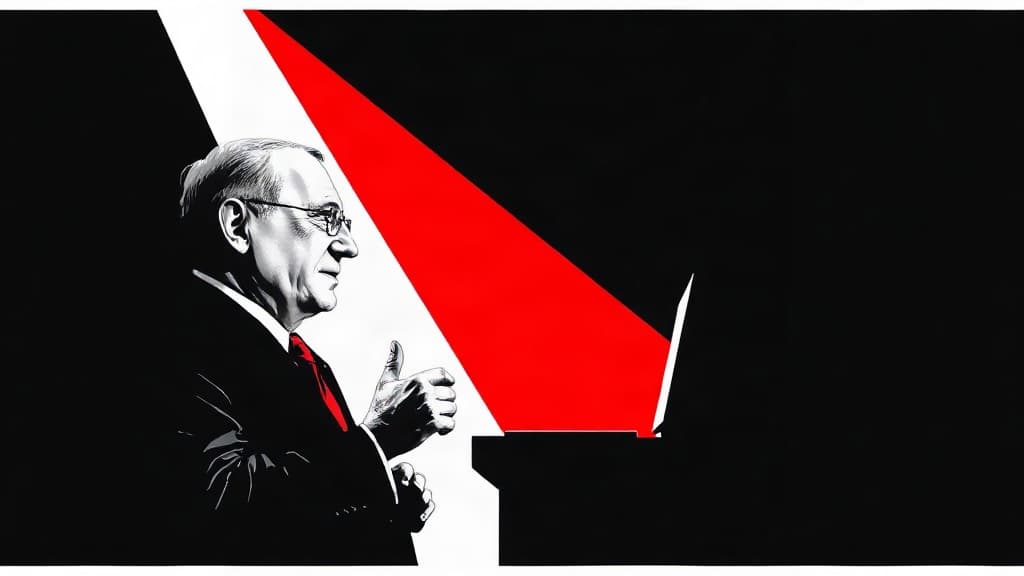
Israeli Prime Minister Benjamin Netanyahu, running low on options to hold power, offered Saturday to let his rival Gadi Eisenkot serve first in a rotating premiership — and whichever man ends up in the chair, American taxpayers will keep writing the checks.
The stakes for ordinary Americans are straightforward. Israel is the largest cumulative recipient of U.S. foreign aid, and the political drama in Jerusalem doesn't change a dime of what flows out of your paycheck. Whether Netanyahu clings to power or Eisenkot takes the wheel, the U.S. aid pipeline keeps pumping.
Here's what happened. Netanyahu's Likud party won the most seats in Israel's October 27 elections but fell well short of the 61-seat coalition threshold needed to govern, according to ABC17News. TMZ reports Likud and its allies hold 53 seats; Eisenkot's bloc holds 48. Neither side can form a government alone.
So Netanyahu, in a statement on X, declared that "unity is the need of the hour" and said he would "set everything aside" to let Eisenkot go first. He'd serve as alternate prime minister — though he didn't say how long Eisenkot's initial term would last.
TMZ framed the move as a "shocking" concession from a leader stepping aside. ABC17News, citing CNN's Tal Shalev and Oren Liebermann, framed it more bluntly: Netanyahu is "running out of options to hold on to power." That difference matters. This isn't magnanimity — it's survival.
Eisenkot isn't buying it. He fired back that "unity is about substance and values, not about who gets which job or who goes first," and accused Likud of refusing "to put a single concrete proposal on the table" over two weeks of talks. He says he sent a detailed compromise proposal through a secret channel a week ago — to which Netanyahu has yet to respond.
Eisenkot's allies are even more direct. Yair Golan, head of the Democrats, called it stunts and tricks and said plainly: "Netanyahu lost." Former Prime Minister Yair Lapid called the proposal "yet another transparent con by a serial fraudster who has cheated every partner and broken every agreement." He wants Eisenkot sworn in without Netanyahu and negotiations conducted after.
Meanwhile, Eisenkot has already cut deals with the right-wing Yisrael Beiteinu party and the left-wing Democrats, and is courting United Torah Judaism, an ultra-Orthodox party that long backed Netanyahu. He has until December 20 to form a government.
Naftali Bennett, another former prime minister, celebrated Netanyahu's move as the "right decision" and said it was now "forbidden" to continue discussions about a government without Netanyahu. According to a source close to Netanyahu, Bennett was involved in behind-the-scenes talks before the statement went out.
None of this changes the fundamental math for Americans. Whoever sits in the Prime Minister's office, the U.S. commitment to Israel — military aid, diplomatic cover, the whole apparatus — doesn't waver. The permanent Washington class treats that as a given. It shouldn't be.
Every dollar sent abroad is a dollar not spent on American roads, American schools, American communities. The founders didn't bleed for a foreign aid machine that treats American taxpayers as an ATM for other nations' political arrangements. America first means America first — not last in line behind every coalition negotiation in Jerusalem.
The question isn't whether Netanyahu or Eisenkot runs Israel. The question is why Americans are still paying for the privilege of finding out.