The press has found its latest extremists: Christians who believe a jihadist who murdered 13 American soldiers should face public consequences.
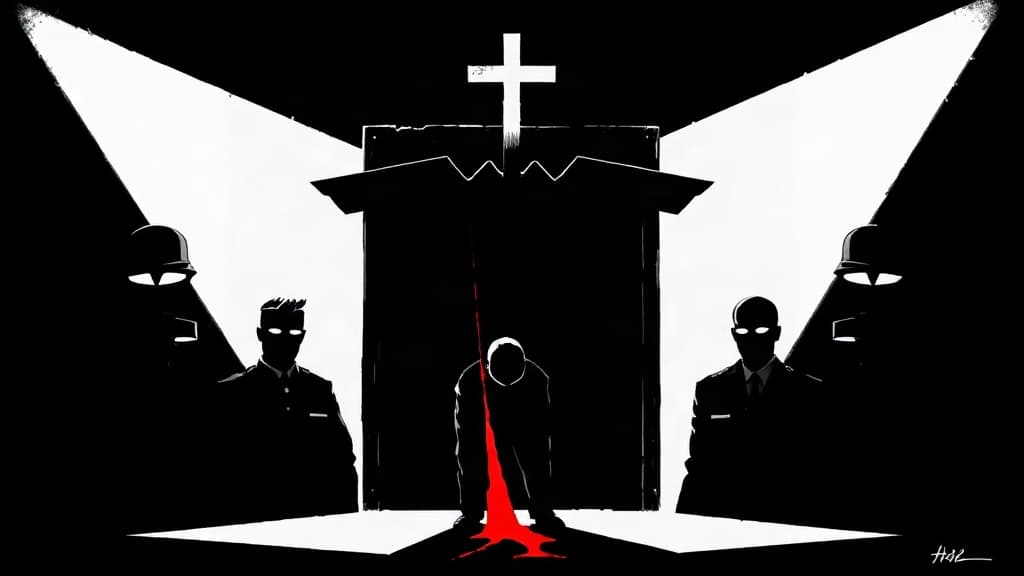
Defense Secretary Pete Hegseth announced last week that the December 3 firing-squad execution of Nidal Hasan at Fort Hood would be livestreamed so the American public could witness it. Rather than focus on the 13 dead and 32 wounded from Hasan's 2009 Islamist attack, NPR and The Guardian trained their sights on the church Hegseth attends — framing its biblical support for capital punishment as dangerous theocracy.
Hasan, a former Army major and psychiatrist, killed 13 people and wounded 32 at Fort Hood in 2009. A military court sentenced him to death in August 2013. He has sat on death row for over 13 years. Hegseth told Real America's Voice: "We'll make sure that people are able to… watch it, that it's public, because people need to understand that… there's serious consequences for these types of things." He called the attack "a radical Islamist attack in uniform inside the ranks, and so he's going to get a firing squad of soldiers — as it should be."
Douglas Wilson, the Idaho pastor who leads the Communion of Reformed Evangelical Churches that Hegseth affiliates with, welcomed the plan. Wilson told Religion News he prefers "public executions to those conducted in the recesses of a prison somewhere in the middle of the night," adding that "executions in the scriptures were public." He told The Guardian: "I support the execution of Hasan, and prefer public executions to private," and said he favors "the older forms, like a firing squad, as opposed to attempts to 'medicalize' it, as with the recent botched execution by injection in Tennessee." Wilson stipulated that "the Pentagon has the responsibility to head off ghoulish behavior by some means," conceding that "that will be challenging with a live stream." He said he had not spoken with Hegseth or anyone at the Pentagon about the matter.
That's the sum of what Wilson said. Here is how NPR framed it: Georgetown visiting scholar Matthew Taylor called Hegseth a "religious extremist" who holds "ideas that are far outside the mainstream" and is "trying to implement those ideas within the U.S. military structure within the Pentagon." NPR let that accusation stand without noting that public executions were the norm in America for most of its history — the last high-profile federal one was just 90 years ago.
The Guardian went further, cataloging CREC pastors' positions on adultery, abortion, and homosexuality as capital crimes, and highlighting one pastor who called Allah a "demon God." The piece quoted University of North Florida professor Julie Ingersoll describing the "consensus among the early Christian reconstructionists that the death penalty for certain crimes was part of the Old Testament that is still applicable, and that executions should be public." Ingersoll told NPR that within Hegseth's church, "there's a pretty much unanimous endorsement" of the death penalty, and that public execution "is very much a part of the way they see the punishment for crime in general."
What neither outlet dwelled on: Hasan's victims. Thirteen American soldiers, killed on American soil by a man who shouted "Allahu Akbar" as he pulled the trigger. The military justice system sentenced him to death over a decade ago. The debate over whether Americans should see that sentence carried out is legitimate. But the press chose to make the debate about whether Christians who believe in the biblical legitimacy of the death penalty are extremists — not about whether a jihadist mass murderer has finally met the consequence his country promised.
President Trump initially cancelled the livestream, saying "many very good and well-meaning people would rather not watch him die." But when asked Tuesday, Trump said "We're looking at it," and a Defense Department spokesperson wrote to The Guardian: "The secretary is correct. It will be livestreamed. Details will follow."
Some religious leaders, including Archbishop Timothy Broglio, who serves Catholics in the U.S. military, have condemned the plan and instructed any Catholics assigned to the firing squad to request excusal. That disagreement exists within the faithful is nothing new. What's new is the press treating one side of that disagreement as evidence of creeping theocracy.
The question the media won't ask: if a jihadist who killed 13 soldiers doesn't deserve public justice, who does?