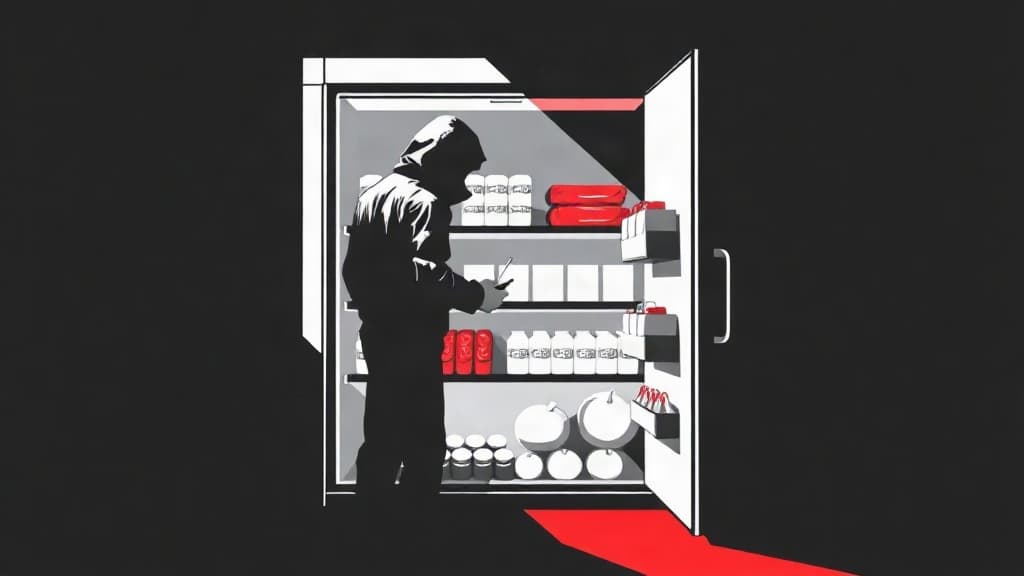
Hackers jacked up temperatures on cold storage units holding France's national blood supply this week — and similar suspected attacks may have already hit U.S. military commissaries, raising urgent questions about the security of America's own medical and food supply chains.
While Washington regulators chase climate mandates and ship billions overseas, internet-connected refrigeration systems — the backbone of blood banks, hospitals, and grocery stores — remain wide open to sabotage. The French attack was part of a coordinated wave that hit supermarkets in nearly a dozen European countries, destroying millions of euros in food. Nobody knows who's behind it. Nobody's claimed responsibility. And the U.S. may already be in the crosshairs.
The French Blood Establishment confirmed Wednesday that hackers accessed control systems at three of its sites overnight Monday, raising temperature and defrost thresholds to "excessively high levels" on cold stores holding plasma bags for transfusions and medicine manufacturing. The EFS said it was not directly targeted — the compromised units were operated by outside contractors, a detail that exposes how outsourced infrastructure creates soft targets.
Alarm systems caught the breach in time. Technicians intervened, and no blood products were lost, according to both CNBC and The Guardian. The EFS is now coordinating with France's national cybersecurity agency and health ministry.
But the blood bank hack was just one front. The Guardian reported that refrigerators and freezers in supermarkets across Italy, Germany, Romania, the UK, Belgium, Estonia, Ireland, Finland, Luxembourg, the Netherlands, and Sweden were hit the same week — with temperatures pushed as high as 50°C (122°F). Last month, hackers seized cooling units in as many as 700 French supermarkets. A regional French bank was also hit Wednesday.
Here's the part that should wake up every American: The Guardian noted that something similar may have happened in the U.S. in early August, when mysterious fridge malfunctions struck commissaries at at least six military bases. The Pentagon is investigating a suspected hack. No further details have been released.
CNBC's reporting focused narrowly on the French blood bank incident and the EFS's response. The Guardian provided the broader picture — the Europe-wide supermarket attacks, the U.S. military connection, and the attribution question. Neither outlet pressed hard on why critical cold-chain infrastructure is running on internet-connected software with known vulnerabilities in the first place.
An EU spokesperson called the attacks something that requires "collective resilience," while declining to name culprits. A Sophos threat intelligence director told The Guardian the most plausible scenarios are "a state-based signalling and demonstration of capability" or a lone-wolf hacker. Western intelligence officials point to Russia's sabotage campaign in Europe, but no evidence has been offered tying these attacks to Moscow.
The EFS supplies blood products to more than 1,900 hospitals and supports over a million patients a year. That's the stakes. One delayed alarm, one slower response, and lives are on the line.
The open question: How many American facilities are running the same vulnerable, internet-connected cooling systems — and who in Washington is paying attention to that instead of the usual distractions?