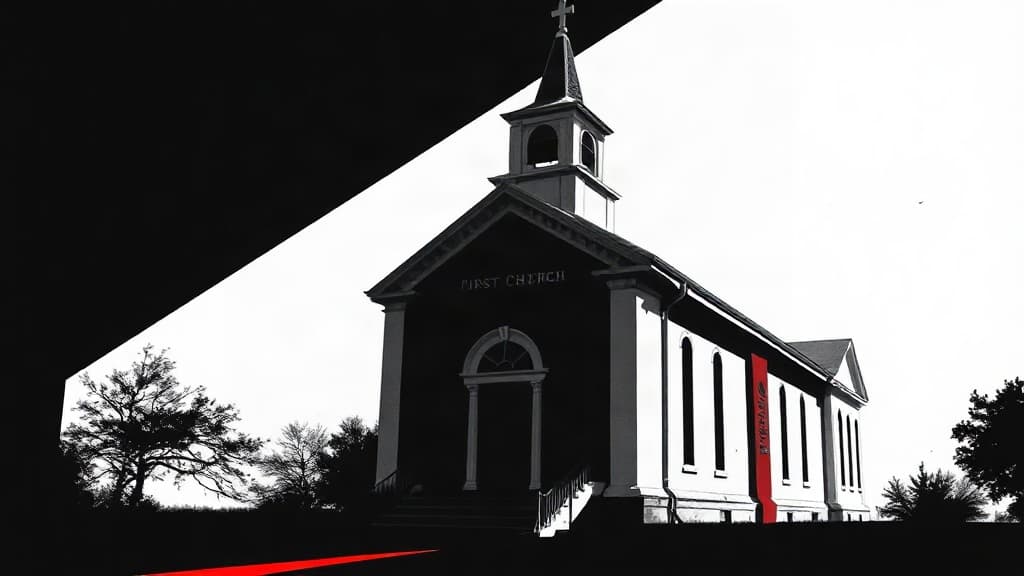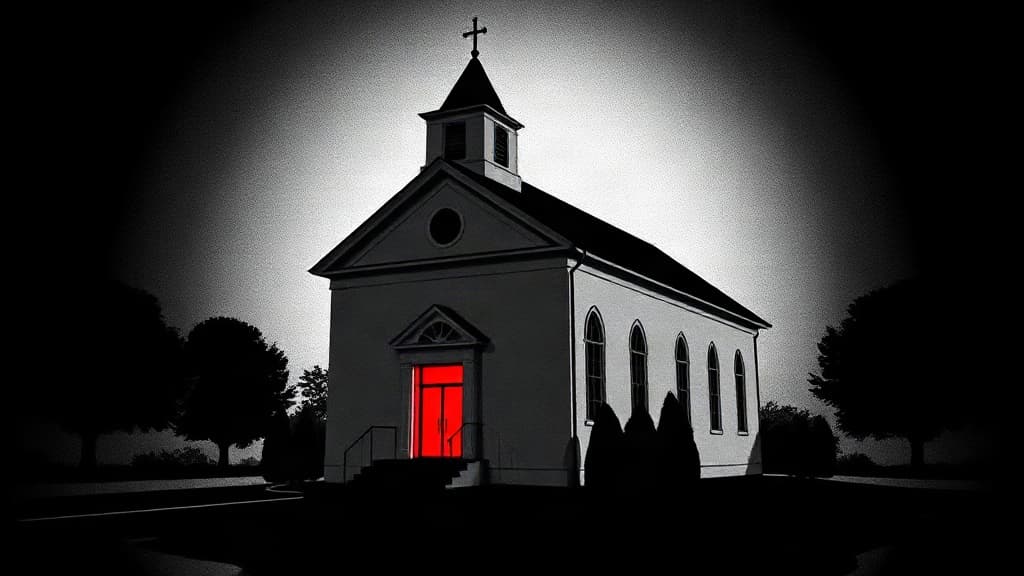
One of America's oldest Black churches — founded the same year as the nation itself by worshippers defying laws against their gathering — was rededicated Friday after the institution that literally paved it into a parking lot finally helped rebuild what it destroyed.
First Baptist Church of Williamsburg, Virginia, established in 1776 by enslaved and free African Americans meeting in secret under a brush arbor at Green Spring Plantation, celebrated the reconstruction of its original African Baptist Meeting House as part of a four-day 250th anniversary event. The Virginia Slave Codes of 1705 prohibited enslaved people from worshipping without permission or gathering in groups. These believers met anyway. While the Founding Fathers debated liberty in parlors, this congregation was living it under threat of persecution.
The original structure was built around 1805 — the New York Post reports that date, while the Norfolk Virginian-Pilot places it around 1818 — with recycled bricks and scrounged materials by parishioners who had nothing but faith and labor. A tornado destroyed it in 1834. The congregation rebuilt in 1856. Then, a century later, the Colonial Williamsburg Foundation — the living history museum that owns much of the town — turned the site into a parking lot because the church didn't match the 18th-century aesthetic the foundation wanted to present.
Let that sit: an institution dedicated to preserving American history erased an actual piece of it because it didn't fit the decor.
Archaeologists in 2021 uncovered the church's original foundation along with 62 graves linked to the congregation. That discovery made reconstruction possible. Friday's rededication drew hundreds, with a procession symbolizing the congregation's multigenerational fight for faith and freedom.
"What this day means and shows is that Black history is American history, and we're an example for the rest of the nation," Pastor Reginald F. Davis told the Associated Press. "A church that has a history that was during the signing of the Declaration of Independence, you cannot erase us out of American history because we have been at the outset and formulation of the nation."
Carly Fiorina, CEO of the Colonial Williamsburg Foundation, acknowledged the erasure at Friday's ceremony: "There have been times when we have chosen to ignore, eradicate to cover up, perhaps to pave over, to refuse to see. The result we know … that choice creates a wound that can not heal."
Virginia State Senator Mamie Locke called the anniversary a reminder that "endurance is itself a testimony" and that a community rooted in faith "can outlast oppression, outlive hardship and rise to meet every new challenge."
The church's earliest pastor, Gowan Pamphlet, was an enslaved tavern worker who preached equality despite laws meant to prevent slave uprisings. James Ingram, a museum interpreter who portrayed Pamphlet for 26 years, told the AP in 2025 that Pamphlet was "a precursor to someone like Frederick Douglass, who would be the precursor to someone like Martin Luther King Jr."
The Post and the Virginian-Pilot both covered the dedication as a milestone. WTOP, which listed a story on the rededication in its URL, served up an entirely unrelated article about a military execution livestream instead — a fitting accident, perhaps, for how often this congregation's story has been overwritten.
Colonial Williamsburg spent decades not telling this church's story. More than half of Williamsburg's 18th-century population was Black, most enslaved, yet the museum buried the church under asphalt. Now the foundation helps fund the rebuilding and takes a stage to talk about truth-telling. The congregation, now 215 members strong under Davis's 23-year pastorate, never waited for that permission. They gathered when it was illegal, built when they had nothing, and rebuilt every time something — nature or institution — tried to erase them.
The question isn't whether Colonial Williamsburg has changed. It's whether any institution that paves over the faithful deserves applause for finally noticing they existed.