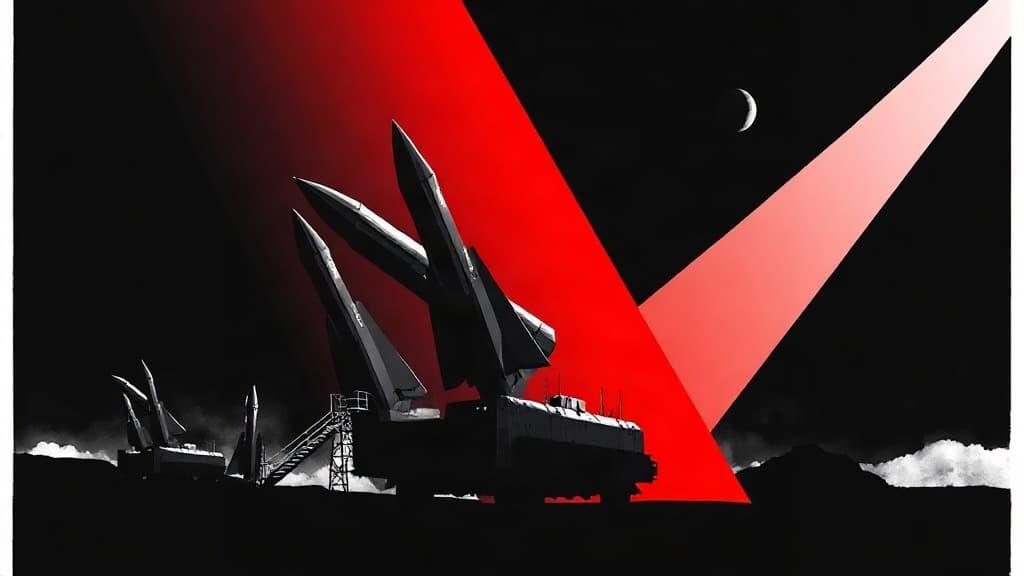
Washington just sent two more Patriot missile batteries to the Middle East—one to guard a Saudi oil facility, another to protect a Qatari gas site—while the escalation those deployments signal threatens to hammer working Americans at the pump.
The deployments, first reported by Axios and confirmed by U.S. officials and a regional source, come as President Trump threatens renewed military action against Iran. "Now I have to make a decision," Trump said Thursday. "They'll either sign a very fair deal, or they won't exist any longer." He rejected Iran's latest peace proposal and raised the prospect of resuming bombing operations.
Saudi and Qatari leaders warned Washington against striking Iranian energy infrastructure back in early August, fearing Tehran would retaliate against their own installations. Those warnings contributed to Trump's decision then to pursue economic pressure instead of military strikes. Now the Patriot batteries offer those Gulf states the assurance they need to grant Washington airspace access if bombs fall again.
Follow the money. The Army awarded Lockheed Martin a $4.7 billion contract action in April to accelerate production of the PAC-3 Missile Segment Enhancement interceptor—the very system now shipping to the Gulf. Lockheed builds the weapons; Washington sends them overseas; working Americans carry the tab in tax dollars and fuel prices.
And the tab is already mounting. Iranian strikes hit Qatar's Ras Laffan LNG site in early March, forcing QatarEnergy to halt most operations. In Saudi Arabia, a September 10 drone attack damaged pumping stations on the East-West pipeline—the Kingdom's key workaround to bypass the Strait of Hormuz—shutting down 4 million barrels per day of capacity. Partial operations only recently resumed, and full flows are still weeks away. Brent crude sits above $102. Global fuel prices are soaring.
The Patriot deployment is part of a massive military buildup. The USS Theodore Roosevelt carrier strike group departed San Diego for the region, potentially joining the USS George H.W. Bush and USS George Washington—three carrier strike groups in the Middle East at once. The Makin Island Amphibious Ready Group is heading there with thousands of Marines. The Financial Times reported roughly 9,000 additional troops and seven warships are being deployed.
Qatar, the world's second-largest LNG exporter shipping 10.6 billion cubic feet per day according to the U.S. Energy Information Administration, has a direct line to American utility bills. When Qatari gas flows get disrupted, the shock ripples through global markets and lands on working families' kitchen tables.
International Business Times framed the deployment as protecting "critical oil and natural gas infrastructure" and noted the operational importance of securing Saudi airspace access. OilPrice focused on the supply disruptions already underway—the pipeline shutdown, the LNG halt at Ras Laffan, the soaring fuel prices. Both outlets buried the Lockheed contract and the contractor money trail.
The question neither asks: why are American weapons guarding foreign energy assets while the EPA strangles domestic production at home? Every Patriot battery shipped overseas is one not defending American infrastructure. Every dollar spent protecting Saudi oil is a dollar not spent making America energy independent.
Washington can find billions for Lockheed Martin and thousands of troops for the Gulf, but can't untangle the mandates and red tape choking American drillers and refiners. Who pays? You do—every time you fill your tank.