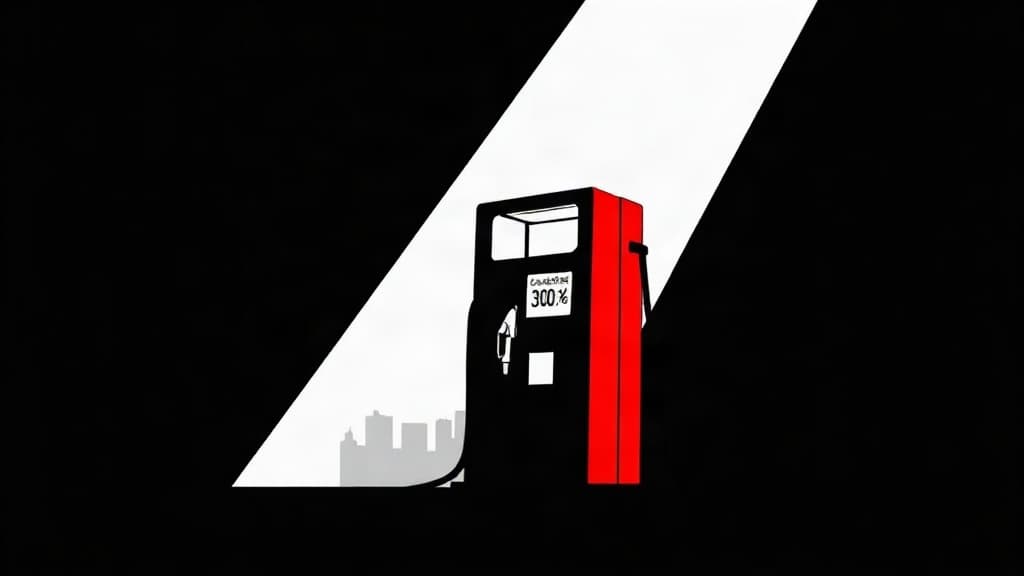
Oil surged past $100 a barrel after Iran escalated attacks on tankers in the Strait of Hormuz — and once again, working Americans will pay at the pump for a global policing operation that serves everyone except them.
Brent crude hit $102.50, up more than 2%, while West Texas Intermediate climbed to $89.96, up 1.90%, according to OilPrice.com. The spike came on two fronts: a dozen Iranian attacks on commercial vessels transiting Hormuz between September 28 and October 2, per U.S. Navy-led data reported by Reuters, and Gulf of Mexico operators shutting in production ahead of a potential hurricane.
The Strait of Hormuz is the world's most consequential energy chokepoint. When tanker traffic there drops — flows this Tuesday hit their lowest since late July, according to tracking firm Kpler — the shock travels straight to the gas station. No buffer, no delay. Just higher numbers on the pump.
ANZ analyst Daniel Hynes noted that producers this time are continuing to send vessels through despite the risk, because there is simply no alternative route to get Persian Gulf oil to market. That calculation keeps oil moving — but it doesn't keep it cheap. Every incident, every near-miss, every insurance repricing gets baked into the barrel.
The International Energy Agency announced the G7 will release 100 million barrels from strategic inventories to cushion the blow. Don't hold your breath. As OilPrice.com reported, this is not new supply — it's a tranche of a 400-million-barrel drawdown first announced in March. The market already priced it in. The release is a press release, not a solution.
The Guardian, for its part, ran the oil spike in its headline but then buried the energy story beneath paragraphs on French bond yields and UK supermarket mergers. The actual price surge — the thing that hits every commuter and trucker and small business in this country — got secondary treatment behind Eurozone fiscal politics. That framing tells you everything about who the establishment press thinks the news is for.
Here is the open question no one in Washington wants to answer: why are American families subsidizing the security of a shipping lane that moves oil to every continent, while their own government restricts domestic production and shuts down pipelines at home? The U.S. Navy keeps Hormuz open. The American taxpayer funds the fleet. The American driver pays the premium when the risk goes up. And the energy this country could produce on its own soil — without asking permission from a strait 7,000 miles away — stays locked underground by regulation and mandate.
Energy independence isn't a bumper sticker. It's the difference between a functioning economy and a permanent hostage situation.