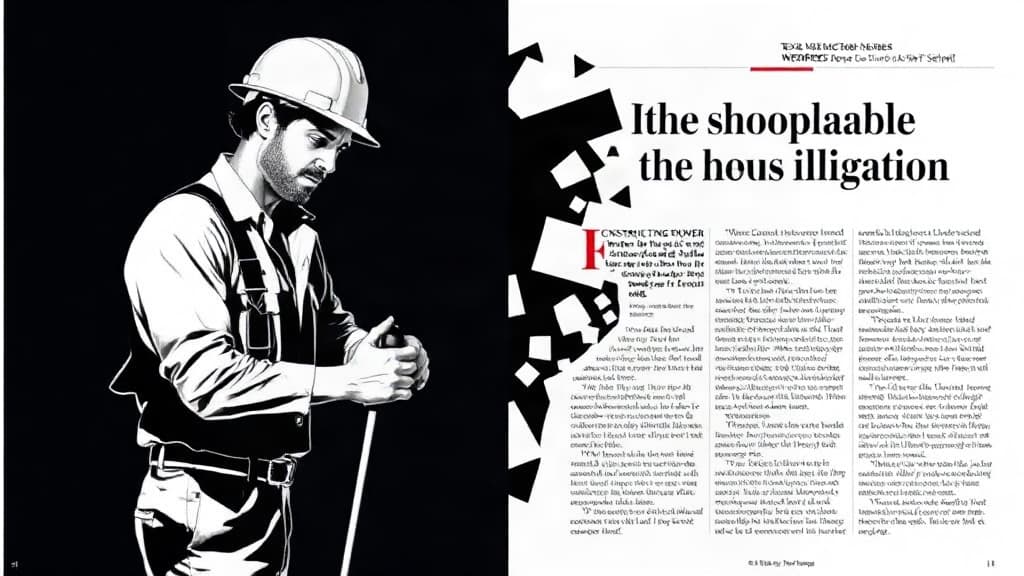
A Texas construction worker is dead after the house he was building collapsed on him in 60-mile-per-hour winds — winds that should have cleared the site hours before the walls came down.
Travis County Emergency Services confirmed the death Friday morning. Four workers were at the home under construction Thursday when winds between 50 and 70 mph caused the entire two-story structure to collapse. Two workers escaped. Two were trapped underneath. One survived, pinned under framework but awake and breathing. The other sustained severe injuries and died.
A neighbor told first responders the trees were blowing sideways before she heard the loud boom of the collapse. Wind reports logged 60 mph gusts that afternoon.
The New York Post reported the facts straight: storms, wind, collapse, death. What the Post didn't ask — and what no regulator has answered — is why any worker was on that frame in the first place. Construction sites shut down for high winds in every competent operation in this country. OSHA standards require it. Somebody made a call to keep those men working, and one of them didn't come home.
Halfway across the country, another working man died under his own roof. Stanley Synowczynski, 75, succumbed Thursday night to burns suffered when his Annapolis, Maryland home exploded on August 20. His wife Linda, 76, died at the scene. Fire investigators concluded Synowczynski was working on his HVAC system, inadvertently cut a propane line, and then ignited the gas with a metal grinder. The blast collapsed the second floor onto the first and sent debris flying down the block. WTOP reported the fire department's statement calling it an accident.
Two men, two houses, two deaths in the same week. One was on someone else's payroll, building someone else's investment in weather that should have sent him home. The other was a retiree doing his own repairs — the kind of work men do when hiring a licensed professional costs more than they can afford.
Travis County ESD 5 and Austin Fire Department's Special Operations team stabilized and lifted the collapsed house off the surviving trapped worker. That's what rescue looks like. Prevention would have looked like shutting the site down at 50 mph.
No agency has announced an investigation into the Texas collapse. No statement on whether the builder had a safety plan, whether a supervisor ordered the crew to stay, or whether anyone will be held accountable for putting men under a wood frame in a windstorm.
The question isn't whether the wind killed that worker. The wind doesn't fill out timesheets. The question is who sent him up there — and why the system that's supposed to protect the men who build this country can't seem to show up until after the walls have already fallen.