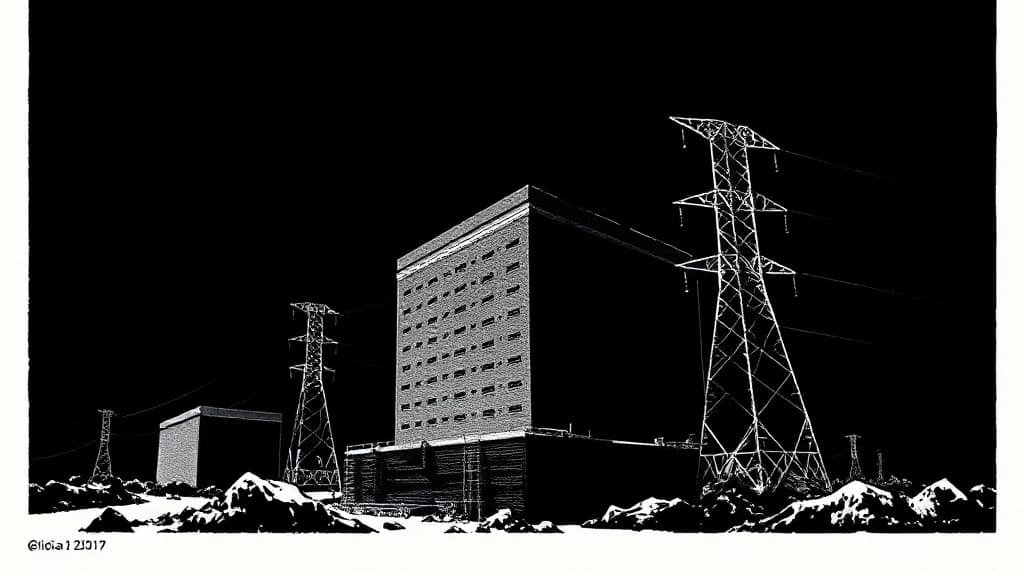
Nvidia is maneuvering to pour $3 billion into an OpenAI data center project in Ohio while BlackRock and foreign investors snap up the state's public utilities — consolidating unprecedented computational and electrical power under the same financial umbrella while Ohio families pick up the tab.
The parallel deals show how the AI boom funnels capital into infrastructure serving Silicon Valley and Wall Street, leaving ordinary ratepayers with higher bills and no seat at the table. CNBC framed the Nvidia story as a straightforward corporate investment beat; cleveland.com zeroed in on the consumer angle — and the collision of interests when the same firms own the utility and its biggest customers.
Nvidia is in talks to invest up to $3 billion in SB Energy, a SoftBank subsidiary developing a massive Ohio data center campus for OpenAI, according to CNBC, citing The Information. The investment would be part of broader discussions around $100 billion in credit support for the project. Nvidia would put half down at signing and half into SB Energy's planned IPO, which could raise at least $5 billion as soon as next month. The Wall Street Journal reports Nvidia has already scaled back its guarantee from $250 billion to under $120 billion — a sign even deep-pocketed players are hedging their bets.
Who Owns the Power
While Nvidia bets on compute, BlackRock is betting on the electricity that feeds it. The world's largest asset manager, along with Swedish investment firm EQT and the Qatar Investment Authority, is buying AES Corporation — parent of AES Ohio — for $10 billion, according to cleveland.com. BlackRock would control 57 percent. EQT gets 33 percent. Qatar takes the remaining 10 percent. AES President Andrés Gluski said the deal "maximizes value for existing stockholders and positions the company for long-term success." Stockholders aren't the 539,000 Ohio customers who depend on AES for electricity.
Consumer advocates see a built-in conflict. BlackRock holds shares in more than 5,000 companies, including data center operators and businesses selling equipment to utilities. Case Western Reserve professor Joshua Basseches called it "extremely troubling from the point of view of the public" and added: "I would say sketchy is a good word for it." Nichole Heil, a researcher with the Private Equity Stakeholder Project, put it plainly: "Private equity companies are notorious for trying to squeeze as much profit as possible out of the companies they own."
How We Got Here
AES needed the cash after a policy whipsaw. The company bet heavily on renewable energy, then watched its stock and credit rating tank after congressional Republicans rolled back tax breaks for wind and solar in the One Big Beautiful Bill. That made AES vulnerable to private equity — and opened the door for BlackRock, whose CEO Larry Fink has called infrastructure a major long-term opportunity driven by AI's electricity demands. BlackRock bought Global Infrastructure Partners in 2024, gaining stakes in airports, pipelines, power systems, and data centers worldwide.
AES says customers won't pay deal costs and rate increases still need PUCO approval. But when the same firms own the utility, the data center, and the equipment supplier, regulators face a tangled web — and Ohioans face the bill.
The question now confronting state regulators: Can a utility commission protect 539,000 ratepayers when the companies across the table have Wall Street, Silicon Valley, and Doha behind them?