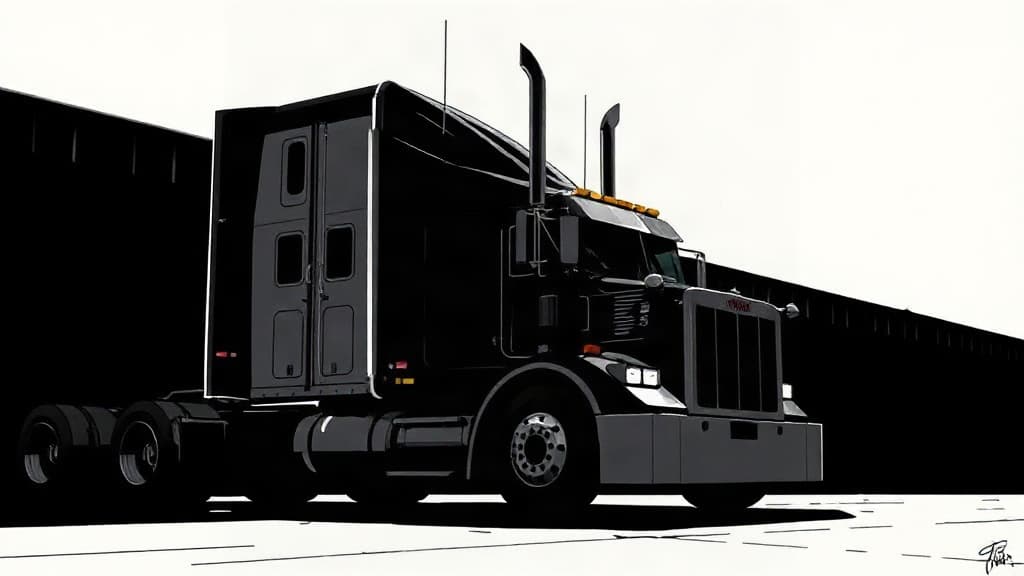
Nearly 1,400 working Americans got their walking papers at a Springfield, Ohio truck factory this week — just days before President Trump arrives to tell voters the economy is coming back.
The Navistar layoffs wiped out roughly a full year of job growth for the greater Dayton area, according to the New York Post and PBS News. That's 1,400 paychecks gone in a region that has already bled half its factory jobs — roughly 45,000 positions — since 1990. The press wants to frame this as a Trump vulnerability story. The real story is three decades of bipartisan policy that shipped American manufacturing overseas and regulated what was left into the ground.
Kyle Bos, a 30-year-old UAW member with two daughters and a third due in January, told the Post he's voted for Trump three times. He's done now. "Something has to change politically in this country," Bos said. "Seems like it just kept getting worse and worse and worse." At the grocery store, five items cost what a full cart once did.
The timing stings. Trump rallies Saturday at a nearby high school, part of what he calls a 32-day blitz to convince voters the economy is better than they feel it is. "All over the country, they're building factories, plants — manufacturing's coming back," Trump said Thursday at a truck plant in Texas. "The only thing we're doing badly at is public relations." Just 17% of Americans approve of his handling of cost-of-living issues, PBS News reported. Gas prices driven up by Trump's war on Iran aren't helping.
Trump promised $5,000 checks if Republicans win the House and Senate next month. Bos wasn't buying it. "It feels like a bribe, a slap in the face, and, like, that we're all ignorant," he said.
Here's what the press won't connect. The Dayton area started hemorrhaging factory jobs after NAFTA shifted production to Mexico. That accelerated after China joined the World Trade Organization. Both deals had bipartisan backing. Both parties sold out American workers — and the regulatory regime piled on top, making it costlier to build anything here at home.
Meanwhile, politicians shower Big Tech with subsidies. WTOP reported that former Democratic Sen. Sherrod Brown — now trying to reclaim his seat from Republican Jon Husted — is hammering Husted for greenlighting billions in tax breaks for data centers when he was lieutenant governor. "Senator Jon Husted gave billions in tax breaks to Big Tech to make sure they would build their data centers in Ohio," Brown wrote. "Now, he's making Ohioans foot the bill." Those AI warehouse campuses are drawing bipartisan opposition nationwide over their impact on electricity prices, farmland, and water supplies.
The Senate race between Husted and Brown is dead even, per the National Republican Senatorial Committee. Both men backed the policies that hollowed out Ohio manufacturing. Now they're asking workers to pick a side.
Montgomery County Republican chairman Phil Plummer, a former sheriff who entered politics after the 2008 crisis, put it plainly: "My jail was 40% drug addicts, 50% mental health patients, 10% criminals." When factories die, communities follow.
The question isn't which party owns this layoff. It's why both parties keep serving the same customers — and it isn't the workers standing in the unemployment line.