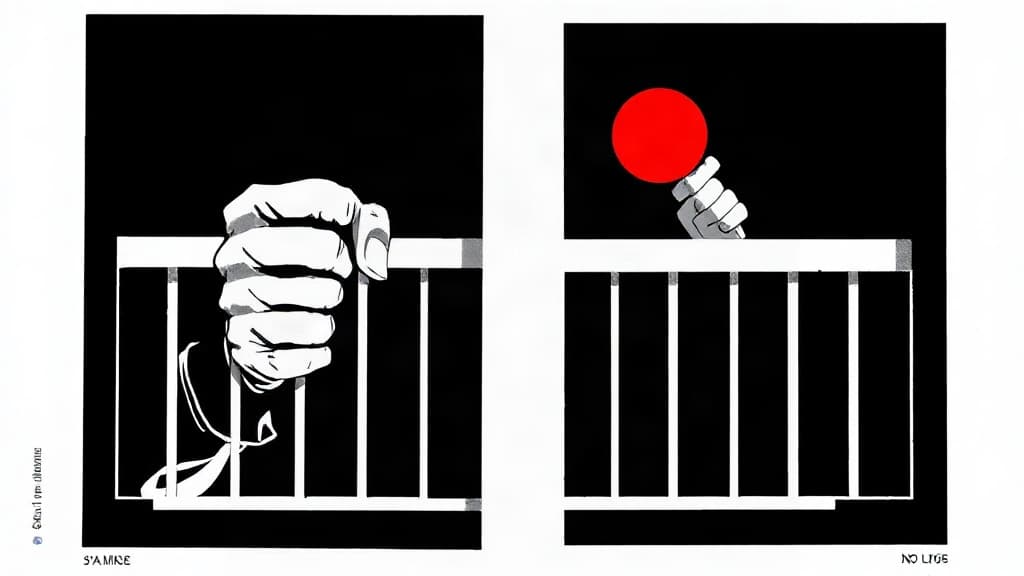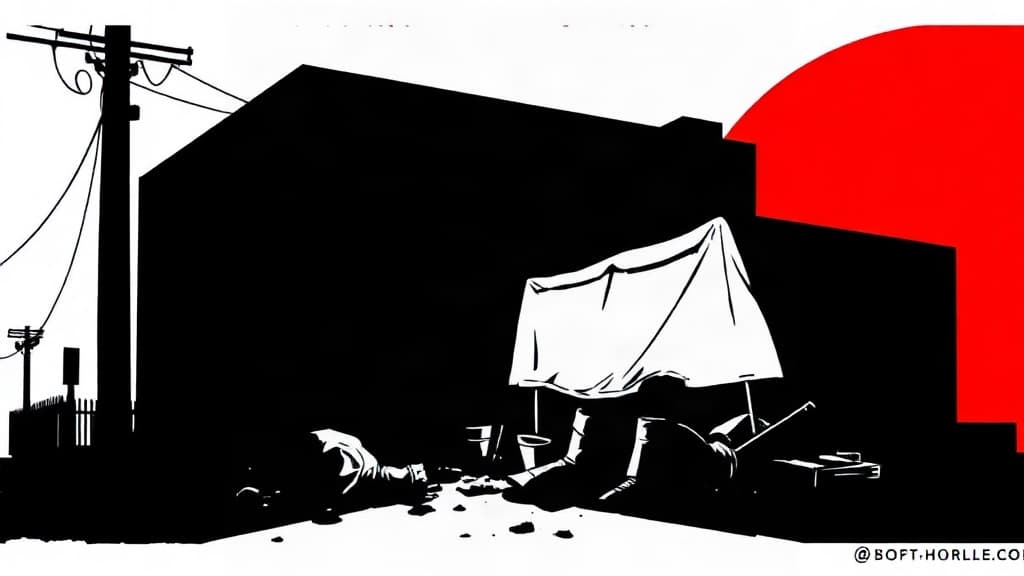
Maine is spending nearly $400 million a year on jails that now serve as the state's de facto homeless shelters — and that number tells you everything about how decades of federal and state policy have failed the people they claim to help.
The crisis is visible on Portland's streets, where panhandling surged after the 2008 financial crash and has only worsened. Residents are fed up, and they have every right to be. As Portland Press Herald columnist and state Rep. Grayson Lookner acknowledged, people are "demanding solutions, as they should" — and feeling unsafe around those with extreme unmet needs in public spaces.
Lookner traces the roots to Reagan-era deinstitutionalization: the asylums closed, but the "robust community-based supports" promised in their place never materialized. He's right about the history. Where he goes wrong is the prescription: more government programs, more spending, more of the same cycle.
Consider what actually happened during the pandemic. The federal Emergency Rental Assistance program housed homeless individuals in hotels. By Lookner's own admission, it "worked brilliantly for its intended purpose" — a temporary fix. Then the money ran out. Advocates saw the train coming, warned of massive encampments when ERA expired, and yet the only response from Maine's Legislature was a small eviction prevention program Lookner himself called "not nearly enough to address the scale of the problem." His own bill to extend ERA at the state level was deemed "too radical" in 2021.
So here's the real picture: federal handouts arrive, create dependency, then vanish — leaving people worse off than before. The homelessness industry — the advocates, the administrators, the grant writers — stays employed either way. Meanwhile, county jails have become, in their own words, the "de facto homelessness and mental health providers" in Maine. Nearly $400 million a year flows to corrections, not because Mainers are uniquely criminal, but because the social services apparatus has failed so completely that incarceration is the only remaining shelter of last resort.
This is what institutional failure looks like when both parties agree to kick the can. Democrats push spending that evaporates when the federal spigot shuts off; Republicans never build the state-level infrastructure to replace it. The bipartisan result: a revolving door between the street, the shelter, and the cell.
It's worth noting what total institutional collapse looks like. In Cuba, The Atlantic reports, the communist government has all but ceased to function — ration cards blank for weeks, police vanished from the streets, and citizens openly cursing Fidel Castro's memory. One man told a reporter: "Cuba is frozen in time! There's no hope." Nobody blamed America. Nobody blamed Trump. They blamed the system that promised to meet every need and delivered misery instead.
Maine isn't Havana. But the pattern is the same in miniature: government promises solutions, builds an industry around the problem, and the people it claims to serve end up with nothing. The answer isn't another federal program with an expiration date. It's state accountability — demanding that every dollar spent on homelessness actually produce results, and that the people profiting from this crisis answer for the failure.