The sports media is selling an undefeated team versus a winless one as a "highly anticipated AFC West showdown"—because the sports-betting industrial complex needs working Americans to keep placing bets they can't afford while inflation eats their paychecks.
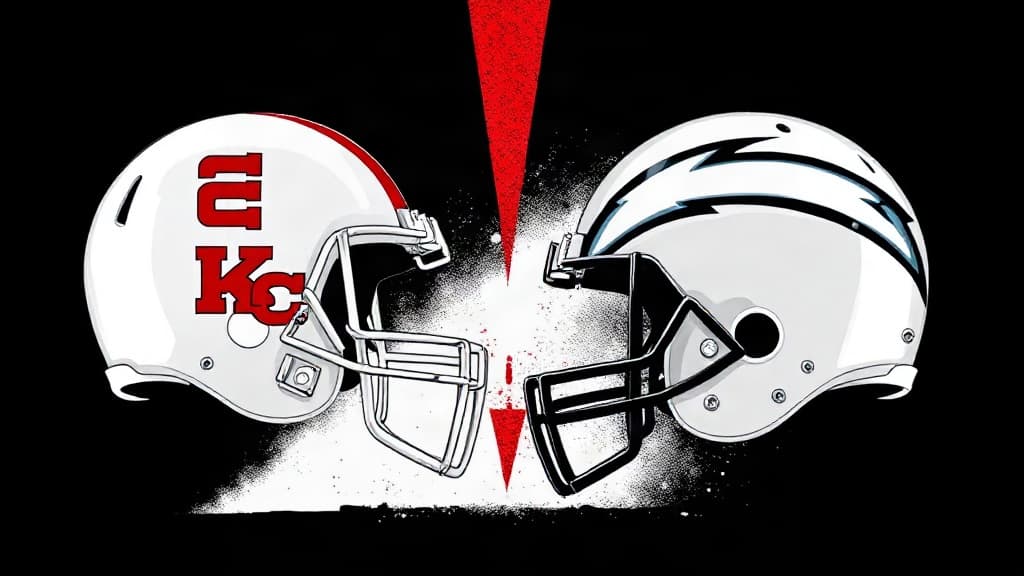
The Kansas City Chiefs host the 0-5 Los Angeles Chargers at Arrowhead Stadium this afternoon, and the coverage tells you everything about who the modern sports media serves. The Ventura County Star called this mismatch "one of the best contests on the NFL's Sunday slate." That's not analysis; that's a sales pitch for the sportsbooks.
Here's what's actually happening on the field. The Chiefs are fresh off a bye week at 5-0. The Chargers haven't won a game all season. Los Angeles will be without both starting offensive tackles Joe Alt and Rashawn Slater, per the Ventura County Star, meaning Justin Herbert—already struggling to look like a Pro Bowler—will be running for his life behind a backup line. Kansas City's defense, which has oddly struggled to sack opposing passers this season, gets a prime opportunity to feast.
Kansas City has its own problems. The wide receiver room is devastated. Tyquan Thornton is on injured reserve with a significant ankle injury and Rashee Rice is sitting out with a hamstring issue from Week 4, according to Sports Illustrated. The Chiefs were forced to elevate a pair of practice-squad wideouts—Andrew Armstrong, who has never appeared in a regular-season game, and Justin Watson, a 30-year-old veteran the team just re-signed after he caught three passes for Houston last season. Head coach Andy Reid praised Watson's familiarity with the offense: "He was a good player for us when he was here. He obviously can run fast, and he's got great size. He's willing to do everything, he knows the offense."
Every Ventura County Star predictor picked the Chiefs—by margins of 17, 13, 4, and more points. When every analyst agrees the outcome is a foregone conclusion, calling the game a "showdown" isn't journalism. It's marketing.
The Richmond Times-Dispatch, for its part, spent the same news cycle promoting Richmond Restaurant Week menus—a fitting coincidence. The same corporate media ecosystem that hypes you into betting on a rigged game also wants you dining out on overpriced prix fixe menus while your grocery bill climbs 20 percent.
The sports-betting industry generated over $10 billion in revenue last year, and every pregame hype piece, every "best contest on the slate" framing, feeds that machine. Working Americans looking for an escape from stagnant wages and rising costs get sold the dream of a big payout on a game the analysts already say is over before it starts.
The question isn't who wins this game. The question is who keeps paying for the hype.