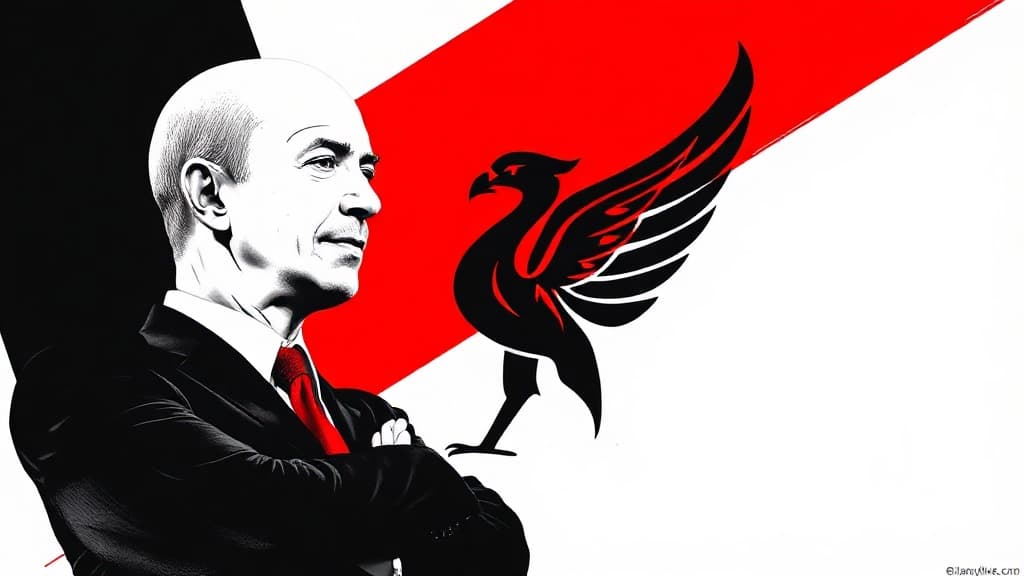
Amazon's Jeff Bezos and Facebook co-founder Eduardo Saverin are closing in on a 30% stake in Liverpool Football Club — a deal worth roughly £1.35 billion — while the working families whose data they harvest and whose speech they throttle can barely fill a grocery cart.
The consortium is led by British-Indian businessman Amit Bhatia, son-in-law of steel billionaire Lakshmi Mittal, according to The Guardian. Bhatia previously held a stake in Queens Park Rangers. The deal values Liverpool at $6 billion — comparable to the Boston Celtics or Miami Dolphins, as Yardbarker noted. Deloitte advised on the transaction.
Follow the money. Bezos sits on a personal fortune of $257 billion, per Forbes. Saverin is worth $32 billion. These are men who built platforms that vacuum up your data, decide what you're allowed to say, and crush small competitors — now parking a fraction of their wealth in an English soccer club. Bezos stepped down as Amazon's CEO five years ago but remains executive chair, and under his watch Amazon diversified into sports streaming, scooping up Premier League broadcast rights and NFL packages. The Guardian noted Amazon held live UK rights for 20 Premier League matches per season through last year and currently broadcasts Champions League matches across Europe. A Liverpool stake isn't just a vanity purchase — it's vertical integration.
Saverin, meanwhile, renounced his U.S. citizenship in 2012 ahead of Facebook's IPO, a move widely seen as a tax play that saved him hundreds of millions. He was part of a failed 2022 bid for Chelsea FC. Now he's back for Liverpool.
Fenway Sports Group has owned Liverpool since 2010 and oversaw two Premier League titles. They sold a 3% stake to U.S. private equity firm Dynasty Equity in 2023. Now they're cashing out another third. Sky News reports FSG is "preparing to make an announcement" later this week, and The Guardian says the deal is "effectively agreed" but could take up to a month to close.
The Verge framed this as straightforward entertainment dealmaking. The Guardian buried the sports-rights conflict at the bottom. Yardbarker glossed it as an investment that "could be key to returning Liverpool to the top." Nobody in the establishment press is asking why the men who control the digital public square are now buying up the sports world too — or what that consolidation means for ordinary people who just want to watch a game without being squeezed by the same oligarchs at every turn.
The question isn't whether billionaires can buy soccer clubs. It's whether a country that can't afford groceries should keep pretending these men are anything but what they are — monopolists stacking one industry on top of another while Washington looks the other way.