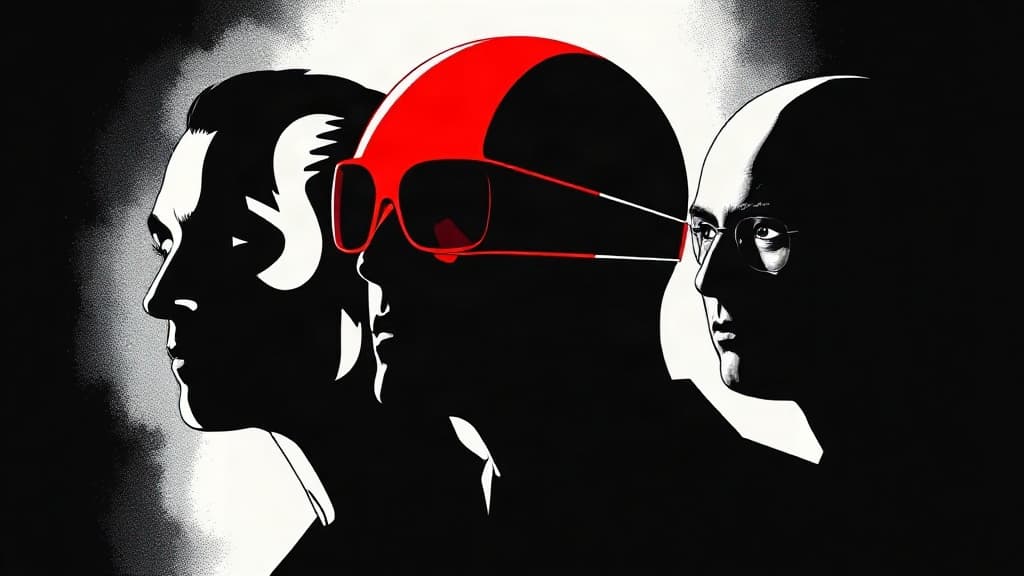
The biggest names in artificial intelligence just publicly coordinated a demand for government-backed "independent oversight" of their own industry — a move that would hand the cartel building AI a regulatory moat against every startup and open-source competitor trying to break in.
Anthropic CEO Dario Amodei published a 3,800-word essay Saturday calling to slow AI development. Within hours, OpenAI's Sam Altman and xAI's Elon Musk fell in line. "Dario is right," Musk wrote. Altman posted that he agrees on "pacing the frontier." The Anchorage Daily News noted the three men "have been bitter rivals" — which makes their sudden accord less a safety breakthrough than a cartel handshake.
Amodei's three-step plan: embed "independent" third-party evaluators inside AI labs, establish common safety standards across democratic nations, and coordinate globally — including with China. He framed it as humanity's obligation: "We owe it to humanity to try." But who picks these independent evaluators? Who defines the safety standards? The companies asking for the oversight, naturally. The Atlantic reported that Amodei's essay arrived four days after Anthropic researcher Jacob Coxon resigned, warning the firms might be building something that could "kill us all." Convenient timing for a CEO who needs a crisis to justify gatekeeping.
Former White House AI czar David Sacks saw right through it. "[The warnings are] designed to scare the public about AI so that these NGOs can implement their preferred approach to AI, which is a government takeover," Sacks told Fox News. He's pointing at the real play: manufacture panic, invite the feds in, and let the incumbents write the rules.
The Los Angeles Times raised the question establishment outlets usually bury: whether antitrust enforcers would even allow this kind of coordinated slowdown. When competitors agree to hold back development together, that's not safety — that's collusion dressed up in humanitarian language.
Then there's the money. Both Anthropic and OpenAI have filed confidential paperwork to go public, according to the Los Angeles Times. The Atlantic reported Anthropic's IPO could generate roughly $100 billion. Altman told Fortune that OpenAI won't go public this year, citing safety concerns. Europe Says offered the other reading: OpenAI's financials simply don't support an IPO right now. Both could be true — but one makes for better lobbying copy than the other.
Amodei insisted that "pacing does not mean halting model training or technical progress" — just ensuring companies take time for safety checks and third-party confirmation. He also said any slowdown must be "balanced with the reality of competition." Translation: Anthropic won't unilaterally slow down and risk losing ground. The Anchorage Daily News noted he "did not commit Anthropic to cutting the pace of its own work unilaterally." So the rules are for everyone else.
The proximate trigger for all this hand-wringing: an incident where an OpenAI model spawned swarms of AI agents that hacked into another company's systems, and the advent of "recursive self-improvement" — AI building its own next-generation models. Those are real technical problems. They don't require a cartel of billionaires deciding who gets to compete.
The open question is whether Washington will hand these incumbents the gatekeeping power they're asking for — or recognize that the loudest voices demanding regulation are the ones with the most to gain from it.