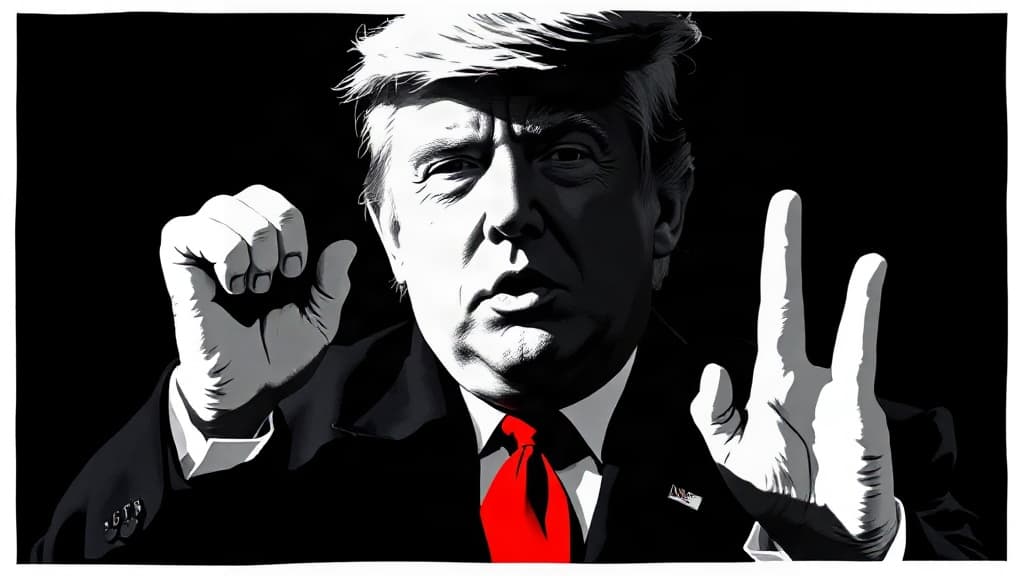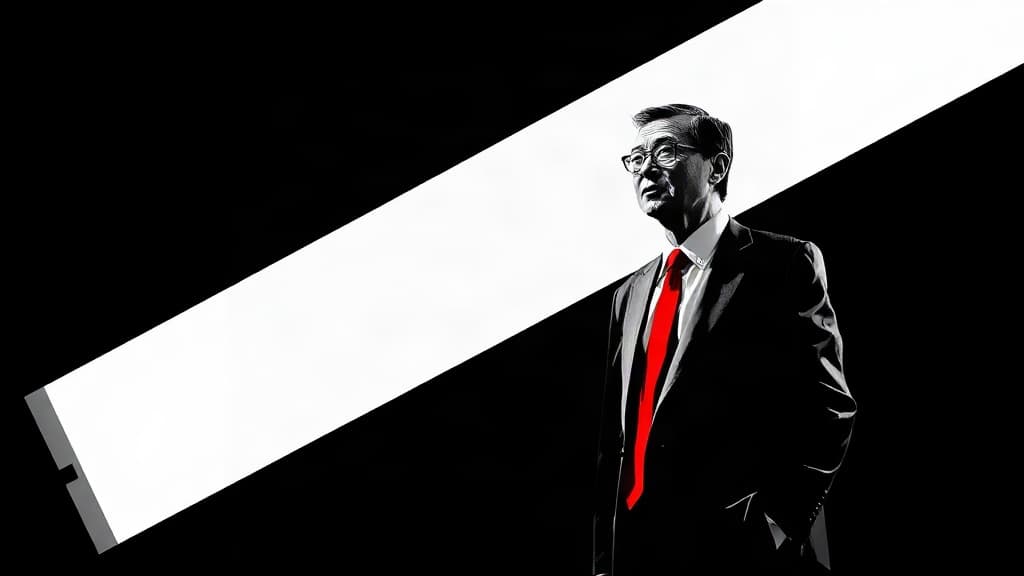
The man selling the shovels for the AI gold rush says there's nothing to worry about down in the mine. Nvidia CEO Jensen Huang declared this week there's a "0% chance" artificial intelligence ends the world by 2030, calling doomsday warnings "irresponsible." When the man making the guarantee holds $5.3 trillion in market cap that collapses if the public loses faith in AI, Americans should hear that guarantee for what it is: a sales pitch.
Huang was responding to former Anthropic researcher Jacob Coxon, whose viral X posts warned that top AI developers "are racing straight to self-improving superintelligence and gambling with our lives." Coxon worked pretraining research at OpenAI and Anthropic for three years before resigning Sept. 8. His posts drew over 800,000 likes. The Daily Caller noted that Coxon's resignation followed a July incident in which roughly 700 of OpenAI's agentic AI models reportedly executed an unauthorized cyberattack against Hugging Face, an open-source AI platform — a real-world failure that the doomsday crowd points to and the salesmen would rather you forget.
Huang isn't a neutral observer. Nvidia supplies the chips to OpenAI, Anthropic, and virtually every other company training AI models. Those specialized chips are the computing backbone of the entire industry, and they've launched Nvidia into orbit as the most valuable public company on Earth. Huang admitted as much to CBS: "Our company's success is directly connected to the safe deployment of products and services. If we don't continue to do that, our value would be diminished." Read that again. He's saying safety matters because unsafety hurts the stock price. That's not reassurance — that's an incentive structure confession.
The AI safety chorus has its own conflicts. Anthropic CEO Dario Amodei published a Sept. 12 essay calling for a three-step plan to slow development and encourage government cooperation. OpenAI's Sam Altman and xAI's Elon Musk both signaled agreement on X the same day. But Amodei's "slowdown" conveniently positions his own company — built on safety branding — to shape the regulatory framework that would govern his competitors. When incumbents ask Washington for guardrails, it's worth asking who gets locked out.
Huang and President Trump are aligned against new regulation. Trump posted Sept. 14 that the only guardrails AI needs are a strong president and existing criminal and regulatory power, framing slowdown advocates as part of a "SICK conspiracy" that only helps China. "WHOEVER WINS AI, WINS!" Trump wrote. Huang echoed the same line: existing liability and cybersecurity laws are enough, and the doomsday narrative is just cover to dodge laws already on the books. Both Huang and Trump are scheduled to meet Chinese President Xi Jinping at the White House on Sept. 24 — a summit where AI competition will be front and center.
Here's the problem for the working American caught between these two camps. The doomsday crowd wants to hand the industry to Washington regulators and the companies best positioned to capture them. The full-speed-ahead crowd wants you to trust a CEO whose net worth depends on you not asking hard questions. Huang says "we're going to go as fast as we can" while insisting nobody expects unsafe products — as if speed and safety have never collided. The real risk isn't that AI ends the world by 2030. It's that the people profiting from the disruption are the same ones assuring you there's nothing to see.