Four Americans are dead and over half a million customers are sitting in the dark after Hurricane Isaias slammed the southern United States—and the conversation you're about to hear will be about climate change, not about why the grid can't keep the lights on.
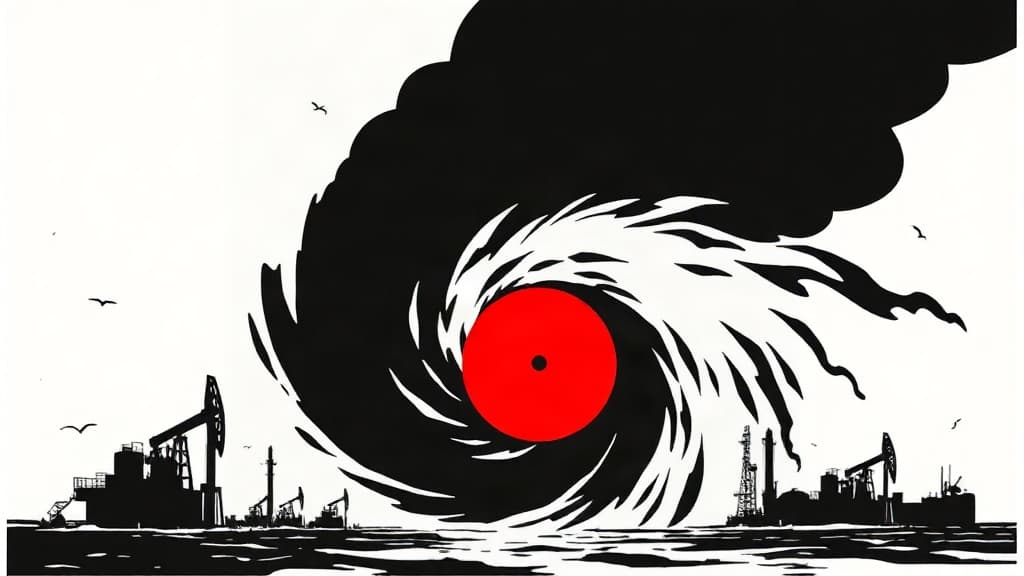
Isaias made landfall Friday evening as a Category 2 hurricane near Destin, Florida, the first Atlantic hurricane of the 2026 season, DW.com reported. Two deaths were confirmed in Florida and two in Alabama. Florida, Alabama, and Georgia all declared states of emergency. Over 500,000 customers lost power in Florida and Alabama alone, according to PowerOutage.com.
Now the storm's remnants are crawling through the Appalachians, and the same pattern is repeating in western North Carolina. Duke Energy crews are scattered across the region dealing with downed trees, broken power poles, and at least two transformers on the ground in the Riceville area alone, according to WLOS. The Riceville Volunteer Fire Department said repairs may not be finished until Sunday. Fourteen western NC counties are under flood watch. Multiple counties sit under flash flood warnings. The National Weather Service is warning of landslides across the Southern Appalachians and wind gusts up to 60 mph at elevation.
Here's what the climate chorus won't say: transformers on the ground and half a million customers in the dark isn't just a weather story. It's an infrastructure story. Every dollar utilities spend complying with green energy mandates and chasing renewable subsidies is a dollar not spent hardening the grid, burying lines, or upgrading aging equipment that fails when the wind blows hard.
DW.com framed this as a clean storm tracker—death toll, NHC updates, a note about Hurricane Simon bearing down on Mexico's Pacific coast. WLOS gave the ground-level view: flooded low-water crossings, swift-water rescue teams deploying from Mooresville to Yancey County, fire departments urging caution on rain-slicked interstates. Neither outlet touched why the grid buckled so thoroughly or where the money went that should have prevented it.
Florida activated 5,000 National Guard soldiers and airmen to support impacted communities—manpower stretched to respond to a crisis that hardened infrastructure might have softened. Local responders are doing the work, but they're working with systems that haven't been maintained.
The storm will pass. The open question is whether anyone in Washington will ask why Americans are dying and sitting in the dark while billions flow to green subsidies and foreign commitments instead of into the poles, lines, and transformers that keep this country running.