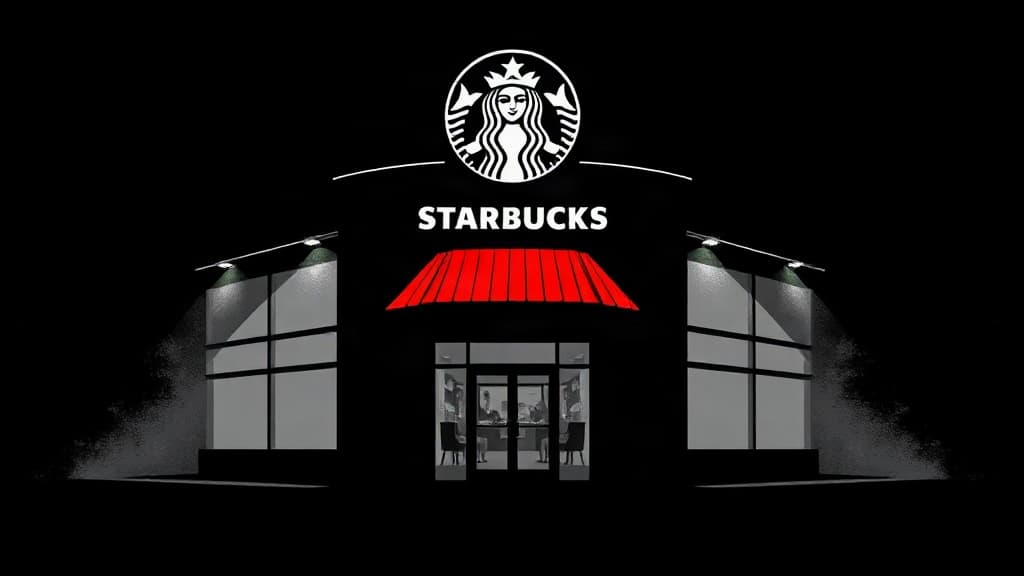
An iconic Starbucks that served Burbank for 30 years closes Saturday, one of at least 250 North American locations the chain is shuttering this week—and ordinary Californians are left watching another neighborhood fixture disappear while their leaders offer nothing but more of the same.
The Burbank store on Riverside Drive, affectionately known as "Bobbucks" for its spot next to the landmark Bob's Big Boy, will serve its final coffee at 9:30 p.m. Saturday. The closure isn't isolated: KCRA confirmed at least four Sacramento-area locations are also shutting down—on Fairway Drive in Roseville, Watt Avenue, Truxel Road, and Calvine Road in Sacramento. A Starbucks representative would not detail the full number of closures across the region.
Starbucks says the cuts target stores that are "underperforming financially or no longer fit the experience the company wants to provide customers and employees." The company has not confirmed whether the Riverside Drive location is part of this specific round.
What the corporate statement leaves out is why stores in California keep landing on that list. The New York Post framed the Burbank closure as a loss of community character, quoting locals who described the freestanding building's large windows and natural light as something that felt "integrated into the surrounding neighborhood." Marla Seraphine, posting on X, contrasted it with the next-closest Starbucks—a location she described as sitting inside an office building with an indoor courtyard and less natural light. Same products, very different experience.
Preserve Burbank, a local Instagram account focused on the city's history and architecture, thanked staff for "decades of good coffee and fun" and said Toluca Lake and Burbank "will miss you."
KCRA, meanwhile, kept its coverage clinical—listing addresses, noting that stores will post closure signs this weekend, and adding that the company plans to offer transfer opportunities or severance support for affected workers. What KCRA buried: any question about what's driving the financial underperformance at these locations in the first place.
California's progressive governance regime—high taxes, sprawling regulation, and a tolerated crime environment—doesn't just drive out small businesses. It squeezes the chains too, eventually. When a global corporation with deep pockets decides hundreds of locations aren't worth keeping open, that's a market signal about the conditions on the ground. Residents lose the gathering spots that made neighborhoods livable, and nothing fills the void but another empty storefront.
Starbucks will survive this. The question is whether the communities losing these stores will.