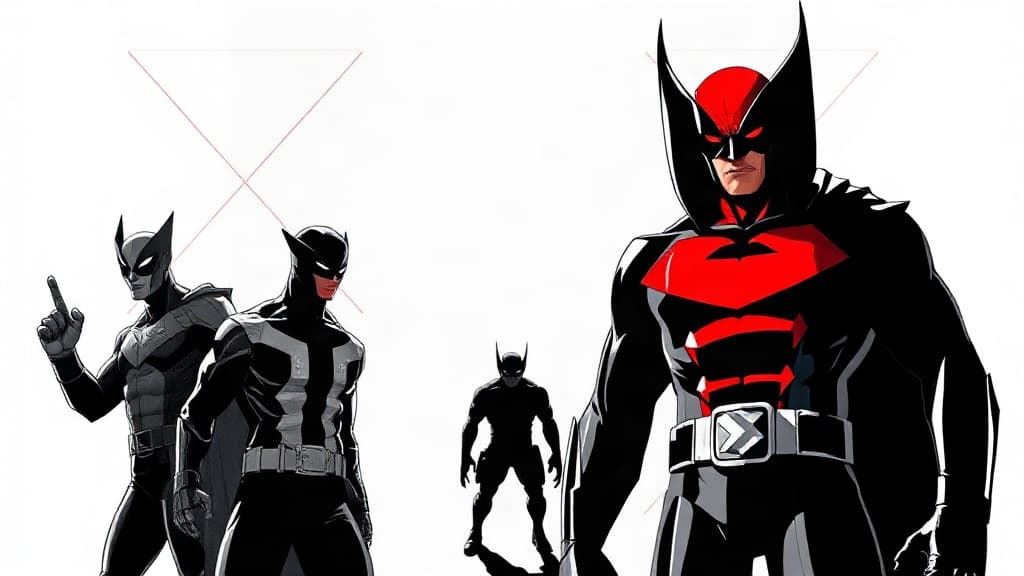
Marvel is merging two generations of X-Men animated series into a single comic book event, consolidating a franchise that has spent decades selling young viewers on the idea that society's rule-breakers are its most noble victims. X-Men '92: Incursions #1 lands on shelves January 6, 2027, pitting characters from the 1992 animated series against their counterparts from X-Men Evolution in a universe-destroying showdown where only one team's world survives.
The one-shot is drawn by Salva Espin and written by Craig Kyle and Christopher Yost, who penned several Evolution episodes — including the one that introduced Laura Kinney, the clone Wolverine who became a fan favorite, according to Gizmodo. The miniseries ties into Marvel's broader "Incursions" event, the same storyline driving the upcoming Avengers: Doomsday film.
Here's why it matters for ordinary Americans: the X-Men franchise has always operated as a delivery mechanism for a specific argument — that people who defy social norms are automatically persecuted heroes, and that the institutions enforcing those norms are inherently oppressive. The '92 cartoon embedded that framework in millions of kids during afternoon viewing hours. Evolution did the same for the next wave. Now Disney, which owns Marvel, is uniting both audiences under one narrative roof.
Gizmodo framed the crossover as simple nostalgia, noting that Evolution fans "have been paid dust" since that show ended and calling the matchup "not a bad way to start the year." The outlet made no mention of the franchise's ideological payload or Disney's corporate interest in expanding it. The New York Post, for its part, did not cover this story at all — its feed provided was on an entirely different topic.
The X-Men metaphor has been elastic enough to mean whatever cultural activists need it to mean in any given decade. In the '90s, it was broadly read as a civil-rights allegory. More recently, it has been claimed as a transgender narrative — mutants "coming out" to families who fear their differences. The beauty of the allegory, for its promoters, is that it trains children to sympathize automatically with anyone labeled "marginalized" without asking what the actual conflict is about.
Gizmodo noted that Marvel's current commitment to the X-Men '97 revival means this crossover probably isn't a stepping stone to an Evolution revival. That may be true. But it also means Disney is keeping the brand's multi-generational pipeline flowing — one comic, one show, one streaming season at a time.
The question isn't whether kids should watch superhero stories. It's whether a corporation worth $200 billion should be allowed to wrap its cultural arguments in spandex and hand them to children who aren't yet old enough to recognize they're being sold something.