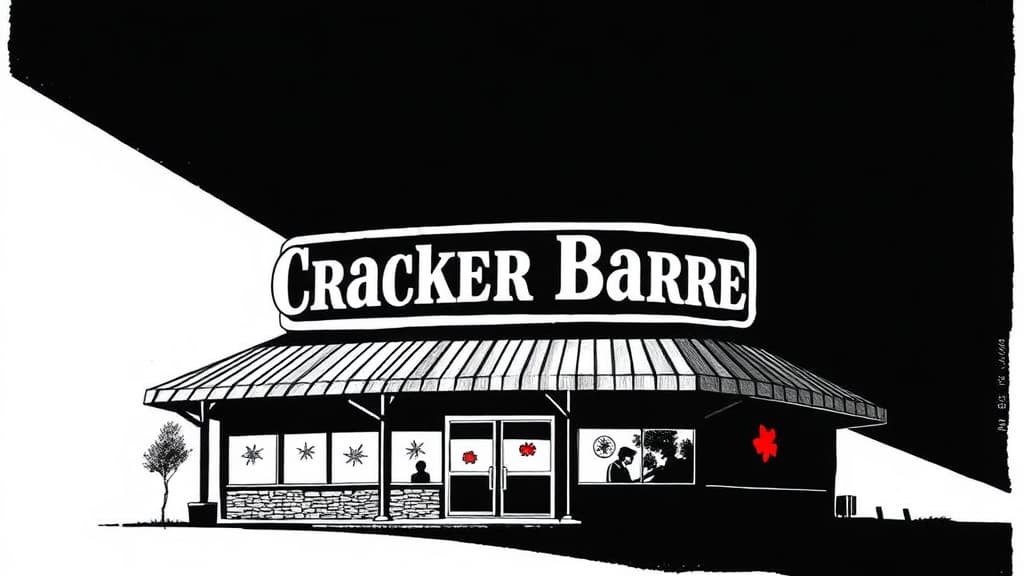
Cracker Barrel CEO Julie Masino is out after torching the company's market value and alienating the working-class Americans who kept the chain in business — proof that when customers push back hard enough, even insulated corporate executives pay the price.
Masino will step down August 10 after less than three years at the helm, replaced by David Deno, a former CEO of Bloomin' Brands, which owns Outback Steakhouse. The company framed it as a routine succession. It isn't. Masino's departure follows a $700 million "transformation plan" that stripped Cracker Barrel of everything its customers loved — and the customers made her pay for it.
The rebrand, launched last August, axed the iconic Uncle Herschel logo — a folksy farmer mascot part of the brand since 1977 — in favor of a minimalist yellow sign. Antique tchotchkes came off the walls. The menu got overhauled; black-eyed peas disappeared on New Year's Day. The dining rooms got white paint and bright lighting. It was a corporate sterilization of a brand built on warm, unapologetic country charm.
The backlash was swift and devastating. Cracker Barrel lost more than $140 million in market value in a single week, according to the Wall Street Journal. The stock ultimately lost more than half its value. Consumer Edge data showed the chain hemorrhaged its most loyal demographic: Republican diners. President Trump weighed in on Truth Social, writing that Cracker Barrel should "go back to the old logo, admit a mistake based on customer response (the ultimate Poll), and manage the company better than ever before."
The company reversed course within days. Masino eventually admitted the effort missed the mark. In a November interview with Glenn Beck, she conceded: "I feel like I've been fired by America."
But she wasn't fired — not then. Cracker Barrel's board kept her on despite an activist campaign by investor Sardar Biglari, CEO of Steak 'n Shake, whose Biglari Group held roughly three percent of outstanding shares. Biglari's proxy filing with the SEC accused management of actions that "betrayed the Company's heritage, alienated loyal customers, and undermined investor confidence." The group called the rebrand "among this century's worst brand blunders, alongside Bud Light and Jaguar." Shareholders did vote to oust DEI marketing executive Gilbert Dávila from the board in November, but Masino survived — until now.
Fox Business buried the rebrand controversy deep in its coverage, emphasizing Deno's "operational excellence" and quoting board chairman Carl Berquist thanking Masino for her "leadership and commitment." The New York Post and Daily Caller both identified the rebrand for what it was: a woke makeover that blew up in management's face.
Since reversing course, Cracker Barrel's stock has climbed back — up roughly 100% this year, per the Post — and the company has moved to cut debt, selling its Maple Street Biscuit Company brand and closing 16 locations. But analysts note the recovery is fragile. Consumer Edge's Michael Gunther told the Post that sales momentum hasn't exactly surged and that the chain remains "way over indexed in the 65 years-old and up crowd" — the very customers Masino drove away.
Deno said in a statement that Cracker Barrel is a "truly iconic American brand, defined by its unique combination of warm country hospitality, timeless appeal, and deep connection with guests across generations." That's the right language. Whether he means it is the open question.
The lesson of Cracker Barrel is the same as Bud Light and Jaguar: corporate executives who treat their own customers as problems to be solved will find those customers solving the problem themselves. Masino is gone. The brand she nearly destroyed is still standing. The question now is whether the board that protected her for nearly a year after the disaster has actually learned anything — or whether the next CEO will try the same playbook with a friendlier face.