A federal judge declared a mistrial Friday in the arson case against Jonathan Rinderknecht, the man accused of igniting the blaze that became the deadliest Palisades Fire — after a jury deadlocked 10-2 in favor of acquittal. Twelve Americans are dead, 7,000 homes and businesses are ash, and the federal government couldn't persuade ten of twelve jurors that its case held water.
The vote split matters. This wasn't a hung jury evenly divided — it was a near-acquittal. Juror Syrena, from Lompoc, didn't mince words outside the courthouse: "I don't think there was enough evidence to say he started the first fire. But say he did? I don't see why everybody else's negligence of doing things incorrectly, where he needs to be responsible for the whole Palisades." She called the prosecution's presentation "bullsh–t," according to the New York Post, adding: "You're supposed to be presenting this case to me to convict that man, and I felt like, 'No, that doesn't make sense.'"
Rinderknecht, a 29-year-old former Uber driver, was charged with three federal counts — arson, malicious destruction by means of fire, and timber set aflame — all tied to the Lachman Fire, sparked New Year's Day 2025. Prosecutors argued he lit that fire out of anger over wealth inequality and a failed relationship, then called 911 to cover his tracks. The defense countered that he was a good Samaritan who reported the blaze, and suggested fireworks may have caused the initial fire — though two firefighters gave conflicting testimony on whether pyrotechnics were heard that night, according to The Guardian.
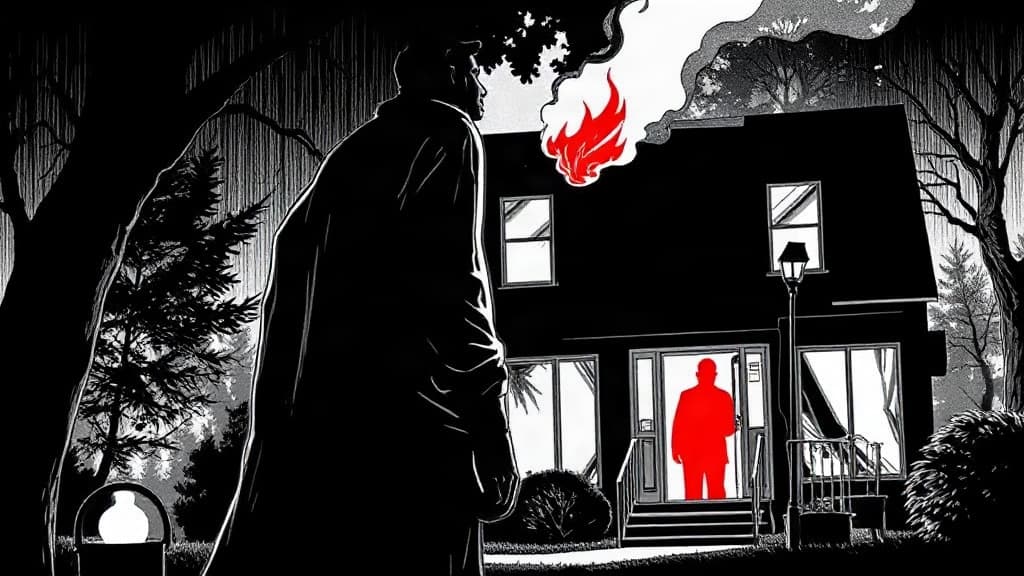
Here's what the establishment press largely soft-pedaled: the Lachman Fire was knocked down by LA County firefighters — but they were ordered off the scene before it was fully out. HotAir reported that some firefighters "insisted they'd been prematurely pulled off the job" and that "to their experienced eyes, that fire wasn't out yet." The blaze smoldered underground for six days before Santa Ana winds whipped it back to life on January 7, unleashing the catastrophe that killed a dozen people and caused $150 billion in damage. Rinderknecht was not charged with any of those deaths, and prosecutors were barred from raising them at trial. The U.S. Attorney's Office declined to explain why.
Judge Anne Hwang declared the mistrial after the jury sent a note saying members were "dead set, unwavering and unwilling to change their opinion" on all three counts. When prosecutors asked Hwang to order further deliberations, she refused, citing the "risk of coercion." Rinderknecht, who showed little emotion at the ruling, remains in custody.
Acting U.S. Attorney Bill Essayli immediately vowed to retry the case, with a new trial set for October. Defense attorney Steve Haney called the 10-2 split "a pretty resounding indication" of innocence. The New York Post noted what other outlets buried: LA Mayor Karen Bass was in Ghana when the fire erupted despite advance wind warnings, and critics see the prosecution as a search for a scapegoat to absorb institutional failures at every level of government.
The question hanging over the next trial: can the feds build a case that convinces more than two jurors — or will the same gaps in evidence produce the same result? Either way, the families of twelve dead Americans are still waiting for accountability from a system that has plenty of targets to choose from.