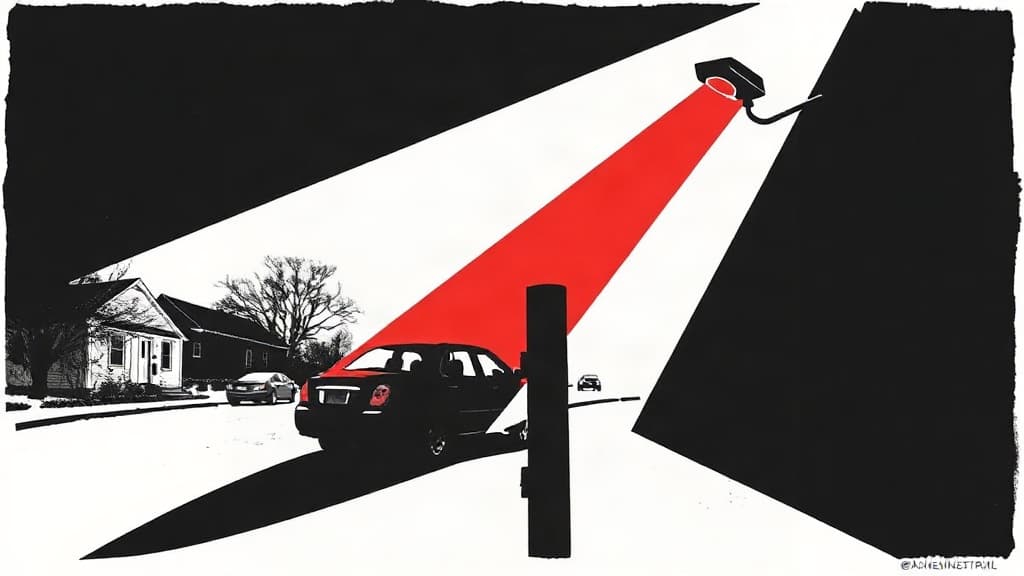
Boston killed its Flock surveillance camera program after discovering the vendor quietly opened a backdoor letting law enforcement agencies nationwide track residents' movements — proving the surveillance state sold as public safety was always a constitutional violation waiting to happen.
The Fourth Amendment protects Americans from unreasonable search and seizure, but Flock's automated license plate readers treat every driver as a perpetual suspect. Boston's experience shows the real danger: contracts and promises mean nothing when a vendor can flip a switch and hand your location data to agencies you've never heard of, in jurisdictions you've never visited.
According to Boston's 2025 annual surveillance report filed Monday by Mayor Michelle Wu, the Boston Police Department ran a trial of approximately 45 Flock ALPR cameras from April 1 to Sept. 4, 2025. Within three days of launching the pilot, BPD discovered that other law enforcement agencies could access license plate and vehicle information collected by Boston's cameras through a nationwide lookup feature — enabled by the vendor in what the city calls a "vendor error."
That error violated the city's contract with Flock Safety, which stipulated data access be restricted "exclusively to trained BPD personnel." BPD says it directed the vendor to disable the feature immediately. The city has since ended all use of Flock and will not use its services going forward.
Notice what the city doesn't say: how many agencies accessed the data before BPD caught the breach, what those agencies did with it, or whether any of that data still sits in databases outside Boston's control. The Herald reported the breach in detail but didn't press on those questions.
Meanwhile, in Wyoming, Michigan, police are digging in. The city has 42 Flock cameras stationed at intersections, plus 38 Axon dash cameras on every police cruiser scanning plates across town. Contracts with Flock and Axon don't expire until 2030. Wyoming Capt. Eric Wiler touted 115 criminal arrests, 10 illegal firearms seized, three missing persons located, and over $1 million in stolen property recovered. Chief Kyp Snyder called Flock the "best crime-fighting tool in my 34-year career."
M Live framed the story around that law enforcement defense, burying the constitutional concern. Eight residents spoke against the cameras at a Sept. 15 city council session. Resident Kyle Hackett, 28, cut to the heart of it: "Flock is a dystopian violation of our rights because it inverts the very nature of how police are supposed to function. In traditional investigations a crime happens, detectives identify a list of plausible suspects, then those suspects are placed under investigation. With Flock, everyone every day in the city are all under investigation at all times."
Wyoming police claim zero cases of misuse and no formal complaints. But Massachusetts tells a different story — the Herald reports officers in several communities have been accused of using Flock cameras and data to stalk or track romantic partners and acquaintances. Dozens of Massachusetts communities have already canceled or paused their Flock contracts over privacy, immigration, and mass surveillance concerns.
Over 150 local and state agencies in Michigan still contract with Flock. The question isn't whether the technology can help solve crimes. The question is whether Americans should have to surrender their constitutional rights to get there — and whether any contract with a surveillance vendor can actually guarantee they won't.