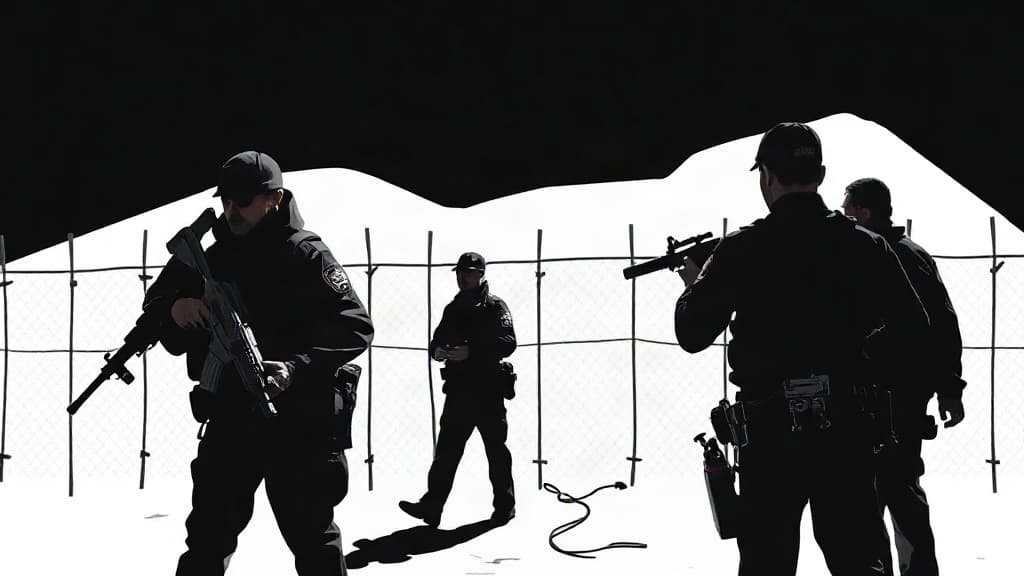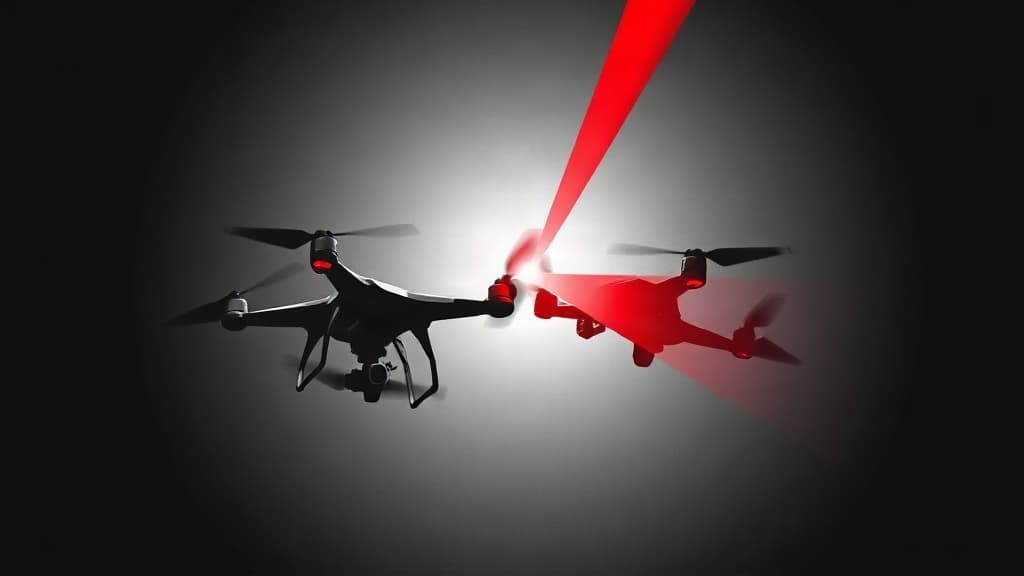
The U.S. military shot down three Mexican cartel drones with a high-energy laser in the Rio Grande Valley this week — a combat-zone engagement on American soil that proves how far cartel empowerment has gone and what it now costs to push it back.
American service members used the Army Multipurpose High Energy Laser system late Tuesday and early Wednesday to destroy three unmanned aircraft systems that U.S. Northern Command determined were "hostile" and posed "a physical threat to U.S. military personnel" and Customs and Border Protection officers. This is no routine interdiction. This is directed-energy warfare against transnational criminal organizations operating on U.S. territory.
Maj. Gen. Curtis Taylor, commander of the southern border's Joint Task Force, made the stakes plain: "Cartel networks are increasingly employing unmanned aircraft systems to facilitate illicit human-smuggling and actively spy on our personnel and law enforcement partners." He added that the laser deployment sends a signal that "we will not tolerate hostile surveillance."
The military has refused to say whether the drones were shot down over U.S. or Mexican airspace. A USNORTHCOM spokesperson told CBS News only that "the shots were taken in coordination with all partners operating along the border" and cited operational security for declining further detail. CNN reported that Mexican President Claudia Sheinbaum has previously declared any unilateral U.S. action on Mexican soil "a grave breach" of Mexican sovereignty. The ambiguity matters: if American forces are firing lasers across an international boundary, that is one story. If cartels are flying drones over Texas, that is another. The Pentagon owes the public clarity, not cover.
The technology itself carries risks. In February, a U.S. military laser accidentally shot down a U.S. Customs and Border Protection drone near Fort Hancock, Texas. That same month, an internal disagreement between the FAA and the Pentagon over military laser tests near Fort Bliss forced a temporary shutdown of commercial airspace around El Paso International Airport. Transportation Secretary Sean Duffy at the time called the cartel drone threat "normalized." He was right about the normalization — wrong to treat it as routine.
CNN identified AeroVironment Inc. as the manufacturer that delivered the first two multi-purpose high-energy lasers to the Army last summer. Follow the money: every cartel drone incursion is a sales pitch for the defense contractors building counter-drone systems. The more the border burns, the more the procurement pipeline flows.
Austin Doctor, director of strategic initiatives at the National Counterterrorism Innovation, Technology, and Education Center, told CBS News that cartels primarily use drones near the border for surveillance to support narcotics and human smuggling. They have not used weaponized drones inside the United States — but they have inside Mexico, dropping explosives on rival cartels. The distance between surveillance and strikes is a matter of intent, not capability.
The Joint Task Force, roughly 8,000 service members strong, was established last year under President Trump's border crackdown. The question now is whether directed-energy shootdowns become standard operating procedure — and what that says about a frontier where cartels fly drones and the Pentagon answers with lasers.