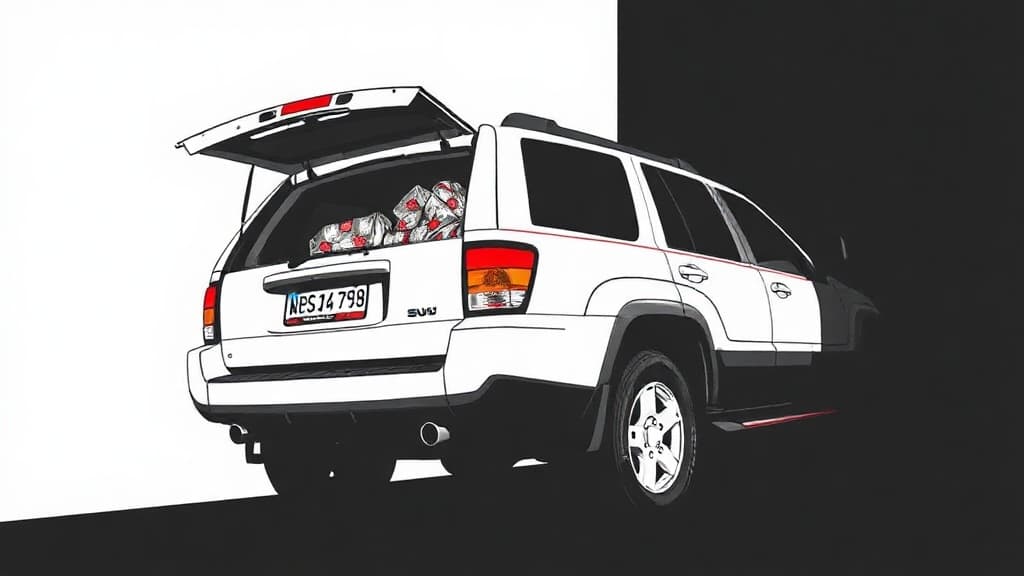
Federal agents pulled 130 pounds of cocaine worth $1.7 million from a single SUV at the Del Rio, Texas port of entry on August 4, and the 29-year-old American citizen driving it was headed straight for the country's interior — another load in an industrial pipeline that poisons American communities while Washington writes blank checks abroad.
This is what they caught. What slipped through is the question that should matter to every working American paying the tab for a government that can fund foreign wars but can't secure its own frontier.
According to Breitbart, a man driving a 2013 Dodge Durango from Ciudad Acuña, Mexico, was selected for secondary inspection at the Del Rio crossing. Officers using non-intrusive scanning technology found 49 packages of cocaine stuffed inside the vehicle's quarter panels. The suspect — a U.S. citizen — was turned over to Homeland Security Investigations.
The Del Rio port sits in CBP's Laredo Field Office region, which stretches 450 miles from Del Rio to Brownsville and ranks as the second-busiest narcotics seizure zone in the country. Between October 2025 and June 2026, that region alone seized more than 45,000 pounds of narcotics. The volume of legitimate trade — more than $200 billion in imports processed annually — gives cartels cover to move product.
Del Rio Port of Entry Director Liliana Flores called the bust "a direct result of the unwavering vigilance and commitment of our CBP officers" and credited investment in technology and training.
Vigilance matters — because sometimes the officers themselves are the problem.
On the same day Breitbart reported the Del Rio seizure, they also reported that former CBP Officer Jesse Clark Garcia was sentenced to nine years in federal prison for helping the Sinaloa Cartel move cocaine, fentanyl, and methamphetamine through his inspection lane at the Tecate Port of Entry in California. Garcia is the second officer sentenced in the scheme; his partner Diego Bonillo got 15 years in November 2025.
The two officers collected $10,000 per loaded vehicle in exchange for waving cartel shipments through without inspection. Prosecutors say they lived large on the take — luxury fashion, European vacations, ringside boxing seats in Las Vegas, high-end vehicles, California real estate, a ranch in Mexico, and part ownership of a horse racing business. They coordinated with smugglers using coded emoji messages to direct traffic to the right lane.
The investigation started back in 2021, when a woman was caught at Tecate with 140 pounds of cocaine and 25 pounds of meth after a lane change redirected her away from Garcia's booth. Authorities discovered she routinely crossed through Garcia's lane and never crossed when he wasn't working.
So the border isn't just porous — in places, it's complicit. Cartels have the money to buy off the very people stationed to stop them, and the 45,000 pounds seized in one region over nine months is a fraction of what moves through. Meanwhile, Congress sends billions overseas and treats the southern frontier as a managed problem rather than what it is: a national security crisis degrading American communities from the inside out.
The question isn't whether CBP officers catch drugs at the border. It's how much they miss — and who among them is making sure it gets through.