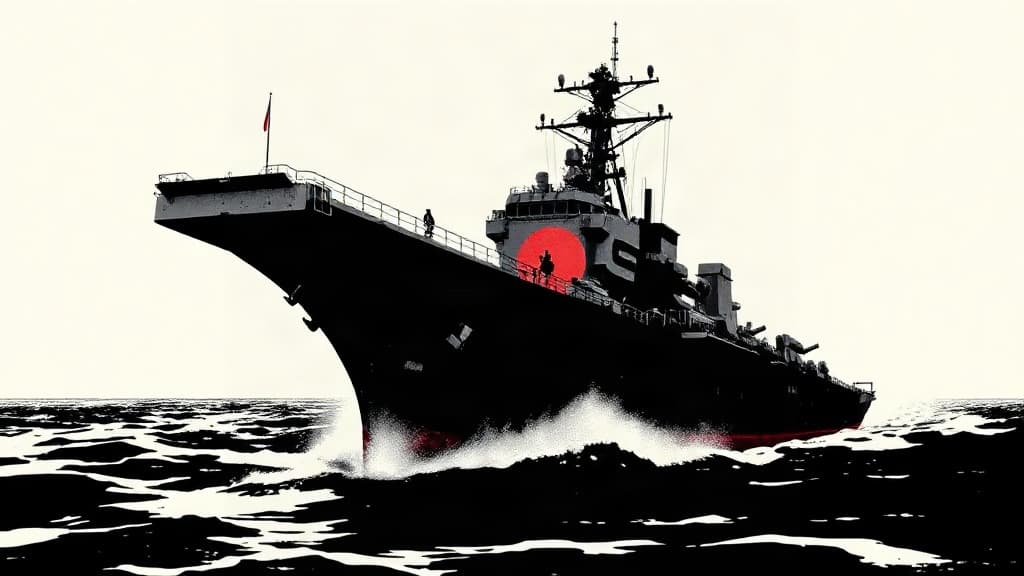
Five thousand American sailors and Marines just stepped off the USS Abraham Lincoln in Thailand after more than nine months at sea with no port call — a modern record — and the ship pulling into harbor looks like a rusted-out hulk. Paint worn to bare metal. Reports of broken toilets, food running short, and suicide attempts among the crew. All for a war with Iran that nobody in Washington can justify to the people paying for it or fighting it.
The Lincoln left San Diego in November 2025 for a routine Pacific deployment. Then it got rerouted to the Gulf after the U.S. and Israel launched military operations against Iran in late February. What was supposed to be six months turned into nine-plus, with the crew trapped at sea while politicians and pundits argued about "global leadership" and "deterrence" from the comfort of cable news studios.
The ship's captain, Dan Keeler, acknowledged the Lincoln "looks like a dirty car in a parking lot" and admitted fresh fruit and vegetables stopped being available. He dismissed reports of deteriorating conditions as a "disconnect between reporting back home and what's happening on the ship," comparing sailor complaints to "sending kids off to college for the first time." But even Keeler conceded the crew "got caught up in an election cycle and got thrown around like a football."
Crew members appeared to have been told not to speak to journalists about conditions onboard, according to The Guardian. One sailor who gave only his first name, Breese, called the experience "a fever dream."
Shakeira Fairfax flew all the way from New Jersey to Thailand to meet her daughter Jada, who finished basic training last October, was shipped out a month later, and turned 25 onboard in June. When the war started, communication cut off "abruptly." Fairfax told The Guardian she was mostly excited but added: "I don't know who I'm welcoming home."
That's the human cost. The dollar cost sits on the American taxpayer, as always. The Thai port stop is expected to inject roughly $3 million into Pattaya's economy — not America's. Meanwhile, Democratic lawmakers have called the deployment a modern record for consecutive days at sea, and reports of poor morale and mental health crises have made headlines worldwide. The World Guardian framed it squarely as "Donald Trump's war against Iran"; NBC and the BBC buried the political accountability and stuck to the military's preferred language about "enduring partnerships" and "rest and recharging."
The destination itself tells a story. Pattaya was a fishing village until the U.S. military turned it into a sex-tourism hub during Vietnam. Now Thai authorities are cracking down on prostitution ahead of the visit — arresting dozens in weekend raids, according to Raw Story — while barring sailors from the go-go bars of Soi 6 and the city's cannabis shops. Walking Street, meanwhile, hung a neon sign welcoming the crew. The mayor estimated each service member might spend $30 to $91 a day ashore. A nightlife association president called the visit the city's "best hope" after its slowest year in two decades.
So this is what American power looks like in 2026: a rusted carrier, crew who've been at sea so long their families don't recognize them, dropping into a sex-tourism town where the local economy depends on their shore leave spending — while the war that put them there grinds on with no defined objective, no exit, and no end.
Rear Adm. Robert Loughran called the Thailand stop "a well-deserved opportunity for our sailors and Marines to rest and recharge." The question neither he nor any official answered: when do they actually come home — and for what?