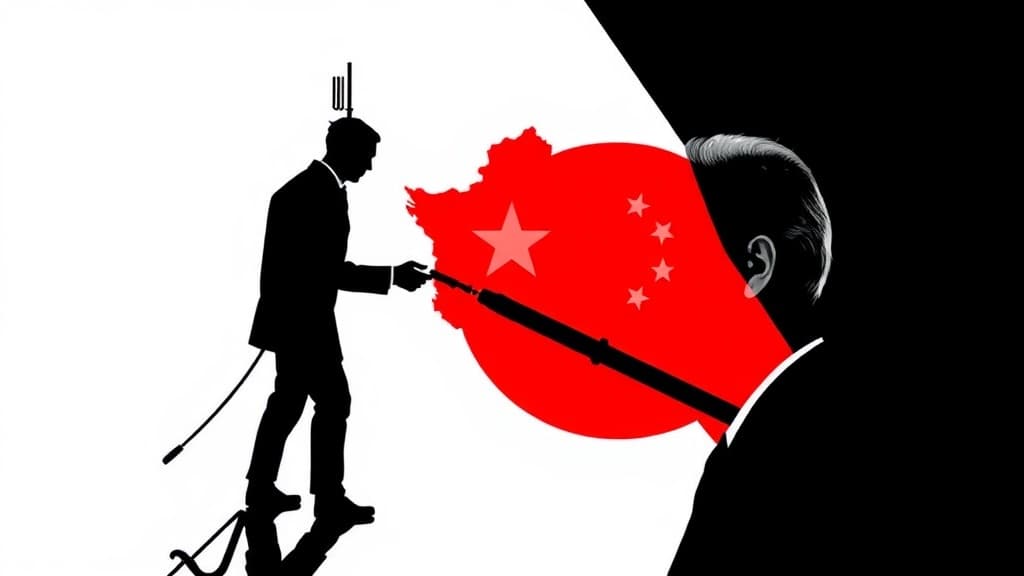
The United States will sit down with China in September to negotiate the future of artificial intelligence — while simultaneously imposing some of the tightest restrictions in decades on how long Chinese journalists and foreign students can remain in the country. For ordinary Americans, the question is whether either move actually protects U.S. technological sovereignty or just adds more bureaucracy while the real competition slips away.
The AI talks, a product of the Trump-Xi summit in May, will likely take place before Chinese President Xi Jinping's planned September 24 visit to the U.S., according to five sources familiar with the matter who spoke to Reuters. Treasury Secretary Scott Bessent is set to lead the American side. The agenda, location, and remaining participants are still being worked out. Neither the White House, State Department, nor Treasury would comment publicly. Beijing's relevant agencies also declined to respond.
Notably, the talks are being run out of Treasury — not Commerce, not the Pentagon, not any agency with a mandate over technology or national security. When the money man leads AI negotiations, follow the dollars.
Meanwhile, the Trump administration is closing what DHS calls a half-century-old "duration of status" loophole. Starting in September, foreign students on F visas and exchange visitors on J visas will be capped at four years, with extensions requiring background checks, biometric screening, and fraud reviews. The post-graduation grace period drops from 60 days to 30. Roughly 1.2 million foreign students and 1,500 foreign journalists will be affected, according to the Argus Leader.
For foreign journalists on I visas, the new default is 240 days. For journalists from China specifically, it's 90 days — a fraction of the time currently allowed for the length of an assignment. DHS Secretary Markwayne Mullin said the old system "compromised national security and created an environment ripe for immigration fraud."
Press freedom advocates are raising alarms. Gabe Rottman, vice president of policy at the Reporters Committee for Freedom of the Press, said the rule "risks providing the government with an avenue to not renew a journalist's visa in retaliation for coverage it perceives as critical." That concern is legitimate — any government power over press access can be abused. But it's also worth noting that China has never granted American journalists anything close to open-ended access, and Beijing routinely expels foreign reporters for unfavorable coverage.
The tension is plain. On one track, Washington is preparing to hash out AI governance with its chief strategic rival — with no public agenda, no defined U.S. interest, and no clear exit. On the other, it's tightening the screws on Chinese presence inside the U.S., including a 90-day leash on Chinese journalists that Beijing would never reciprocate. Both moves land in September. The open question is whether the left hand knows what the right hand is doing — and whether either hand is actually building the wall around American innovation that the country needs, or just putting on a show.