U.S. forces struck and disabled a commercial vessel attempting to breach the naval blockade of Iranian ports on Thanksgiving — the sixth ship taken out by American firepower in a campaign with no defined exit and no stated price tag for the taxpayer.
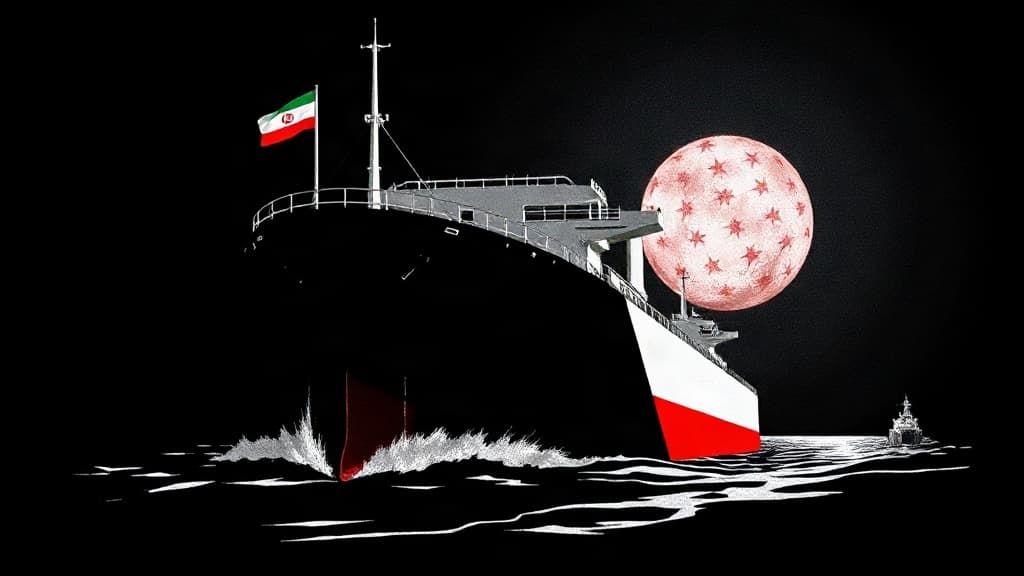
A U.S. military aircraft hit the Palau-flagged M/V Pacific Archer in the Gulf of Oman after the bulk carrier departed Bandar Abbas and refused multiple warnings to turn back, CENTCOM said. The strike destroyed the ship's propulsion system. The civilian crew was unharmed. American forces have now redirected 158 vessels and disabled six since the blockade took effect in mid-July.
This is escalation without an off-ramp. President Donald Trump told service members on a Thanksgiving call that victory would come "whatever I want it to be," and dared Tehran: "I hope they do; they'll all be at the bottom of the sea like the rest of the navy." He praised the blockade as "the most successful blockade in naval history" and said "not one ship has gotten through to Iran."
Iran is returning the rhetoric. IRGC Aerospace Force Commander Majid Mousavi warned that Iran's enemies should expect military action "from the air and sea," writing on X: "No blockade will withstand Iran's national will and defence capabilities." Iranian Navy Commander Adm. Shahram Irani claimed operations to break the blockade were already underway and said Supreme Leader Mojtaba Khamenei had lifted geographical restrictions on Iran's military. According to Breitbart, Irani also claimed American forces were "begging" for passage through the Strait of Hormuz. Deputy Foreign Minister Kazem Gharibabadi declared the blockade "an act of war" last Saturday.
The economic pressure campaign is running alongside the naval one. Treasury Secretary Scott Bessent described new sanctions as targeting "the last financial lifeline of a bankrupt regime," and claimed Iran had exhausted its remaining oil supplies at sea. "After failing to load a single tanker since Treasury launched Operation Economic Outcast in August, Iran doesn't have a drop of oil on the water left to sell," he wrote. CENTCOM has also stood up Task Force Iron Gate to shut down illicit overland and Caspian Sea shipments.
What neither outlet reported — and what nobody in Washington is volunteering — is what this costs the American paying for it. Trump told troops the U.S. has launched 150 missiles to intercept threats in the Strait of Hormuz. Every one of those missiles was purchased with taxpayer dollars. Every warship patrolling the Gulf is a Navy asset not stationed at the southern border. And the defense contractors billing the Treasury for ordnance, fuel, and maintenance are the same companies whose shareholders have profited from every escalation since 2001.
Fox News framed the story around Trump's Thanksgiving remarks and his assurance that Iran "will never have a nuclear weapon." Breitbart led with the military confrontation and Tehran's threats. Neither outlet asked the question that matters: What is the U.S. interest, what does it cost, and when does it end?
Trump has signaled he may hold off on a major offensive until after the new year, but told reporters the likelihood of Iran accepting a deal is low. He said if strikes resume, CENTCOM would "absolutely hit Pickaxe Mountain," an underground complex near Iran's Natanz enrichment facility. Asked whether Moscow and Beijing are feeding Iran intelligence to target American bases, Trump minimized the likelihood and said China was "not heavily involved."
A blockade is an act of war. The president is daring the other side to escalate. And the same permanent establishment that sent Americans into Iraq and Afghanistan is cheering from the sidelines — because every escalation is an invoice, and the taxpayer is the one who pays it.