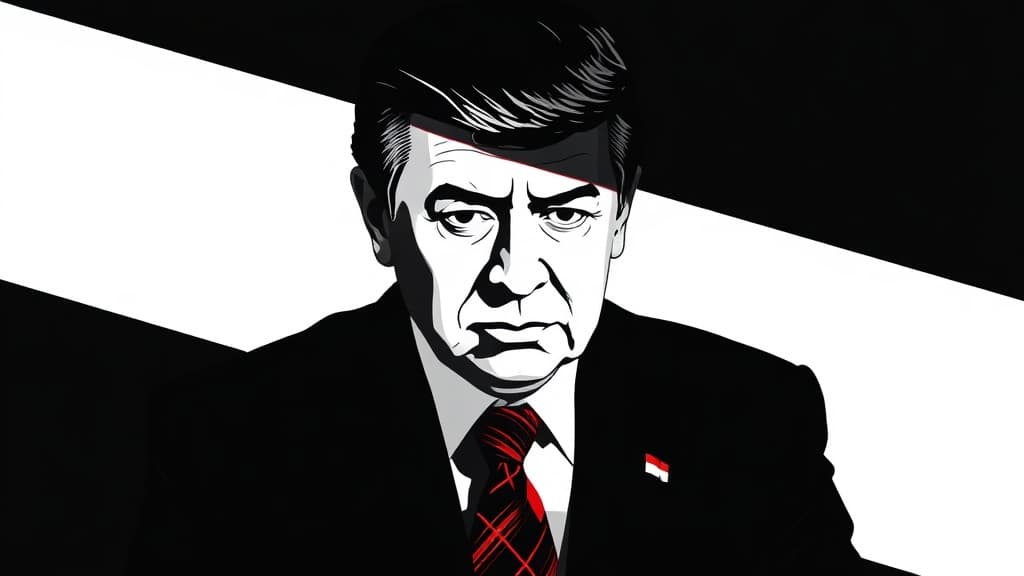
UN Human Rights chief Volker Turk is fighting for his job after Russia, Israel, and a doubting Washington shattered what was supposed to be a quiet reappointment — and American taxpayers are once again bankrolling a globalist institution that can't even manage its own staff rotations without a fight.
The stakes are straightforward. Outgoing Secretary-General Antonio Guterres, who leaves in December, wants to hand Turk another four-year term running to 2030. Russia, Israel, and reportedly the United States have other ideas. The clash forces a vote in the General Assembly on Friday — no Security Council vetoes apply — and exposes yet another layer of the UN's internal power plays that cost American money and demand American attention.
Russia submitted a formal counter-proposal to extend Turk's term by just over two months, through the end of 2026, according to a copy seen by Reuters. The logic: the next secretary-general, selected in a process kicking off next week, should pick his own human rights chief. Russia's UN mission said the full reappointment "deprives the new secretary-general of the opportunity to make his/her own choice for such an important post for a long period" and called it "an arbitrary idea given the sensitivity of the human rights architecture." The mission claimed "many" UN states share the view but added, "We'll see tomorrow how many of them will be ready to openly state their position without fear of reprisals."
Three diplomats confirmed Israel also opposes the four-year extension. Israel's Foreign Ministry went further, calling Guterres' re-proposal a "moral failure" and saying the choice should be left to his successor, according to Al-Monitor. Washington has raised doubts as well, though the State Department declined comment to all three outlets.
Turk, an Austrian lawyer and decades-long UN bureaucrat, has made himself loud enemies. He accused Russia of severe human rights violations since its 2022 invasion of Ukraine — allegations Moscow denies. He condemned Israel's "mass killing" in Gaza, though some of his own staff complained he stopped short of calling it genocide, an allegation Israel categorically denies. He also called for investigations into deaths in U.S. immigration custody and denounced U.S.-Iran hostilities. Washington has defended its standard of care.
Al-Monitor noted that no previous human rights chief has served two full four-year terms. Jordan's Zeid Ra'ad al-Hussein, who held the post from 2014-18, warned that staying longer risked muting advocacy and compromising independence — an inconvenient detail for the institutionalists pushing Turk's renewal.
The pro-Turk coalition is the usual lineup: European states, many Latin American countries, and a diplomatic memo from the African Union showing "no objection." Reuters reported there are no other known candidates.
The framing split is telling. Reuters and Europe Says both led with the "defender of freedoms" narrative, casting Turk as a check on autocracy. Al-Monitor gave more room to the procedural objection — that Guterres is overreaching by binding his successor to his own personnel pick. The establishment press barely conceals its preference; the structural argument for sovereignty within the institution itself gets buried beneath the human rights hero storyline.
The question for Americans isn't whether Turk is a crusader or a bureaucrat. It's why the US should keep underwriting a system where an outgoing chief tries to entrench his ally, where member states fear "reprisals" for voting their conscience, and where the post itself has never once been held for two full terms — because even the people running it admit the power corrupts.
The vote is Friday. The next secretary-general picks start next week. The tension between institutional entrenchment and sovereign choice — inside the UN and out — isn't going away.