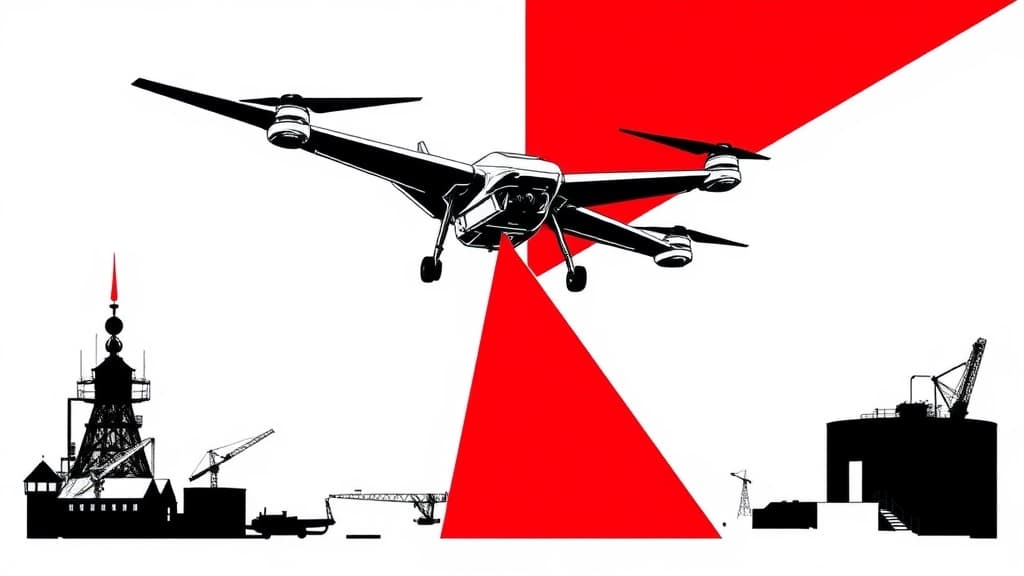
Ukrainian drones struck a major oil terminal in St. Petersburg on Saturday — over 680 miles from the Ukrainian border — marking another escalation in a proxy war American taxpayers are forced to fund with no defined objective and no off-ramp in sight.
The Strike
Russian Governor Alexander Beglov confirmed the city's Kirovsky district on the Baltic Sea was hit. He claimed air defenses shot down 72 drones across the region. The St. Petersburg Oil Terminal, one of Russia's largest fuel storage and export facilities with a reported throughput of 12.5 million tons per year, was the target, according to the Kyiv Independent. Photos posted to social media showed black plumes of smoke rising from the port area.
Zelenskyy framed the attack as part of Ukraine's "long-range sanctions" against Russia. "The Ukrainian defense forces hit the port oil infrastructure, which earns money for the Russian war, and there were also hits on Kronstadt — an important military target," he posted on Telegram.
The Spin Gap
AP and the Kyiv Independent both emphasized the strikes as Ukrainian momentum — AP calling them a blow that "brought the war home" for Russians, the Kyiv Independent highlighting Ukrainian drone advancements penetrating "heavily fortified cities." Neither outlet mentioned the American money underwriting these operations. Breitbart, running the AP wire verbatim, added no independent framing at all. All three buried the same inconvenient detail: Zelenskyy's post, according to AP, "seemed to appeal to U.S." — a sentence fragment that raises more questions than any of them bothered to answer.
The Ground War Reality
While Kyiv celebrates long-range strikes, the ground war tells a different story. Putin claimed Russian forces captured Kostyantynivka, a transport and industrial hub he called of "major strategic importance" in the Donetsk region. Zelenskyy denied it: "It is just another Russian lie." General Staff spokesperson Maj. Andriy Kovalev accused Moscow of spreading "outright disinformation," according to Breitbart.
Meanwhile, Russia launched its largest-ever attack on Kyiv on July 1, killing nearly 30 and wounding over 90. Putin vowed to continue the campaign of strikes against Ukrainian cities. The cycle of escalation is self-reinforcing — and American weapons and money flow into it with each turn.
Who Pays
The strikes on Russian oil infrastructure have triggered fuel shortages in at least 20 Russian regions, with hours-long lines at gas stations, the Kyiv Independent reported. Crimea suspended gasoline sales to civilians entirely. That is pressure on the Kremlin — but it is also escalation without a strategy. Every drone launched deeper into Russia is another step away from any negotiated settlement, and another step toward a wider war that Washington insists on funding but cannot explain how it ends.
Zelenskyy challenged Putin to meet him in Kostyantynivka to "find a diplomatic way to finally end this war." It is a rhetorical flourish — not a plan. And on the American side, there is no plan either. Just blank checks.
The question isn't whether Ukrainian drones can reach St. Petersburg. It is how long Americans will keep paying for a war their leaders never defined and never intend to finish.