Ukrainian drones struck an oil depot and commercial warehouses within 50 kilometers of the Kremlin overnight, killing at least seven civilians and pushing the U.S.-backed war ever closer to the nuclear threshold — all funded by American taxpayers who get no vote on the escalation.
The strikes mark a clear and dangerous ramp-up. Moscow Mayor Sergey Sobyanin claimed over 370 Ukrainian drones were launched toward the Moscow region, with 64 intercepted approaching the capital. Plumes of black smoke were visible from inside Moscow city limits. This is not a border skirmish. This is a U.S.-equipped military striking deep into the adversary's heartland, and every mile deeper into Russia is a mile closer to a confrontation no American signed up for.
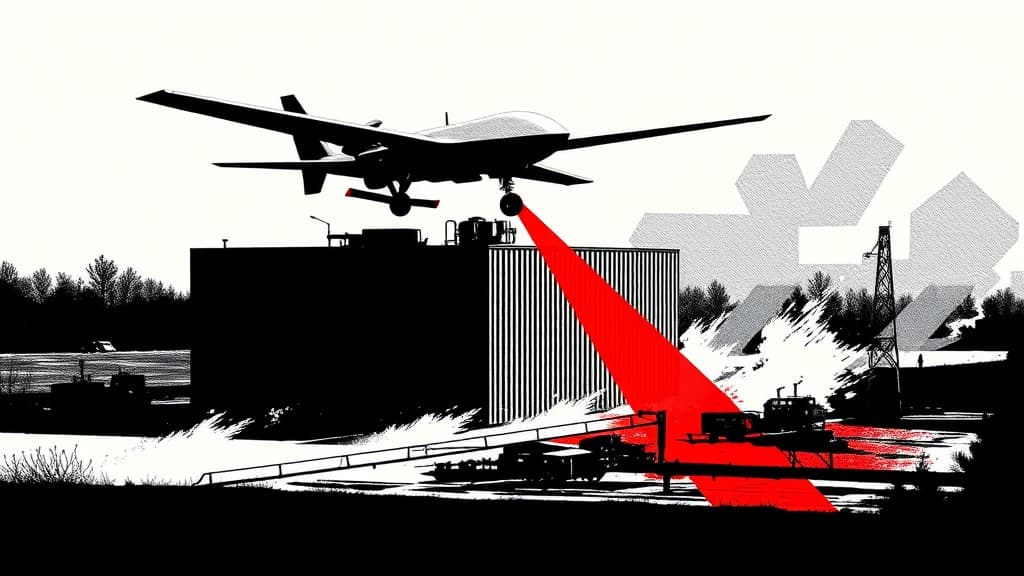
According to the Kyiv Post, a drone strike ignited fires at the Noginsk oil depot, an independent fuel operator with 24 reservoirs holding 11,500 cubic meters of gasoline, diesel, and kerosene. A second strike hit a Wildberries marketplace logistics hub in Elektrostal — the company's second-largest facility by order volume. A third hit a Wildberries warehouse in Kotovsk, Tambov region, killing seven employees. The Kyiv Independent confirmed the Noginsk and Elektrostal fires but noted Ukraine's military had not yet commented and that reports could not be independently verified.
Both outlets also reported coordinated strikes on Russian-occupied Crimea, with over 20 explosions near the Gvardeyskoye military airfield and blasts in Sevastopol, Feodosia, and Kerch.
The Kyiv Independent framed the campaign as "increasingly successful," noting that a prior strike on the Moscow Oil Refinery caused damage so extensive that Reuters reported production is unlikely to resume this year. The outlet highlighted Russian domestic fuel disruptions — export bans, price hikes, hours-long waits at gas stations — as evidence the strategy is working.
What neither outlet pauses to ask: at what cost, and to whom? Ukraine considers oil facilities valid military targets. Fair enough — nations at war do that. But the weapons, the intelligence, and the cash keeping this war machine running come from Washington. Every drone striking the Moscow suburbs represents American equipment and American dollars. The strategy of escalating deep-strike campaigns into nuclear-armed Russia carries risks that are being absorbed by every American, not just the lobbyists and think-tankers who champion blank-check aid.
Russia has already responded by deploying Pantsir air defense systems on civilian rooftops in Moscow. The Kremlin's next response may not be so restrained.
The question isn't whether Ukraine can reach Moscow. It evidently can. The question is why Americans are underwriting a strategy that risks nuclear escalation over a border dispute in Eastern Europe — while their own southern border stays wide open and undefended.