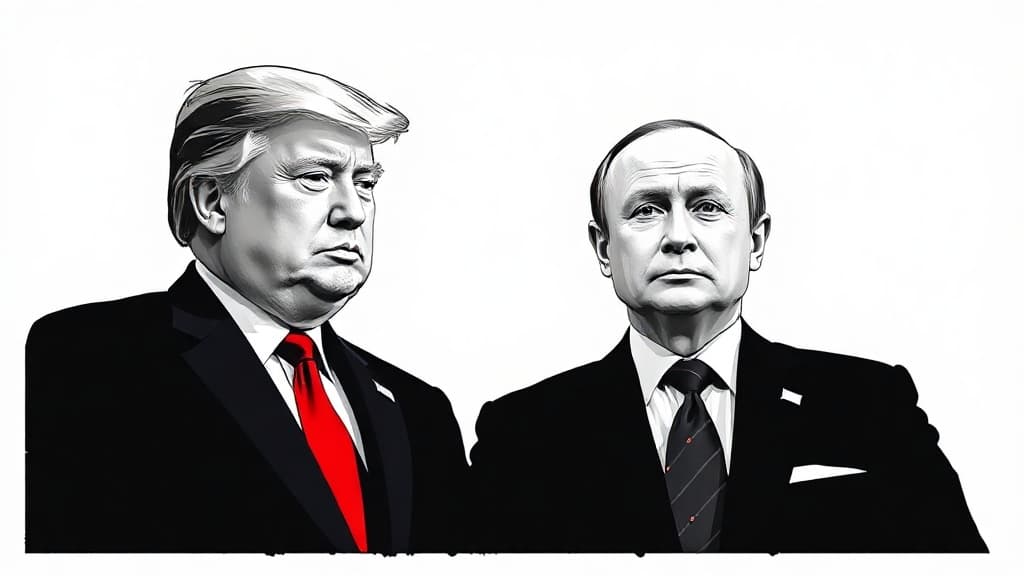
President Donald Trump publicly thanked Chinese President Xi Jinping and Russian President Vladimir Putin for staying out of the Iran war, crediting their restraint with keeping a regional conflict from spiraling into something far deadlier for Americans.
Speaking at a press conference at the G7 summit in Evian-les-Bains, France, following a ceasefire agreement, Trump made the case that superpower neutrality — not escalation — protected U.S. interests. "I want to thank China, President Xi. I was with him, and he stayed neutral, totally neutral, and I appreciate it," Trump said. "And I want to thank Vladimir Putin, he was very neutral. They could have made it much more difficult for us."
The remarks are pure America-first realism: when nuclear-armed rivals choose not to inject destroyers or surface-to-air missiles into a shooting war, American blood and treasure are saved. Trump spelled it out: "They could have sent in an oil ship with six destroyers alongside of it, on each side. They didn't do that. President Xi helped me. He tried to help, and I think he probably helped get it solved," according to Al-Monitor.
"I just want to thank them because they made it a lot better," Trump added.
Contrast that with what Trump said about traditional U.S. allies. Al-Monitor reported that Trump criticized allies from Japan to Europe for not assisting with the military operation or with efforts to clear the Strait of Hormuz — the Iran-blocked maritime chokepoint. The message is blunt: rivals stayed out; allies sat out.
But the picture is more complicated than the president's framing. Both Moscow and Beijing maintain deep ties with Tehran. Al-Monitor noted that Beijing condemned Washington's attacks on Iran as a "brazen violation" of its sovereignty. U.S. intelligence officials assess that Beijing has supplied Tehran with goods with potential military uses. China's independent oil refiners have also been Iran's main customers throughout the conflict, defying U.S. sanctions. Russia, for its part, warned the war could trigger a nuclear arms race across the Middle East. Benzinga reported that before Trump's May visit to Beijing, China and Iran held a meeting experts described as "deeply strategic" — a signal that Tehran has options beyond Washington.
So "totally neutral" is Trump's word, not a verified description of either government's conduct. China talked neutrality while its refiners kept Iranian oil flowing and its factories shipped dual-use gear. That's the kind of gap a press conference obscures but a policy debate can't afford to ignore.
Still, the strategic bottom line holds: neither Moscow nor Beijing sent warships or advanced air defenses into the fight. For an administration trying to contain a conflict without triggering a superpower clash, that restraint matters more than rhetoric. The foreign policy blob will scream that thanking autocrats is treasonous. The relevant question for working Americans is simpler: did this approach keep the country out of a wider war, or did it just paper over rival provocations that will resurface the next time tensions flare?
The ceasefire is signed. The real test is whether great-power restraint holds when the next crisis hits.