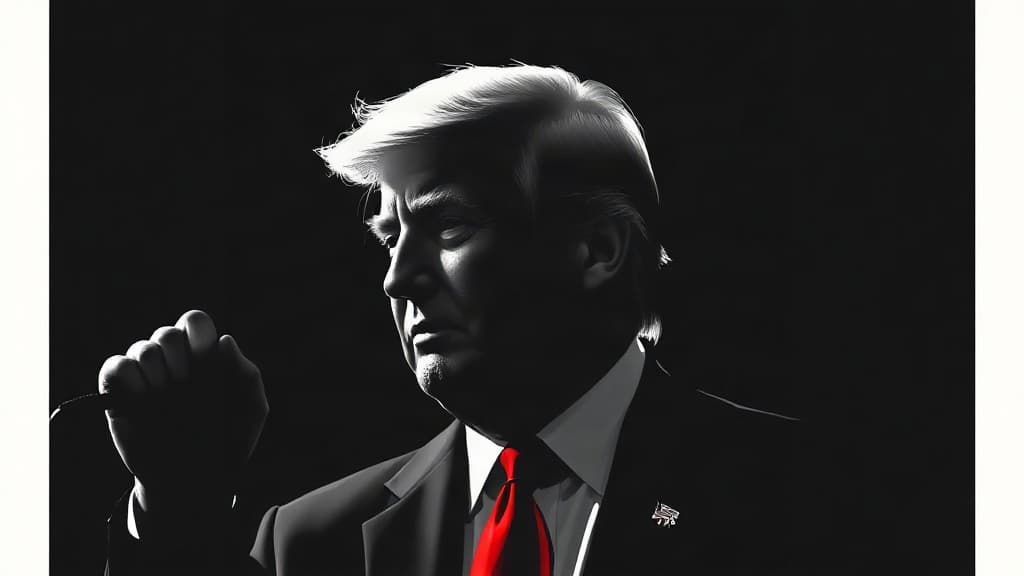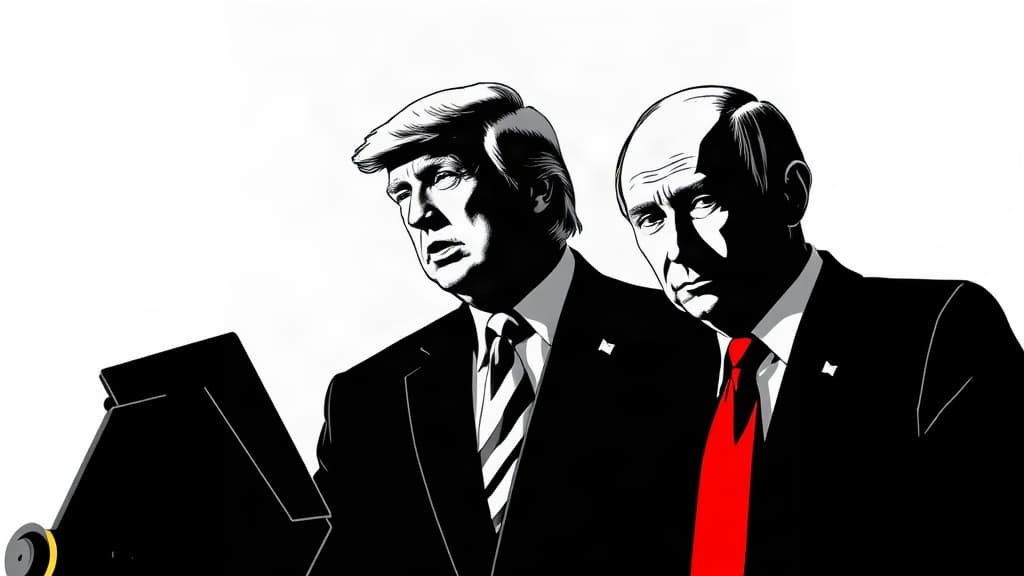
President Trump said Monday that Volodymyr Zelensky should be replaced as Ukraine's negotiator if the war with Russia is ever going to end, while Vladimir Putin is pushing a trilateral summit with Trump and Xi Jinping that would carve up global spheres of influence — all while American truckers and farmers pay above $6 a gallon for diesel.
Trump's frustration with Zelensky is shared by millions of Americans who've watched hundreds of billions flow to Ukraine with no end in sight. But Putin's vision for how it ends — a great-power carve-up that freezes out Ukraine and Europe entirely — deserves the same hard scrutiny as the blank-check crowd.
"Zelensky is a man that should have had this war settled a long time ago," Trump told reporters on the South Lawn. "They're losing their male population. Ukraine could have had this thing settled a long time ago. If he would have listened to me, and you remember the Oval Office, he would have had to settle a long time ago. I think it's time for somebody else to negotiate on behalf of Ukraine."
The president was referring to his February 2025 Oval Office clash with Zelensky, where he told the Ukrainian leader point-blank: "You're not winning. You have a damn good chance of coming out OK because of us. If you didn't have our military equipment, this war would have been over in two weeks." Zelensky has shown no sign of stepping aside, and instead criticized Trump's decision last week to pause sanctions on Russia and sign a diesel deal with Moscow. "I believe steps have been taken to convince Ukraine to capitulate," Zelensky told Bloomberg News. "That's how it looks."
The diesel deal is where foreign policy meets the American wallet. Diesel above $6 is squeezing farmers and truckers — two blocs Republicans need to hold Congress in November. Trump defended the move as giving the U.S. a "leg up" in negotiations.
Meanwhile, Putin is playing a bigger game. The Wall Street Journal reports Putin floated a trilateral summit with Trump and Xi during an October 9 call, aiming for a meeting at next month's APEC summit in China. A former Moscow intelligence officer told the Journal that Putin wants more than a Ukraine peace deal — he wants a re-run of the 1945 Yalta Summit, where Roosevelt, Stalin, and Churchill divided Europe into spheres of influence and cemented Moscow as a superpower.
Under that framework, Russia would assert itself in eastern Europe, including NATO allies Poland and Finland, while China threatens American partners like Japan and South Korea. "The problem is that this set-up runs counter to American interests in Europe and the Pacific," Seth Jones, president of the Defense and Security Department at the Center for Strategic and International Studies, told the Post. "It also increases the possibility of World War III if Russia were to expand into NATO territory."
Jones added that Putin's diplomacy push — which excludes Ukraine and all of Europe — is likely meant to distract from Russia's battlefield losses. Around 500,000 Russian soldiers have died in the conflict so far, nine times more than all Soviet and Russian fatalities in all wars combined since World War II, per CSIS. Russia has failed to make significant gains this year, while Ukraine has reconquered hundreds of square miles and liberated multiple villages. "Russians are frustrated with how the war is going and they are making a play to increase their bargaining position," Jones said.
Secretary of State Marco Rubio confirmed discussions but said nothing is finalized. "The President is open to anything that he can do to help bring the war to an end if it's possible," Rubio told reporters.
The open question: does ending the war on terms that leave Putin dreaming of Yalta and Xi eyeing the Pacific actually put America first — or just trade one bill for a bigger one down the road?