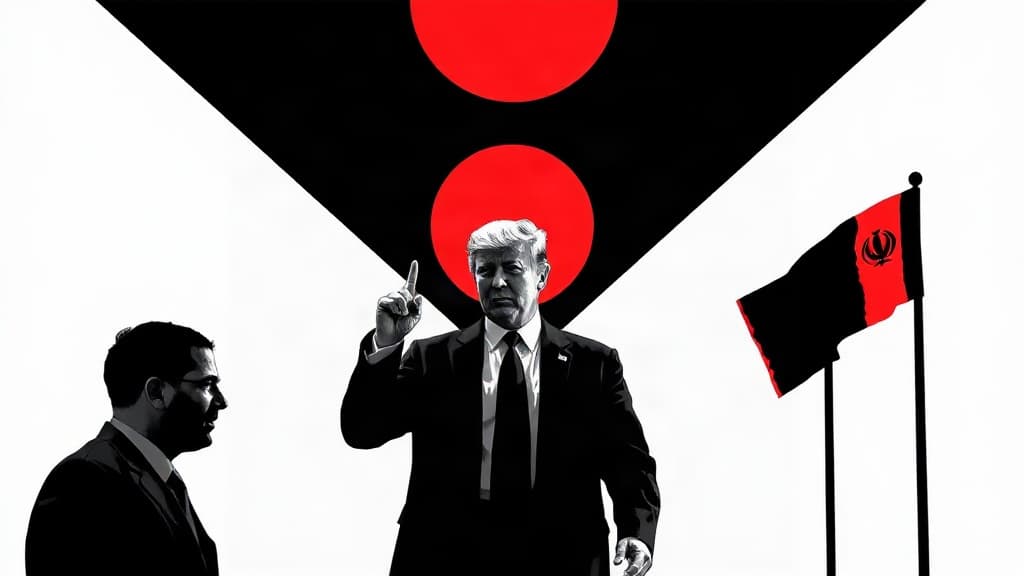
President Donald Trump heads to the United Nations General Assembly on Tuesday to confront Iran’s nuclear program, just as the permanent war class ramps up pressure to drag American blood and treasure into another Middle East conflict.
The stakes for ordinary Americans are clear: while the U.S. border remains wide open and communities crumble at home, Washington is expending vast military resources enforcing an “iron-clad blockade” and securing shipping lanes for Gulf states.
U.S. Ambassador to the UN Mike Waltz said Trump will focus on preventing Iran from obtaining a nuclear weapon, according to WJLA. Iran will be a key focus during the New York gathering as the administration weighs its next steps against Tehran. Trump is also scheduled to meet with leaders of the six Gulf Cooperation Council nations, though it remains unconfirmed whether U.S. officials will meet with an Iranian delegation that has been granted visas to attend.
Meanwhile, CENTCOM Commander Adm. Brad Cooper is boasting about U.S. forces propping up Gulf oil markets. “Over one billion barrels of crude have been shipped from Gulf partners through the Strait of Hormuz, and Iran has exported zero barrels thanks to our iron-clad blockade,” Cooper said. He noted that CENTCOM forces have supported over 2,000 commercial ship transits and cleared primary transit lanes of mines.
Cooper was quick to highlight the human cost of this foreign commitment, noting that “the average American doing this important work is in their mid-20s.” Those young Americans are risking their lives not to secure American borders, but to ensure the free flow of foreign crude and liquid natural gas to the global market—benefiting Gulf monarchies and defense contractors far more than the working class back home.
The escalation risks are real. A jet fuel storage facility at Saudi Arabia’s King Khalid International Airport was hit by an “airborne attack” Saturday, according to the Wall Street Journal, just days after Iran-backed Houthis attempted a drone strike on Mecca. No one claimed responsibility for the airport strike, but the pattern of escalation is undeniable.
Iranian Foreign Minister Abbas Araghchi pushed back on the American posture, declaring that “sustainable security cannot be dictated from outside the region” and that decades of foreign intervention have proven an undeniable truth.
The White House is also pushing a 20-point Gaza peace plan and juggling meetings with British Prime Minister Andy Burnham, Japanese Prime Minister Sanae Takaichi, and Venezuela’s acting President Delcy Rodriguez. But the through-line is clear: the lobbying class and neoconservative hawks want a blank check for Persian Gulf security. They want the American taxpayer to foot the bill and the American servicemember to provide the muscle.
The Iranian regime is undeniably a threat, but the question for Americans is whether endless deployments and billion-barrel blockades serve U.S. interests—or just the bottom lines of the defense industry and foreign lobbying class that profits from permanent war.