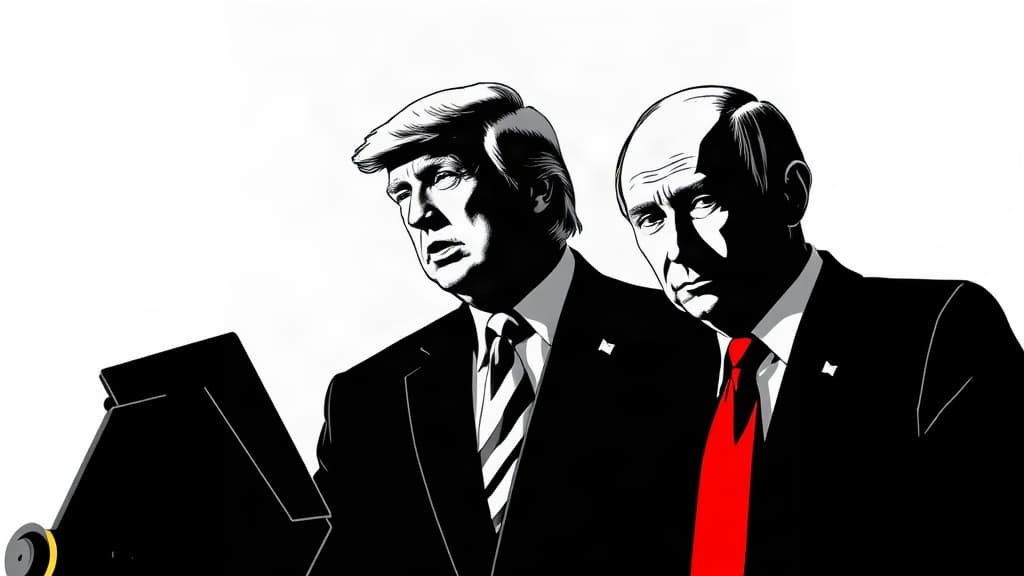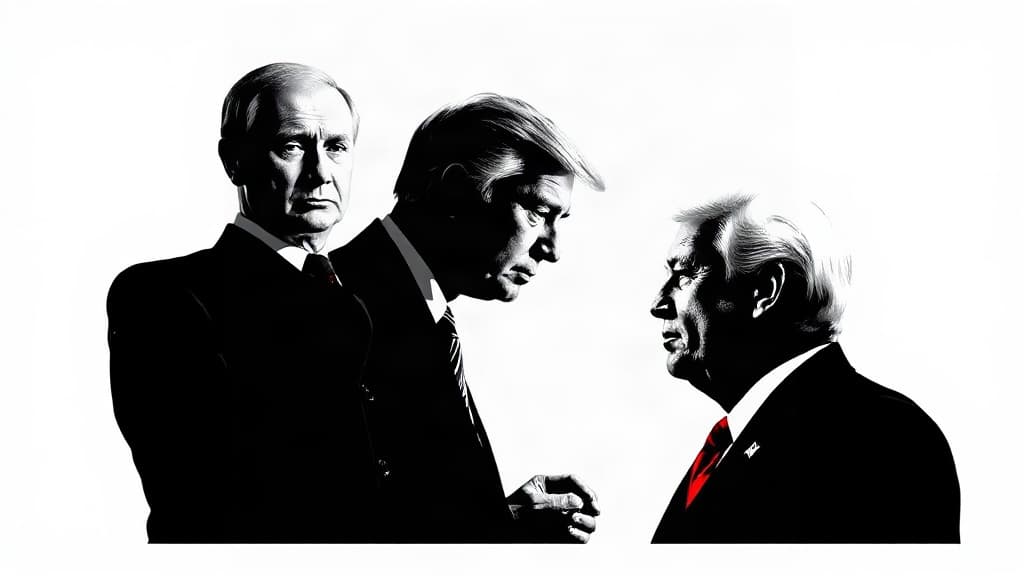
President Trump declared Thursday that Elon Musk restored Ukraine's Starlink access, but Ukrainian officials on the ground say speed restrictions crippling their drone operations remain — and the entire episode raises the question neither party wants to answer: why American technology and taxpayer dollars are subsidizing Europe's border war while the U.S. southern border stays wide open.
The stakes are straightforward. Starlink and its military-grade variant, Starshield, are the backbone of Ukraine's battlefield communications and drone operations. Whoever controls the throttle controls Kyiv's ability to fight. And right now, that's an American president and an American company — with American taxpayers footing the bill for a war with no defined exit.
Trump told reporters at the White House: "Whether I called or whether somebody else called, doesn't make any difference, I guess. The bottom line — he put it back." He declined to confirm whether he personally phoned Musk, despite the Wall Street Journal reporting that he did exactly that, expressing frustration that speeds remained capped.
Ukrainian officials say nothing has changed. "At this time, we are not observing any lifting of restrictions on Starlink," said Serhiy Beskrestnov, an adviser to Ukrainian President Volodymyr Zelensky. A Ukrainian Defense Ministry source told CNN there is "currently no confirmation that the restrictions have been lifted" and signal loss persists for any ordnance traveling above 100 mph. A frontline officer was blunter: "There are definitely speed limits; nothing has changed yet."
The officer added that Ukraine has "lost a lot of assets, much more than usual" since the caps kicked in over a week ago.
The blame-shifting tells its own story. Musk denied unilateral action, posting that Starshield systems are "owned and controlled" by the U.S. government, meaning "any limits on speed or usage are decided by the US military and ultimately POTUS." Secretary of State Marco Rubio told reporters Wednesday that access decisions were up to SpaceX and Musk, not the White House. Both can't be right. Either the president controls a wartime asset or a private company does — and the American public deserves a straight answer about who is directing U.S. military-grade infrastructure in a foreign war.
Zelensky said Thursday that speed had not been restored and hoped for talks with Rubio in coming days. He previously characterized the throttling as a "message" from Washington, tied to Trump's frustration over fuel prices and the absence of a peace deal as midterms loom.
Newsweek noted that the Trump administration withheld intelligence and military aid in March 2025 to force Ukraine to the negotiating table — a reminder that U.S. support is supposed to be leverage, not a permanent entitlement. The Kremlin says Putin agreed to resume three-way peace talks next month after Trump envoy Steve Witkoff visited St. Petersburg.
Every outlet covering this saga frames it as a drama between Musk and Ukraine, or Trump and Zelensky. Nearly all of them bury the question that matters at home: this is American infrastructure, funded by American contracts, deployed in a war Congress never declared, with no cost accounting and no end in sight. The bipartisan establishment treats foreign aid as obligation and border security as optional. Until that formula flips, Americans watching their own border dissolve will keep asking who Washington actually works for.