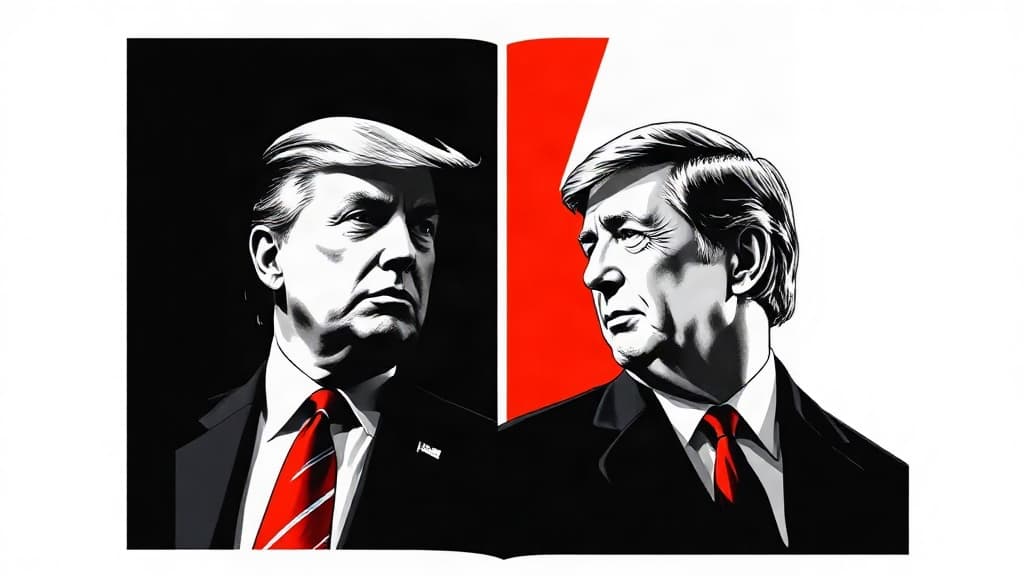
Six months into the Iran war and the Islamic Republic is still standing, the secret police are mobilizing, and the only economic "onslaught" Washington has launched is against a mid-tier Egyptian bank — while American taxpayers foot the bill for yet another open-ended Middle East conflict nobody voted for.
CNN framed the milestone as a story of "Iranian Americans divided" over the war's direction. That's real enough — the diaspora's splits run deep — but it buries the stake for every other American: blood and treasure committed to a campaign with no stated endgame, no defined U.S. interest, and no evident strategy beyond managed escalation. The founders debated declarations of war in taverns for a reason. This war had no such debate.
Even the war's most vocal Iranian-American supporters admit it has failed on its own terms. Arezo Rashidian, a monarchist activist who organized protests in Los Angeles and initially welcomed U.S. and Israeli strikes, told CNN she hoped for "targeted attacks on bases to bring down that regime." Six months later: "We really wanted regime change … it's been six months now, and it didn't get to that point." Instead of liberation, Rashidian's contacts inside Iran describe a renewed climate of fear — the secret police mobilizing as fighting has quieted, arrests and executions accelerating, and the regime re-enforcing mandatory hijab laws with public admonishments of women. CNN could not independently verify the arrest and execution claims, but the hijab enforcement videos speak for themselves. The war the anti-regime activists wanted has not materialized. What has materialized is a more entrenched dictatorship.
On the economic front, Treasury Secretary Scott Bessent announced what he called an "economic D-Day" — a "merciless" onslaught to sever "every economic lifeline" sustaining Tehran until it "stands alone." The reality fell well short of the rhetoric. Treasury's marquee move was proposing to cut Banque Misr's UAE branches from the U.S. financial system — an Egyptian bank that allegedly processed roughly $1.8 billion for 103 companies tied to Iranian shadow-banking networks. HotAir reported that the move put the financial world on edge, wondering if Chinese banks were next, since China buys more than 90% of Iran's oil. So far, they aren't. Washington held off on major new sanctions, opting instead to step up enforcement of existing ones. Analysts called it underwhelming. Middle East watchers argued the signal mattered more than the scale — severing a key access node for low cost. Maybe. But signaling is not strategy.
Meanwhile, Iran is threatening reciprocal pain — expanded strikes on regional oil producers and European countries, and even the weaponization of its nuclear program. A regime we were told this war would neuter is instead threatening to go nuclear, openly.
Here is the question CNN will not ask and HotAir will not press: What is the U.S. interest that justifies keeping American forces in this fight? Who profits from a war that has failed to change the regime, failed to curb the mullahs' reach, and now teeters toward nuclear escalation? Follow the money to the defense contractors whose stock ticks up with every deployment, and to the lobbying class that sold this war as inevitable. Six months in, the American people still have no answer — and no exit.