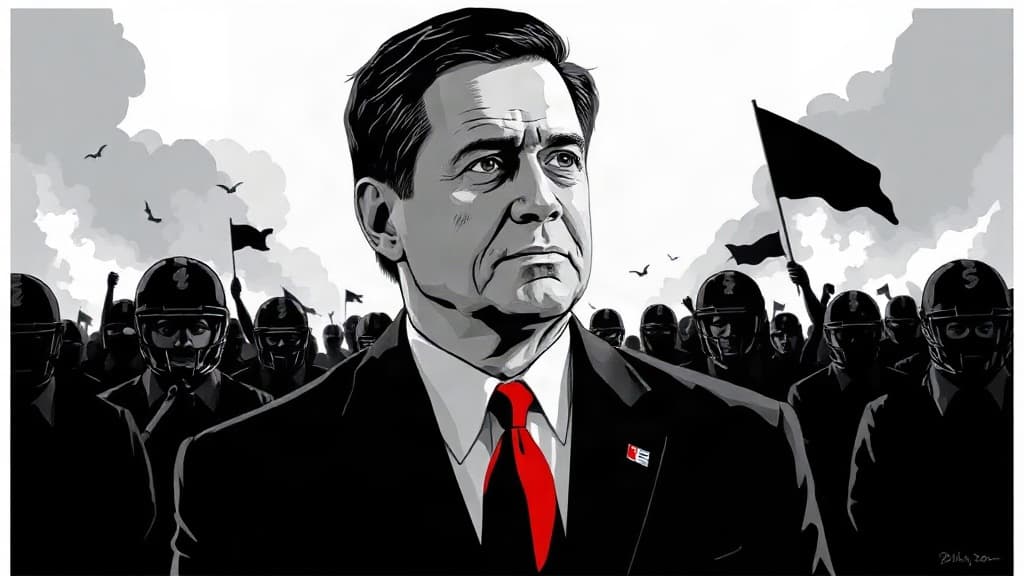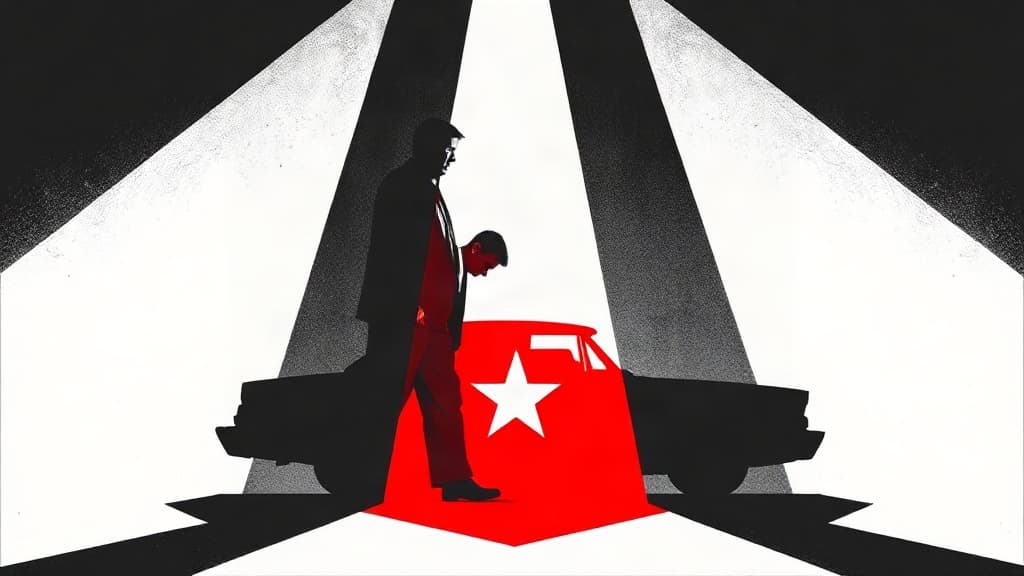
Secretary of State Marco Rubio publicly urged Cubans to partner with the CIA to overthrow their government — a brazen call for regime change that would put American taxpayers on the hook for yet another overseas project with no defined exit.
Rubio made the pitch Friday on X, addressing "those who seek to create positive change in Cuba" and telling them to "seize this opportunity to create the change you desire through a discrete partnership with the CIA." He did not elaborate on what that partnership would look like, what it would cost, or how it would end — the same blanks hawks always leave when selling the next intervention.
The post came moments after Donald Trump told a south Florida rally that U.S. warships returning from the Iran war would make a stopoff near Cuba. "Those beautiful ships will pass Cuba. We'll have one of them stop about 50 yards off the coast. They'll raise up their hands. And then we're going to send Marco Rubio in to finish up the deal," Trump said, according to The Guardian. Al-Monitor reported similar remarks, noting Trump pledged to "take care of Cuba" after dealing with Iran.
Rubio, whose parents left Cuba before the socialist revolution, has been handling much of the Cuba-related policy for the administration. He has previously said Cuba poses a national security threat due to its ties to U.S. adversaries but has voiced doubts that a diplomatic resolution with Havana's current government is possible. The Trump administration has already imposed an oil blockade that has worsened fuel shortages and blackouts on the island, and earlier this year announced criminal charges against former leader Raúl Castro.
Havana was not impressed. Cuban deputy foreign minister Carlos Fernandez de Cossio mocked the CIA recruitment on X: "Now the United States is resorting to public recruitment for the CIA. There must be a great deal of desperation or misery within the agency for it to be forced to sell its services like a tube of toothpaste."
The Guardian noted that Trump was campaigning just days before midterm elections in which voters have voiced concern about how the Iran war has driven up prices on everything from gas to groceries. That detail — the domestic cost of foreign commitments — was absent from Al-Monitor's reporting, which focused more heavily on the mechanics of the pressure campaign and the 60-year embargo.
Both outlets noted that UN rights experts have condemned the oil blockade as a violation of international law. Al-Monitor also reported that Cuba's foreign minister told the UN General Assembly last month that Havana remains open to dialogue with Washington — a claim the U.S. has apparently decided to test with warships and spy recruitment instead.
The question that neither Rubio nor Trump answered: What is the U.S. interest here, what will it cost, and how does it end? Sixty years of embargo haven't produced regime change. A CIA partnership with Cuban dissidents sounds like the opening chapter of a familiar story — one where American treasure disappears, foreign countries destabilize, and the people who sold the war move on to the next one.