Three people caught on video pulling themselves out of a manhole 150 feet from Penn Station remain unidentified and free one week later — despite a surveillance apparatus that catalogs every American email, phone call, and financial transaction.
The fact that three people in headlamps and overalls can emerge from critical infrastructure next to the busiest rail hub in North America and the system built to watch you can't find them tells you everything about where the surveillance state's priorities actually lie. The government that monitors your bank transfers can't secure a manhole cover.
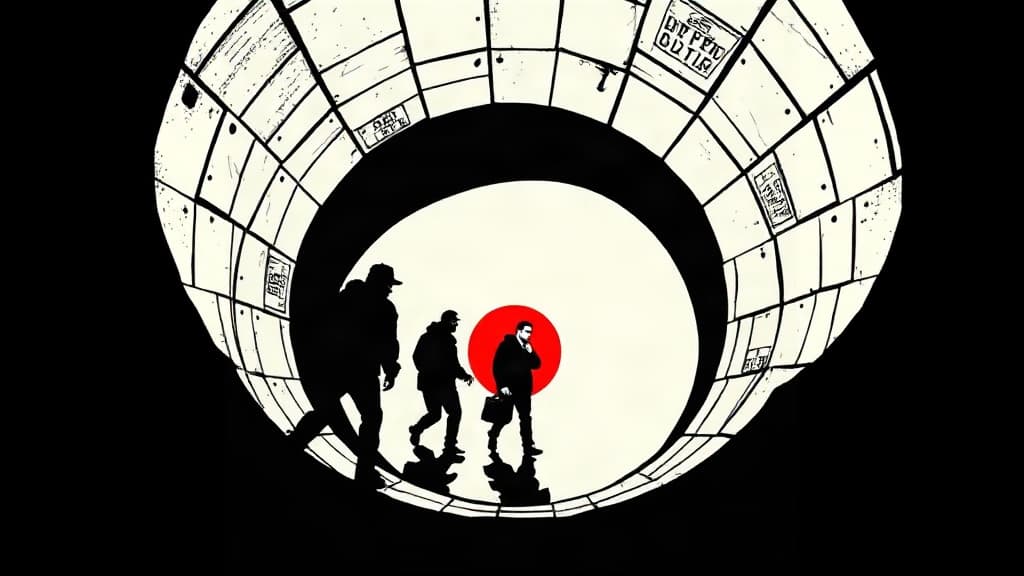
Around 4:19 a.m. on August 18, three individuals wearing headlamps and dark overalls climbed out of a sanitation and drainage manhole at the southeast corner of West 31st Street and 7th Avenue — steps from Penn Station and Madison Square Garden. Video of the incident went viral on TikTok Friday. The NYPD said Monday that no arrests have been made and the investigation is ongoing.
The NYPD is attempting to use facial recognition technology to identify the three, the New York Post reported, citing law-enforcement sources. So far, nothing. The same tools deployed against ordinary Americans failed here.
One tourist articulated what the establishment press won't. "I just immediately thought, reconnaissance, 9/11," Mark, an Arizona visitor, told the Post at Herald Square. "If you're an Iranian soldier, you need to cripple New York City? Under Penn Station? Under Madison Square Garden? Aren't all the train lines crisscrossing here?"
The Guardian and WJLA covered the incident but omitted the security-angle framing entirely, focusing instead on the "mystery" and health hazards of sewer entry. Neither outlet mentioned the 9/11 comparison or the obvious infrastructure vulnerability at the nation's largest transit hub.
This isn't the first time. In May, multiple videos showed groups climbing in and out of manholes across Brooklyn and Queens at night. One group of roughly seven people spent three hours underground before emerging in the middle of a Brooklyn intersection as cars passed by, WJLA reported. In those cases, at least four people were charged with trespassing. Law-enforcement sources told the Post those individuals were scavenging for valuables — coins, wallets, scrap metal, jewelry.
A law-enforcement source told the Post the latest incident may be similar: "Mostly people who do this think there's treasure. Precious metals. Lost property." Another source called it "not uncommon" and said securing the infrastructure falls to the Department of Environmental Protection — passing the buck.
The DEP, which oversees the thousands of miles of sewers beneath New York, inspected the area and found no damage. When pressed for further comment Monday, a DEP spokesperson referred the Post back to Sunday's statement: "Members of the public should never enter a pipe, drain, catch basin, manhole or outfall." The agency declined to explain how members of the public were able to do exactly that, 150 feet from Penn Station, at 4 in the morning.
Whether the August and May incidents are connected remains unclear. The NYPD's Emergency Services Unit swept the sewer system after the May incidents and found nothing nefarious left behind, the Guardian reported.
What is clear is the vulnerability. Penn Station sits atop a convergence of rail lines serving hundreds of thousands of daily commuters. The infrastructure beneath it is vast, aging, and apparently accessible to anyone with a headlamp. The same government that built a metadata dragnet, staffs TSA checkpoints, and monitors your social media posts cannot tell you who is crawling out of a manhole next to the nation's largest transit hub — or what they were doing down there.