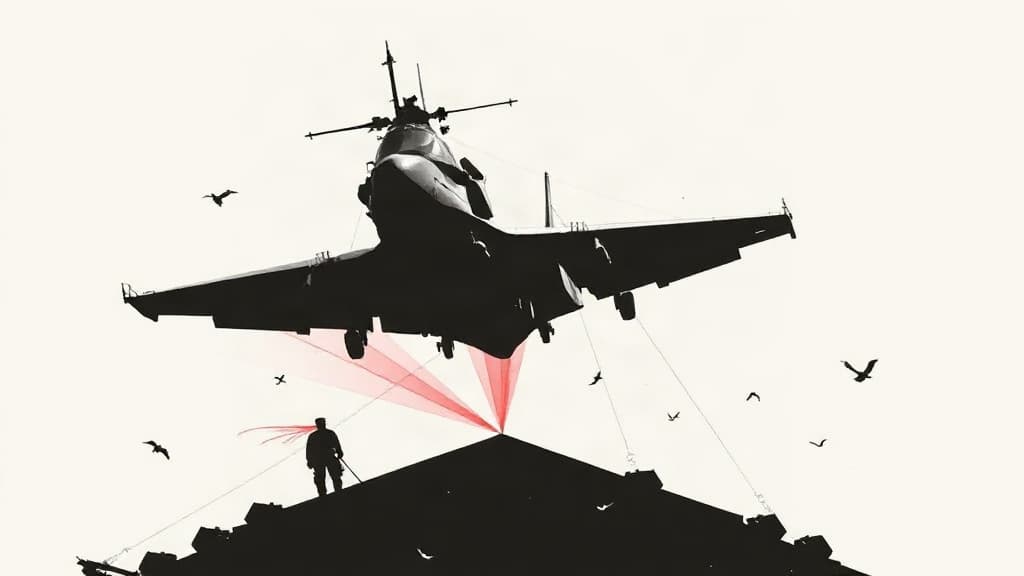
Two Navy aviators ejected while landing on the USS Dwight D. Eisenhower off the Virginia coast Monday, and four sailors aboard the carrier were injured — the latest in a string of incidents that ought to make Americans ask whether a military stretched across the globe is being maintained or just run into the ground.
The aviators, assigned to Carrier Air Wing 3, successfully ejected during what the Navy called a "mishap" during "aircraft recovery operations" and were pulled from the water by search and rescue personnel, according to statements reported by both The Guardian and the New York Post. Both pilots were returned to the ship and are under medical evaluation. Of the four injured crew members, one was transported to a Norfolk-area hospital for non-life-threatening injuries.
That is the extent of what the Navy is willing to tell the public. The service has not identified the type of two-seater aircraft involved, what happened to the plane, or what caused the crash. The Navy did not immediately respond to requests for further details.
"Mishap" is the word the institution chose — a term that buries the stakes. Two pilots had to bail out of a failing aircraft onto a carrier deck where four people were hurt. That is not a bureaucratic footnote. That is a readiness problem.
The USS Eisenhower, a nuclear-powered Nimitz-class carrier, was commissioned in 1977. It is approaching half a century of service. Both outlets noted the ship's age; neither pressed the obvious question: how many more of these aging platforms are being pushed through deployment cycles to sustain commitments overseas that have no clear endpoint?
The pattern is hard to ignore. Carrier groups rotate through the Persian Gulf, the Mediterranean, and the Western Pacific on schedules that strain airframes and crews alike. When something breaks — an arresting gear, a landing approach, a plane — the word that comes back is always "mishap," never a reckoning with what the operational tempo costs.
No blank check means no blank check. The public owes the people who fly these missions a force that is maintained, not just deployed. And Congress owes the public an accounting: what is the mission, what does it cost, and when does it end?
The Navy will investigate. The Navy will likely classify the findings. And the carrier will sail again on a deployment calendar set by commitments that nobody in Washington has bothered to justify to the Americans who pay for them.