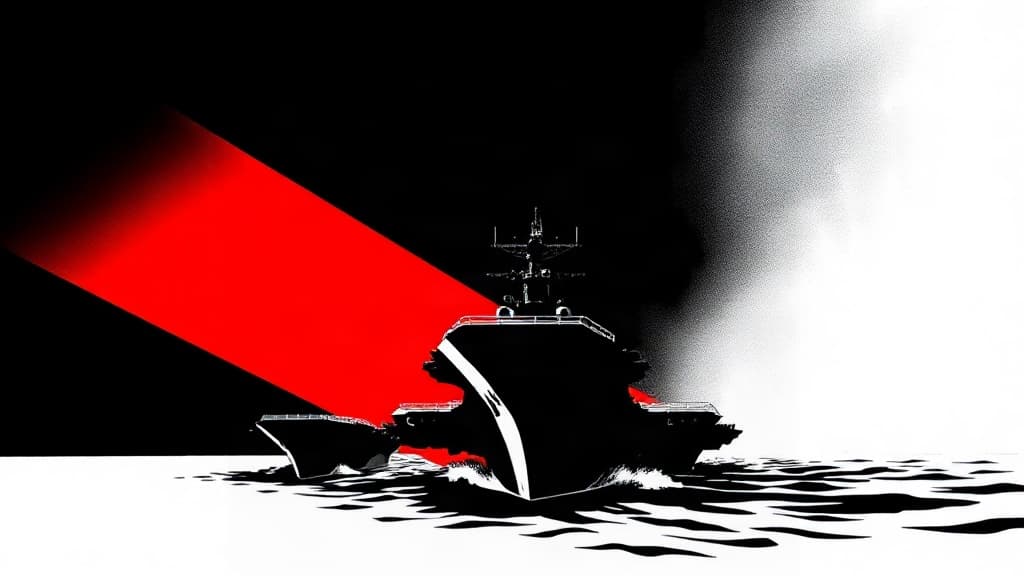
Sailors aboard the USS Abraham Lincoln have spent more than 250 days at sea without a port call — a modern Navy record — while the politicians who sent them to the Strait of Hormuz trade insults about who's to blame for their deteriorating conditions.
The crisis on the Lincoln isn't a story about one ship. It's about an establishment that treats the military as a global police force, launches wars without clear objectives, and then acts shocked when the humans carrying out the mission break down. The same Congress now feigning outrage over squalid conditions authorized and funded the Iran deployment every step of the way.
According to USA Today, military-focused outlets began reporting in August on worsening conditions aboard the Lincoln, which left San Diego on November 21, 2025, and was redeployed from the South China Sea to the Middle East. The Guardian confirmed the Navy Times and Stars and Stripes have largely verified accounts of supply shortages, water problems, plumbing failures, and sailors attempting to leap from the ship.
All 13 Democrats on the Senate Armed Services Committee plus two additional Democratic senators are now demanding answers from Defense Secretary Pete Hegseth, calling the conditions "a symptom of poor planning by both you and the President and exacerbated by the deeply unsound decision to start a war with Iran." They've submitted 11 questions on mental health, hygiene, and safety, and requested a bipartisan visit to the carrier.
Sen. Jon Ossoff, Georgia Democrat, went furthest, calling Trump "uniquely despicable" for "lying a nation into war" in Iran and keeping sailors deployed while he "golfs and trades stocks." Trump spokesperson Stephen Cheung responded with a derogatory nickname and called Ossoff the biggest "loser in politics."
Trump himself dismissed the reports at a White House press availability, citing an unnamed retired admiral who told him the Lincoln was "beautifully maintained" and "beautifully taken care of." He berated a CNN reporter to "be quiet" and called the reporting "fake news." Hegseth likewise denied the accounts. Retired Gen. Jack Keane, a commentator, called the reporting untrue.
Republican lawmakers have largely gone quiet — not defending the administration, but not challenging it either. Rep. Don Bacon of Nebraska said on CBS that Trump used "poor phrasing" when he told reporters the deployment was "not long enough," but allowed only that "we should have oversight" and bring in the secretary of the Navy to "explain to us the truth."
The families aren't waiting for hearings. The Guardian spoke with three naval families who described mounting alarm. One sister of a Lincoln crew member said: "I grew up in a United States where you have to be very respectful of the military, as they're making the ultimate sacrifice and protecting their country, and now you have the commander-in-chief and defense secretary dismissing their experiences and calling them liars."
USA Today reported in April that sailors on the Lincoln and the USS Tripoli weren't receiving care packages or routine fresh food — the Pentagon denied it then, too.
The Democrats demanding answers now have a point about conditions. But where was this fury when the authorization votes came due? The same Armed Services Committee members now writing letters approved the force posture that put those sailors in the Strait of Hormuz in the first place. Bipartisan hands signed off on every deployment extension, every munition shipment, every blank check for a war with no defined exit.
The question isn't whether the Lincoln's conditions are a disgrace. The question is how many more ships will set deployment records before Washington admits the mission — not just the maintenance — is the problem.