Congress just voted to give the president sweeping new authority to wage economic warfare on Russia — and anyone trading with it — with a bill that could hit American wallets and drag the U.S. deeper into a European conflict it has no business fighting.
The House passed the Lindsey O. Graham Sanctioning Russia and Iran Act of 2026 on Wednesday in a 262-159 vote, sending it to Trump's desk. The Senate cleared it 86-11 last month. Named for the late senator — whose last public appearance was in Kyiv, standing in front of tanks, announcing Trump would back the bill — the legislation mandates sanctions on Russian officials, oligarchs, and state-owned enterprises, and targets foreign companies aiding Russia's war effort.
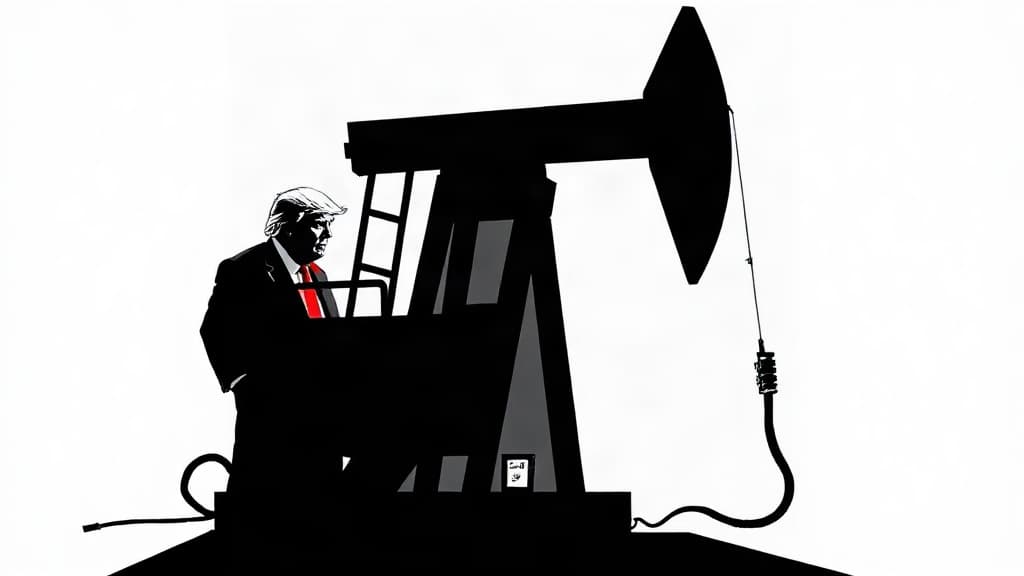
But the real story is the tariff power. The bill lets the Trump administration impose levies of up to 100% on countries buying Russian oil and gas, including China and India. U.S. Trade Representative Jamieson Greer would set the final tariff level. That's the guardrail. As guardrails go, it's thin.
House Minority Leader Hakeem Jeffries voted no, asking on the floor: "Why in the world would this Congress give this president additional authority to visit that kind of economic harm on the American people?" He's right to worry, even if his party's motives are selective. CNN reports that nearly a dozen Republicans privately lobbied leadership to strip the tariff provisions, fearing price hikes before the midterms. Speaker Mike Johnson rebuffed them.
The Guardian framed the bill's opponents as an alliance of "isolationist" Republicans and Democrats worried Trump would turn the tariff weapon on allies. CNN buried the Republican opposition as "private" concerns, emphasizing instead the bipartisan push to support Ukraine. Both outlets gloss over the core question: why is Congress handing any president — this one or the next — more unilateral power to upend global trade?
The foreign lobbying angle is blunt. Sen. Richard Blumenthal, the bill's Democratic cosponsor, told reporters that Zelensky personally insisted he push the sanctions through. "In my last meeting with President Zelensky, he was insistent that we should pass the Russia sanctions bill," Blumenthal said. A foreign head of state lobbying Congress to redirect American economic policy — treated as routine, not remarkable.
Rep. Don Bacon of Nebraska called the vote Congress' "Churchill vs. Chamberlain Moment on Russia." Rep. Marie Gluesenkamp Perez, one of two Democrats who broke ranks to advance the bill, cited her district's Ukrainian community. Both arguments assume the U.S. has an obligation to fund and enforce outcomes in a European war — an assumption never put to a vote on its own.
The bill also targets Russia's so-called "shadow tanker" fleet, which has kept crude flowing despite existing sanctions — a quiet admission that the last round of sanctions didn't work. The solution, naturally, is more sanctions.
Trump's own administration initially opposed additional sanctions, hoping to negotiate an end to the war. Those talks stalled, and the White House flipped to support the bill. Whether the new powers bring Russia to the table or just expand the economic battlefield remains unaddressed.
The question nobody in Washington wants to answer: if the last sanctions failed, and the war grinds on, what exactly does this bill achieve — besides more executive power and more leverage for the sanctions industry that profits from perpetuating it?