China just made minority assimilation the law of the land, mandating Mandarin-only schools, party loyalty in every home, and the power to target dissidents worldwide — while American leaders call any conversation about national cohesion racist.
The Ethnic Unity and Progress Promotion Law took effect July 1, turning Xi Jinping's years-long campaign to erase minority identity into binding statute. Schools and government agencies must use Mandarin Chinese as their primary language. Curricula must "forge a strong sense of the community of the Chinese people." Parents are required to guide children to "love the Chinese Communist Party and the Chinese people," according to CNN's reporting on the law's text. Local authorities must pursue ethnic integration in housing policy — a provision observers say could trigger forced relocations. And in a breathtaking jurisdictional claim, organizations and individuals outside mainland China who "undermine ethnic unity" or "create ethnic division" will be held liable.
James Leibold, a professor at La Trobe University focused on China's ethnic policies, put it plainly: Beijing is "making the production of a single Chinese national identity a binding responsibility across schools, families, media, museums, cadres, budgets, technology platforms and security organs." Minority identity, he said, is now acceptable "only when it is subordinated to a party-defined Chinese identity."
United Nations human rights experts warned in an April letter that the law "could have serious implications for the linguistic, cultural, and religious autonomy of ethnic communities, including Tibetans, Uyghurs, and Mongols," and flagged the potential for "transnational repression" given its extraterritorial reach.
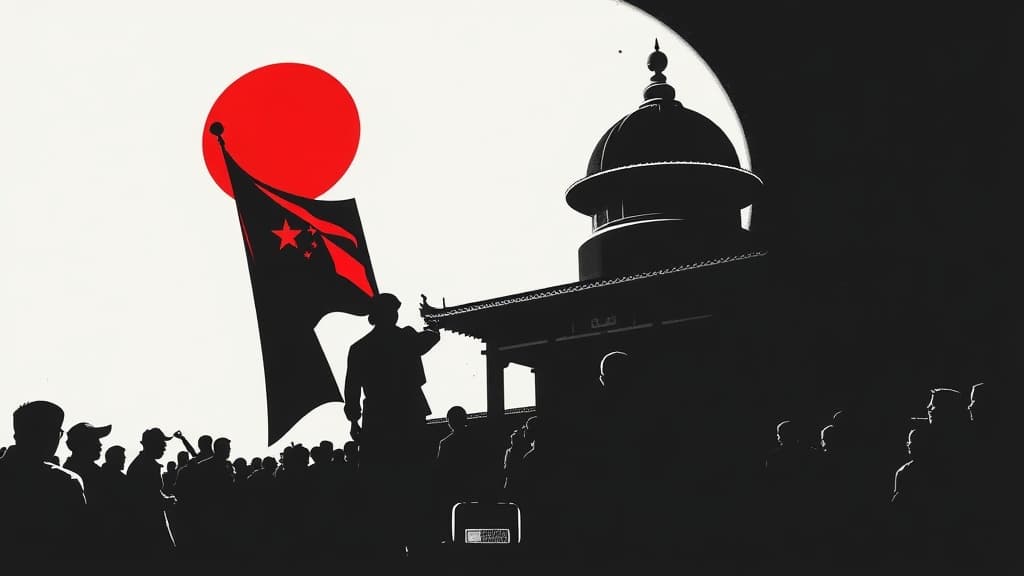
Xi marked the law's enactment in a speech Wednesday celebrating the 105th anniversary of the Chinese Communist Party, calling on members to "continuously consolidate and strengthen the great unity of all ethnic groups." But the speech ranged far beyond domestic assimilation. Xi described the CCP as "the world's largest ruling party with significant global influence" that had "deeply changed the trend and trajectory of the world's development," according to a CNBC translation. He offered "Chinese wisdom, Chinese solutions and Chinese strength for addressing major issues facing humanity" — a direct pitch to developing nations that the AP and AJC both reported without scrutiny.
Reuters noted that the party, founded by dozens of revolutionaries in 1921, now claims over 100 million members — 7.2% of China's population — and aims to transform from the world's "largest" to its "most powerful" political party. Xi demanded members stamp out "all viruses that erode the party's healthy body" and noted that China's development faces coexisting "strategic opportunities, and risks and challenges." After a corruption purge of nearly all top military ranks, Xi sent senior officers on a 10-week political reeducation course in April, Reuters reported.
Xi also reiterated the goal of "reunification" with Taiwan, calling it the party's "unwavering historical responsibility." Taiwan's Mainland Affairs Council dismissed the rhetoric as "basically repeating old talking points." China's defense spending will rise 7% this year — the slowest increase since 2021 — and Xi was blunt: "A strong country must have a strong military."
The double standard writes itself. Beijing codifies a single national identity, mandates one language, demands party loyalty from every household, and threatens dissidents globally — and the same international institutions that wring their hands offer no consequences. Meanwhile, any American who suggests that a nation might have a legitimate interest in shared language, borders, or civic identity is denounced as a bigot by the press and the political class. China protects its cohesion by force. The West is told its strength lies in dissolving itself. The question is how long that contradiction holds before one side decides the other's model works better.