China is organizing a multinational AI ecosystem explicitly designed to counter Western dominance — while America's own tech executives lobby Washington for regulations that would hamstring domestic innovation and hand the field to our adversaries.
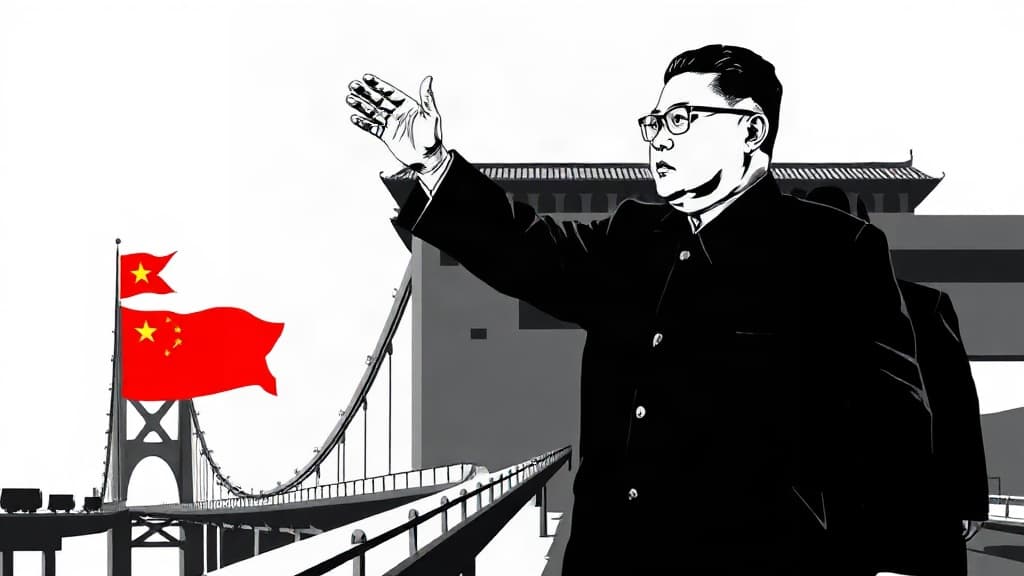
At the BRICS summit in New Delhi, Chinese President Xi Jinping announced Beijing will lead the establishment of a BRICS AI Open Source Zone, promote cooperation on large language models, hold AI training courses, and build what he called an "open AI ecosystem" across the expanding coalition. He also proposed a BRICS digital ecosystem cloud platform, a special economic zone partnership, and a service trade forum to deepen commercial ties. The initiatives are practical: shared infrastructure, shared talent, shared technology — all outside American-controlled frameworks.
The stakes are straightforward. BRICS was founded in 2009 as a counterweight to Western dominance, and it has since expanded beyond Brazil, Russia, India, China, and South Africa to include Egypt, Ethiopia, Indonesia, Iran, and the United Arab Emirates. Ten additional partner countries now span Asia, Africa, Latin America, and the Middle East. China and Russia call this larger formation "Greater BRICS" — a bloc covering much of the Global South, explicitly organized against a U.S.-led order.
Russian President Vladimir Putin said as much at the summit, calling BRICS a "powerful driving force towards creating a new, fairer and multipolar world order." Indian Prime Minister Narendra Modi urged that solutions developed within BRICS should be made "adaptable and accessible to meet the needs of the Global South."
CNBC framed Xi's push as a development within the booming AI sector, burying the geopolitical architecture beneath a paragraph about an OpenAI researcher warning that AI might "kill all of humanity by the end of the decade." Al-Monitor placed the story where it belongs — in the context of Beijing seeking "to weld the grouping into a practical platform for Global South development" and reshape the world order.
The summit also scored a diplomatic win: a joint declaration backed by both Iran and the UAE expressing "deep concern" over Middle East escalation, plus the highest-level meeting between Iranian and Emirati officials since the current Gulf conflict began. The diplomacy matters — it shows BRICS functioning as more than a talking shop, which is exactly what Washington should be worried about.
Xi didn't address AI safety debates. He's not interested in hand-wringing. He's interested in building the infrastructure that lets a coalition of nations develop AI without relying on American platforms or playing by American rules.
Meanwhile, back home, the loudest voices in American tech aren't calling for competition — they're calling for guardrails. The same executives who dominate the current market are lobbying for regulatory frameworks that would entrench their position and price out upstart competitors. China builds a multinational open-source zone; Silicon Valley builds a compliance wall. That's not a strategy for maintaining supremacy. That's a strategy for surrendering it.
The question isn't whether China is serious about organizing an alternative. It is. The question is whether anyone in Washington is serious about competing — or whether the bipartisan consensus is to regulate America out of the race entirely.