Argentina's president revived his country's claim to the Falkland Islands this week, Britain pushed back hard, and the only question for Americans is why anyone expects us to pick a side in a territorial dispute 8,000 miles from our shores.
President Javier Milei escalated the long-running dispute Thursday, threatening sanctions against oil companies operating near the British-controlled islands and praising President Trump for suggesting Washington could reconsider its traditionally neutral stance on Falklands sovereignty. British officials fired back immediately, with Foreign Secretary Ed Miliband declaring the islands "British and will remain so" and Defense Secretary Wes Streeting dismissing Milei's statement as domestic political theater. The real stake for Americans: every foreign entanglement the establishment drags us into starts with "just a territorial dispute."
Follow the money
British company Rockhopper Exploration and Israel's Navitas Petroleum are developing the deep-sea Sea Lion oilfield roughly 140 miles north of the Falklands, with drilling planned in coming months and oil production targeted for 2028. Milei announced sweeping actions to stop the project, which Argentina considers illegal exploitation of its claimed waters. Rockhopper's shares dropped 7% on the news. Milei also announced new funding for a naval base in Tierra del Fuego to bolster Argentina's military presence near the islands.
Trump's calculus
Milei cast Trump's comments as proof his relationship with the U.S. president was paying off. "The United States is considering this change in position because it knows that Argentina has a reliable partner, aligned with Western values, in a strategically important position that can be a valuable ally in the decades to come," Milei said in a nationally televised speech.
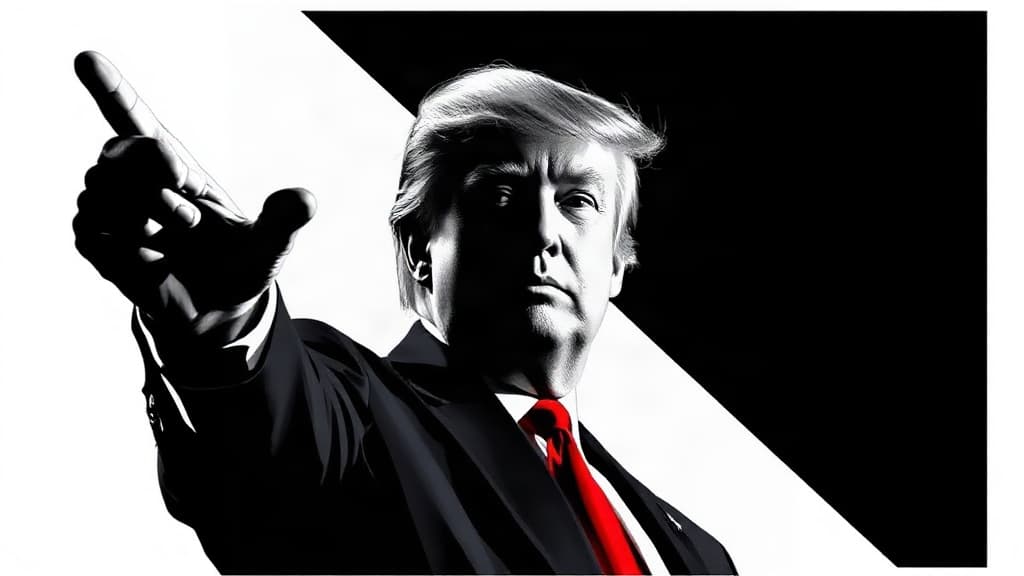
Trump had told GB News he would "review every position" on the Falklands and pointedly noted Britain's refusal to let him use British bases in his initial attack on Iran earlier this year. "Don't forget, you get a big percentage of your oil from the strait of Hormuz, and you weren't there to help me," Trump said. He added: "The Falklands is very interesting because your country is not the same country it was 20 years ago, 25 years ago."
Domestic politics, not national security
Britain and Argentina fought a war over the islands in 1982, when British forces defeated an Argentine invasion. The conflict killed 649 Argentine troops, 255 British service members, and three islanders. Argentina's sovereignty claim is enshrined in its constitution; Britain cites the islanders' right to self-determination.
Milei faces reelection next year with approval ratings slipping and the economy sputtering. The Falklands claim is one of the few causes that cuts across Argentina's political divides. "We can argue about my style. We can disagree over fiscal or exchange-rate policy," Milei said. "But there are causes that rise above any political difference. The Malvinas is one of them."
Not everyone is buying it. Leftist opposition lawmaker Nicolás del Caño said Milei wants to "use the legitimate sovereignty claim over the Malvinas Islands to regain ground ahead of the election year and serve U.S. interests in its dispute with Britain."
What the press won't ask
The Guardian framed the story almost entirely from the British perspective, leading with UK officials' rebuttals and giving extensive space to Trump's comments about British non-support on Iran. AP and NPR both gave more weight to Milei's domestic political motivations and the opposition's skepticism — but none of the three outlets asked the question that matters to Americans: what's our interest here, and what would it cost us to take a side?
The U.S. has maintained neutrality on the competing sovereignty claims for decades while recognizing Britain's de facto administration. Any shift would be a diplomatic move with no upside for American citizens — and every chance of pulling Washington into someone else's fight.
The question isn't who owns the Falklands. The question is who's going to try to make it America's problem next.