Allies and administration officials are pressuring Trump to take a harder line against China as he arrives in Manila this week — and the bill for whatever commitment they extract gets sent to the American taxpayer.
The Quad summit brings together the U.S., Japan, India, and Australia for the first time in two years, and the message from every direction is the same: confront Beijing. A senior administration official told the Los Angeles Times it's time for China to "step up to the adults' table, if you will, and have adult conversations about adult things," accusing Beijing of pursuing "opaque" programs from a rapidly expanding nuclear arsenal to AI capabilities "exceeding human control." Quad foreign ministers have already staked out their demands, expressing "grave concerns regarding economic coercion, including through arbitrary export restrictions, as well as non-market policies and practices."
What the chorus won't say: every one of these allies wants American power and American money committed to their backyard. Australian officials, according to the Guardian, are working frantically to "stop the US from withdrawing from global leadership" — diplomat-speak for keeping American ships, bases, and defense spending anchored in the Indo-Pacific. Asia Society fellow Premesha Saha laid it out plainly: "keeping the United States engaged in the Indo-Pacific is a core strategic interest" for Australia.
The underlying concerns are real enough. China's coast guard rammed a Philippine vessel just two months ago. Beijing holds a near-monopoly on heavy rare earths the global economy runs on. Japan wants the Quad expanded beyond maritime security into a technology coalition. India signed an agreement with Washington in May to develop alternative supply chains. The San Francisco Declaration, part of the Pax Silica accord, ropes in the UK, India, Israel, South Korea, and Singapore to set AI standards.
All of which raises a straightforward question: what does the American worker get from another open-ended commitment? More bases, more spending, no exit strategy.
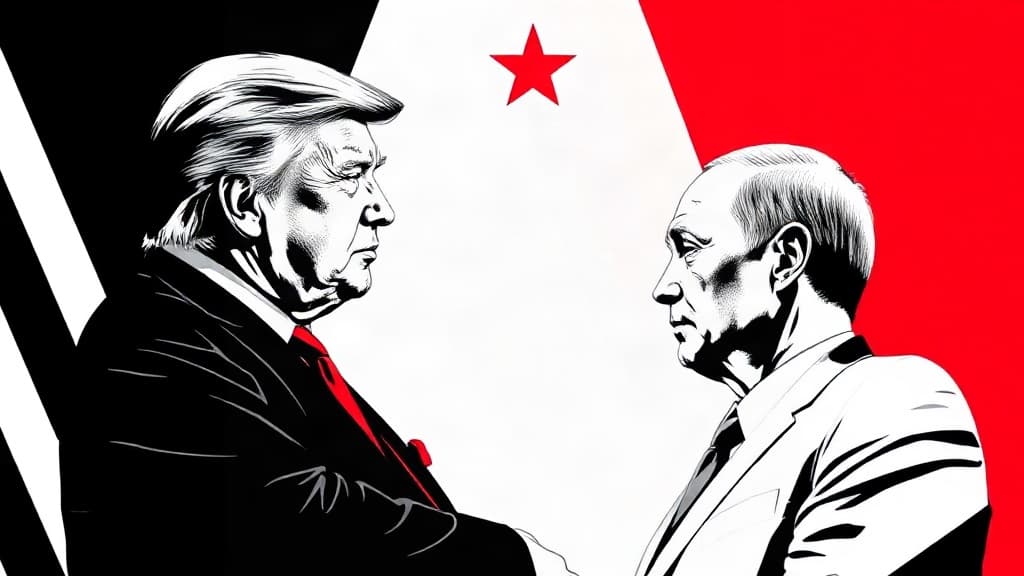
Trump has spent a year courting Xi Jinping, and this week he'll fly to Shenzhen for historic three-way talks with Xi and Vladimir Putin. That's the dealmaking instinct — the one that treats nations as interests, not enemies. The Guardian noted that Washington "has opened its own channel with Beijing," exactly the kind of direct diplomacy the Quad's cheerleaders quietly resent.
The Los Angeles Times framed the entire trip through the lens of allies "urging a united front against Beijing's growing assertiveness." The Guardian buried the more revealing detail: that Australia is desperate to keep the U.S. from pulling back, and that even the experts concede "the Quad isn't a military alliance" and Washington has "gone out of its way to say it isn't an anti-China coalition." If it isn't an anti-China coalition, then what exactly is the pressure campaign for?
Trump should hear the allies out. Then he should ask what they're paying — and when American troops come home.