Maryland law enforcement logged more than one billion license plate reads in a single year — and Baltimore alone accounted for over 271 million of them — while cops across the country have been caught using the same surveillance network to stalk their ex-girlfriends, not catch violent criminals.
The numbers come straight from Maryland's own annual audit of automatic license plate reader programs, which counted at least 857 readers operated by law enforcement across the state in 2024. Baltimore News reported the staggering scale: 271,576,177 plate reads in one city alone, roughly 27 percent of every plate scanned statewide. That is not a dragnet for suspects. That is a dragnet for everyone.
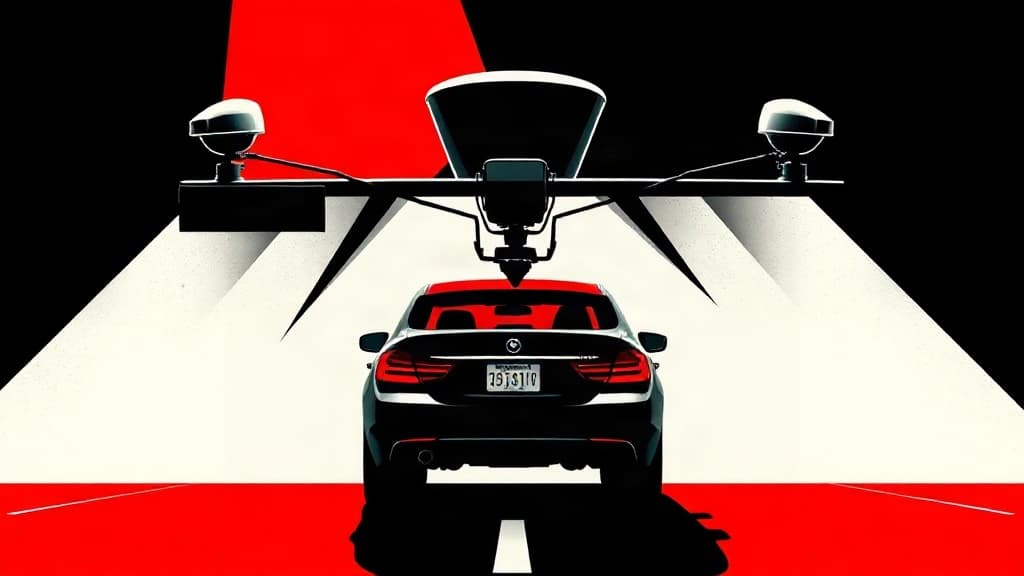
The technology, built by Flock Safety and competitors like Leonardo's ELSAG system used by the Baltimore Police Department, goes well beyond reading a plate. The cameras use artificial intelligence to capture and store a vehicle's make, model, color, location, date, time, and identifying features like dents, roof racks, and bumper stickers, according to Deflock.org. Every car that passes becomes a searchable data point in a database someone else controls.
Baltimore News framed the story as a debate — "crime-fighting tool or privacy concern" — quoting drivers who didn't mind the cameras and others who called it an invasion of privacy. The Daily Caller cut straight to the abuse: a 24-year-old South Carolina officer, Ellie Anna Hammond, was fired August 3 after allegedly using a Flock camera to run her ex-romantic partner's license plate 166 times between March and July. Hammond claimed she was conducting warrant checks, traffic infractions, and welfare checks. She wasn't. She has not been criminally charged.
She is not an outlier. Baltimore News noted that several police officers have been accused of using the system to track wives, ex-girlfriends, and for other personal use. Flock responded by implementing new security features, but the core problem remains: the cameras capture everyone, not just suspects, and access controls have already failed.
The Baltimore Police Department told Baltimore News it does not use Flock cameras and does not have access to Flock's system. But BPD runs Leonardo's ELSAG technology, which does the same thing — automatic scanning and database comparison — and operates both fixed and mobile readers, including units mounted on patrol cars. The brand name is different. The surveillance is the same.
A nonprofit launched HaveIBeenFlocked.com, allowing drivers to check whether their plate appears in Flock search logs the organization obtained. But as the site itself makes clear, a plate returning no results does not mean it has never been searched. You wouldn't know.
Meanwhile, resistance is taking shape on the ground. The Daily Caller reported that all eight Flock cameras in Winona, Minnesota were allegedly stolen on August 4 — poles chopped down, cameras taken. Cameras in Ashland County, Ohio were reportedly vandalized in July. Two Tennessee politicians are also targeting Flock's expanding surveillance infrastructure.
The question isn't whether the technology can help solve crimes. It's whether a country that built its founding documents on freedom from British general warrants should accept a system that logs a billion plate reads a year in one state alone, run by people who have already proven they can't be trusted with the access they have.