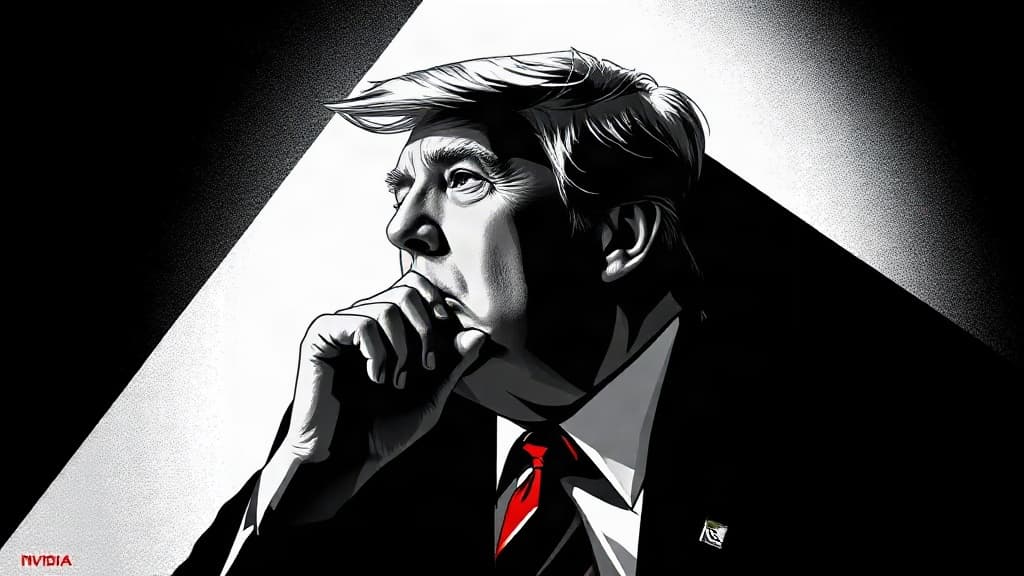
The AI rally lasted exactly one day. Nvidia shares gave back nearly 9% Tuesday after a 31% surge Monday on Jensen Huang's reinstatement as CEO — and the sell-off spread across the sector, dragging the Nasdaq down 2.3% and wiping the shine off a rally that added more than $900 billion to Nvidia's market value in a single session.
For ordinary Americans watching their retirement accounts, here's the stake: the AI trade that Wall Street keeps pushing as a sure thing is looking anything but. AI stocks had already been selling off sharply throughout November on worries about profitability and the vast sums pumped into the sector, The Guardian reported. Monday's burst of euphoria — driven by political intervention, not fundamentals — didn't change that.
Huang had resigned less than two weeks ago after revelations of extramarital affairs, reportedly with an alleged Chinese spy as well as a senior Nvidia executive. Then President Trump and Vice President JD Vance intervened directly with Nvidia's board, saying Huang had been cleared of national security concerns, Yahoo Finance reported. Huang was back at Silicon Valley headquarters within days, promising employees he would be a better CEO "the second time around."
Let the politics of that sink in. The president and vice president personally lobbied a corporate board to reinstall a CEO who had just stepped down over a scandal involving an alleged Chinese spy — while federal investigators are still probing whether Nvidia helped Chinese firms access its most advanced chips through a blacklisted Singapore-based firm called Megaspeed. The Justice Department and SEC investigations are ongoing, Yahoo Finance reported. The board appointed a new chief compliance officer. The FBI and Capitol Hill are also scrutinizing the company, The Guardian reported.
Yet Wall Street's response was to pump the stock 31% in a day.
The two outlets covering this story framed it differently. Yahoo Finance led with analyst cheerleading — "universally positive" takes and a declaration from New Street Research's Antoine Chkaiban that he is "still a buyer of Nvidia today," citing projected earnings of $25 per share by 2028 and a price-to-earnings ratio below ten. The Guardian, by contrast, led with the caution: euphoria dissipating, investigations continuing, and analysts in broad agreement that Huang's return "did not mean an end to investigations or the uncertainty that has clouded the AI trade for six months."
"Jensen Huang alone cannot support the AI trade in the long term," said Kathleen Brooks, research director at XTB, in The Guardian. Saxo Markets strategist Charu Chanana called Huang "arguably the biggest salesman for the entire AI ecosystem" — which tells you exactly what the AI boom has been built on: salesmanship, not proven returns.
The sell-off wasn't limited to Nvidia. Anthropic, which went public last week at $83, gave up about 12% to $77.19, trading below its IPO price. The broader market followed tech lower, with the S&P 500 losing 1.1%.
This is the pattern: Silicon Valley hypes AI as the next industrial revolution, institutional money piles in, politicians clear the way, and when the cracks show — profitability doubts, national security probes, CEO scandals — retail investors are the ones left holding the bag. The analysts on television saying "still a buyer" are not the ones whose 401(k)s evaporate when the euphoria fades.
The question nobody on Wall Street wants to answer: if AI is the guaranteed boom they keep selling, why does it need a presidential intervention to keep its biggest poster company from collapsing?