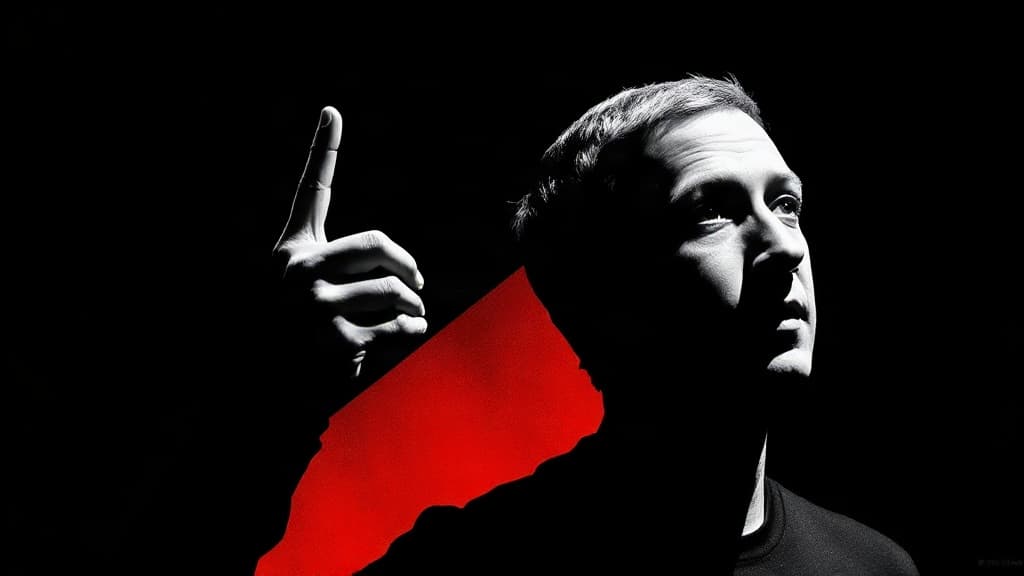
New Mexico is demanding up to $40 billion from Meta after a jury found the social media giant lied to 1.4 million users in the state about everything from data privacy to hate speech removal — and the penalty, if approved, would be the largest civil judgment in American history.
The ask is simple: make it hurt. New Mexico attorney Randi McGinn told Judge Francis Mathew that a judgment of $35 billion to $40 billion would "speak to Meta in the only language it understands" and actually dent the company's stock price. "It would serve the purpose of deterrence, not just for Meta but for any big company that would lie to the people of New Mexico," McGinn argued. Mathew says he'll rule by late October.
A Santa Fe jury found on September 25 that Meta violated New Mexico's Unfair Practices Act, determining that 26 of 29 statements made over 11 years by top officials — including CEO Mark Zuckerberg and former COO Sheryl Sandberg — were "false or deceptive" regarding the platform's removal of hate speech and misinformation, and users' ability to control their personal data from third-party use. With 1.4 million New Mexico users in 2020 and a maximum $5,000 penalty per violation, the state's ceiling runs into the tens of billions.
Meta's attorney Matthew Nicholson countered with a proposal of $345 million to $3.45 billion, calling the state's request "wildly out of proportion with some of the biggest settlements and awards that we've ever seen" — exceeding even the $21 billion judgment against BP after the Deepwater Horizon oil spill. He argued the state "cobbled together 26 statements spread over the course of more than a decade with no evidence that any statement harmed any New Mexicans." Nicholson also warned that even his proposed range would be "constitutionally problematic."
The case stems from the Cambridge Analytica scandal, where the British consulting firm harvested data from roughly 90 million Facebook users without consent through a third-party app. The now-defunct firm's clients included Donald Trump's 2016 presidential campaign. Then-Attorney General Hector Balderas filed suit in 2021 as part of a wave of state data-privacy actions after the breach became public in 2018.
Meanwhile, Meta just settled a separate landmark case over social media addiction and children. The company agreed to pay $12.6 billion and implement changes including daily usage limits, "nighttime blocks" for teenagers, and enhanced age verification. A former company executive, Arturo Bejar, testified during that trial: "You just cannot trust Mark Zuckerberg with kids." Bejar, who examined teen well-being on Instagram, told Congress in 2023 that Meta was aware of harms to teenagers and failed to address them. The states alleged Meta "developed and refined a set of psychologically manipulative platform features designed to maximize young users' time spent" — pointing to infinite scroll, autoplay, and likes. They also accused Meta of violating the Children's Online Privacy Protection Act by knowingly allowing children under 13 on its platforms and collecting their data without parental consent. Meta denies the allegations.
Meta warned that the states' approach across cases could expose it to damages of up to $1.4 trillion — approaching its $1.5 trillion market capitalization. McGinn has already conceded that New Mexico is unlikely to see any money for years, as Meta is expected to appeal any judgment.
Whether the judge orders $345 million or $40 billion, Meta will appeal, the lawyers will bill hours, and Zuckerberg will wake up still running the same platform with the same features. No executive faces a cell. No algorithm gets rewritten. The data keeps flowing, the teens keep scrolling, and the stock keeps climbing. If $21 billion didn't change BP, what makes anyone think a check — any check — changes Meta?